5 Beloved American Snacks Banned in Europe
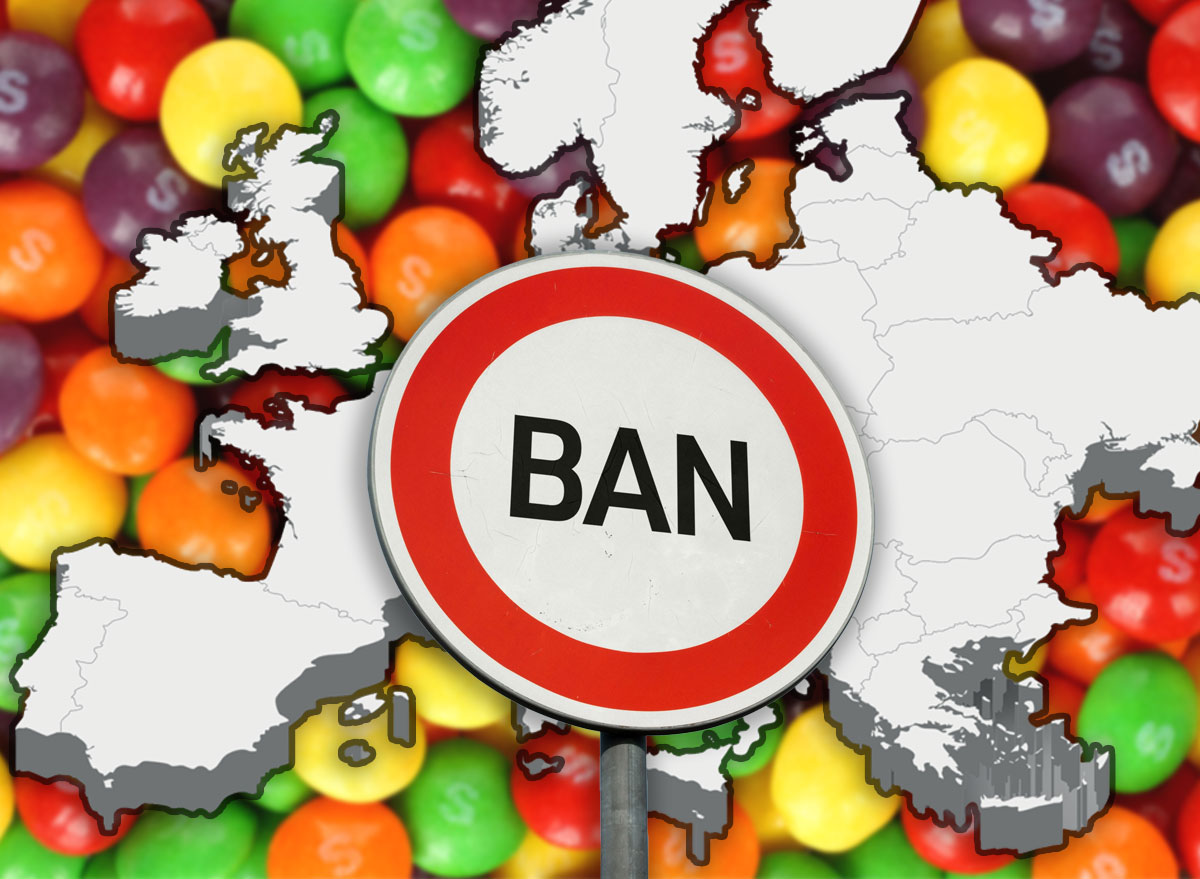

As American food companies work to remove chemical food dyes and other questionable additives from their products, it will fall closer in line to the laws already in place in the EU, protecting customers from harmful additives. Many American products have either been banned or reformulated for the European market, and as of right now, certain popular U.S. snacks are still prohibited. Here are five American snacks not allowed in Europe due to food laws.
Lucky Charms
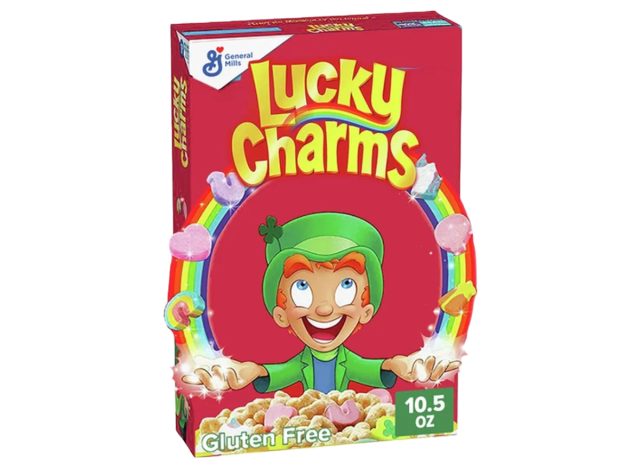
Lucky Charms are heavily restricted if not completely banned in parts of Europe due to containing artificial dyes Red 40, Yellow 5, and Yellow 6. Those dyes are used in the bright, colorful marshmallows so many people love about this cereal, but both Norway and Austria have specifically banned them, and with the FDA working on phasing out Red 40, Yellow 5, Yellow 6, Blue 1, and Blue 2 by the end of 2026, hopefully the U.S. won’t be far behind.
Skittles
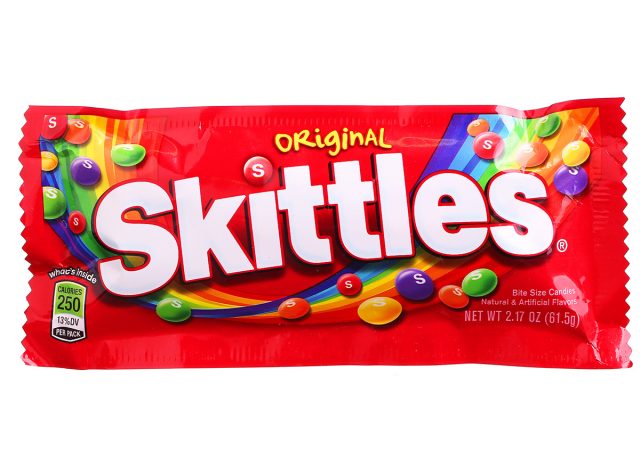
Skittles in Europe were reformulated to remove titanium dioxide, a colour additive and whitener that was banned in the European Union in 2022. Mars has finally removed titanium dioxide from Skittles in America after years of campaigning from health groups about the possible danger of this additive.
RELATED: 7 American Foods Banned in Other Countries
Little Debbie Swiss Rolls
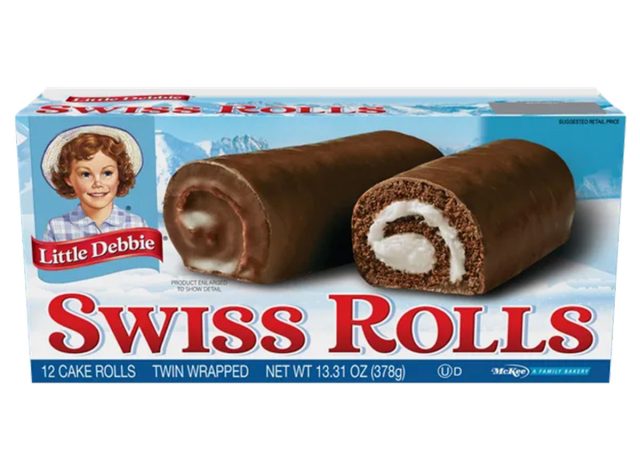
Little Debbie Swiss Rolls contain artificial dyes Yellow 5 and Red 40, so they’re banned in Norway and Austria. “Food dyes and some other additives are a public health concern. Even children and young adults without a mental health condition could become agitated after having food dye,” says Elizabeth W. Barnhardt, DO, MA via Ohio State Health.
Nestle’s Drumsticks
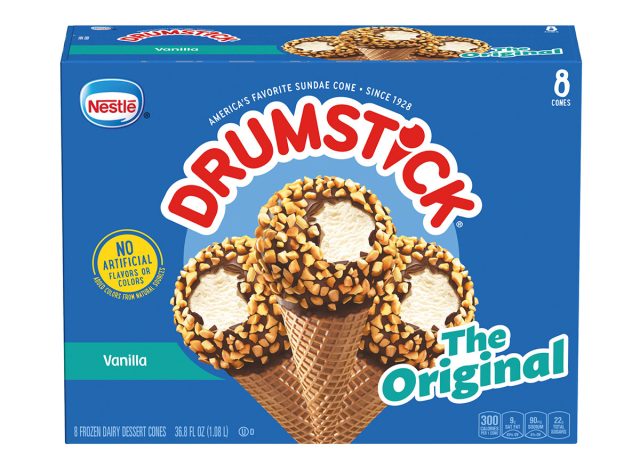
Nestle’s Drumstick frozen desserts are banned in Europe because they contain carrageenen, a seaweed-derived thickening agent. On a personal note, a major pet peeve is finding this additive in heavy cream—there is zero need for it and make sure you check the label even on organic products, because it’s in plenty of them.
Honey Bunches of Oats
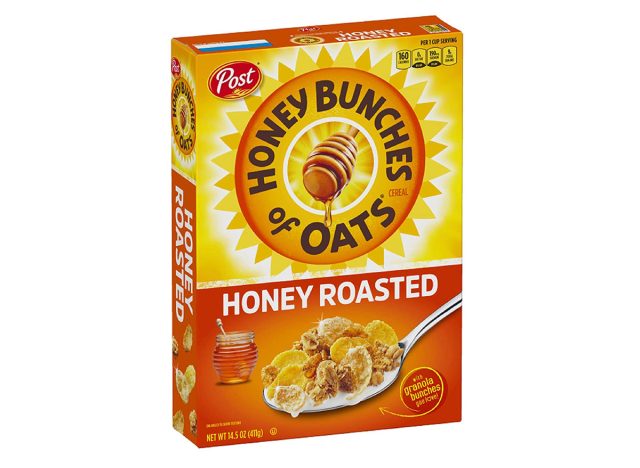
Honey Bunches of Oats (and Rice Krispies) contain butylated hydroxytoluene (BHT), a flavor enhancer banned in the EU and Japan. “BHT is not classified as a human carcinogen. However, evidence from the American Conference of Governmental Industrial Hygienists suggests that it is a human respiratory irritant,” says the EWG.