7 Things You Should Never Do When Buying Produce
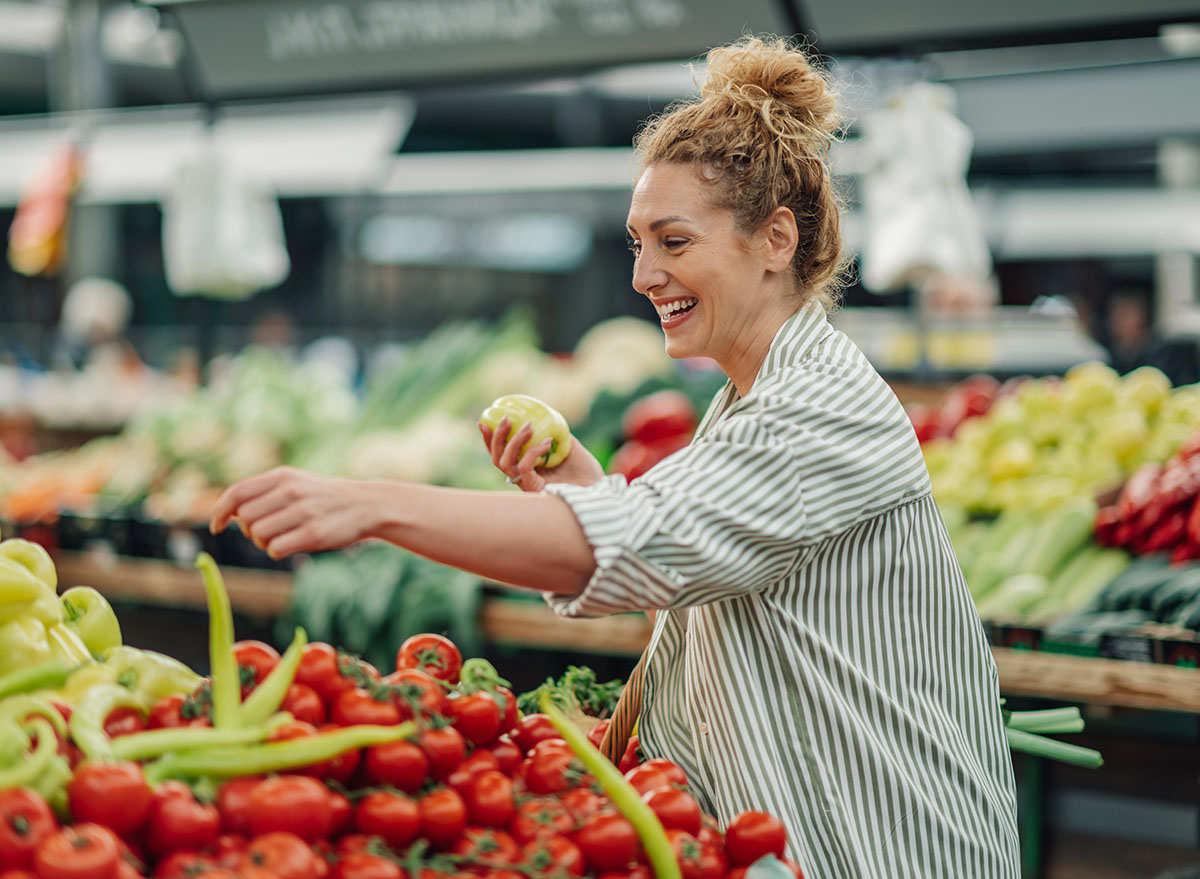

Buying produce should be a straightforward process but if fruit or vegetables are improperly stored or sold out of season, it can impact taste and quality. By keeping a few things in mind, your produce will be safer and stay fresher, plus you won’t have wasted money by having to throw bad produce out. Here are seven mistakes people make when buying produce at the store or farmer’s market.
Room-Temperature Produce
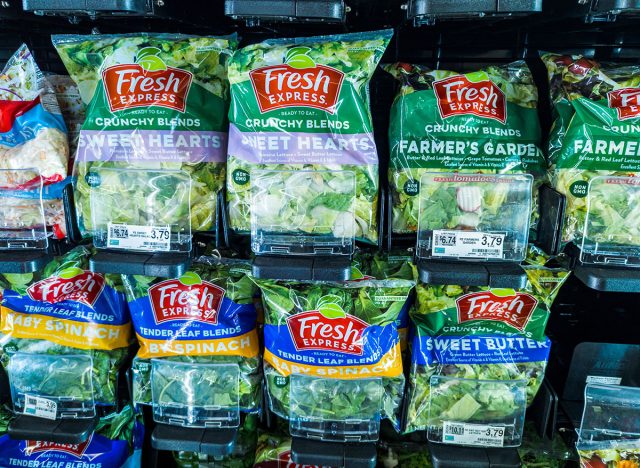
Don’t buy any precut produce that isn’t refrigerated. “When buying pre-cut, bagged or packaged produce — such as half of a watermelon or bagged salad greens — choose only those items that are refrigerated or surrounded by ice,” says the FDA.
Bruised Produce
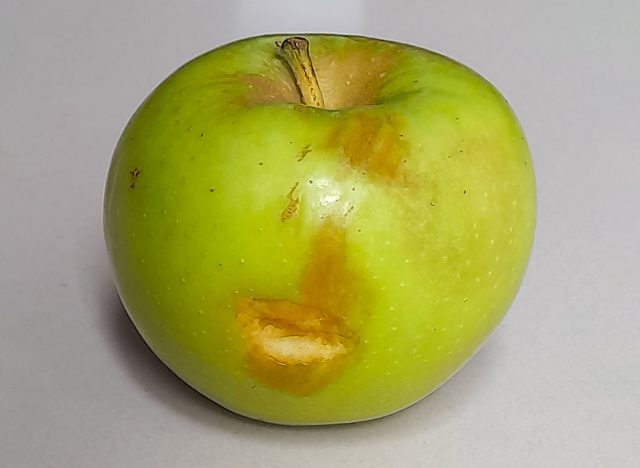
Avoid clearly bruised produce—it’s about more than just aesthetics. “It’s an ideal environment for bacteria to hide and quickly spread throughout the fruit or vegetable. Furthermore, spoiled produce is less nutritious and more unpleasant to eat,” says Fresh Farms.
Not Separating Groceries
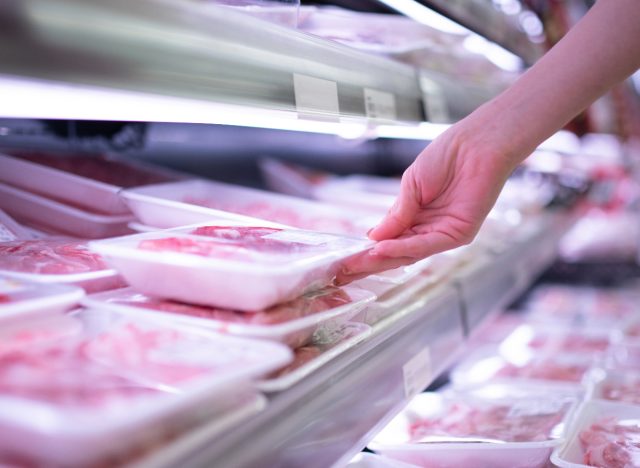
Cross-contamination can happen even before you get home from the store, so make sure to keep your produce safely wrapped and away from meat. “Bag fresh fruits and vegetables separately from raw meat, poultry, and seafood when packing them to take home from the market,” says the FDA.
Buying Out of Season Produce
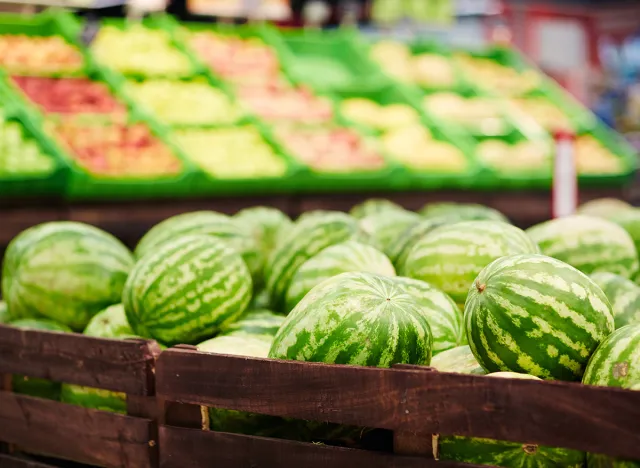
Be aware of which fruits and vegetables are in season at your local market. “Not all types of fresh produce are available all year,” says Fresh Farms. “Selling certain produce out of season incurs significant shipping costs for retailers, which are passed on to the consumer in the form of higher food prices. Seasonal fruits and vegetables are of higher quality and less expensive.”
Buying Bagged Produce
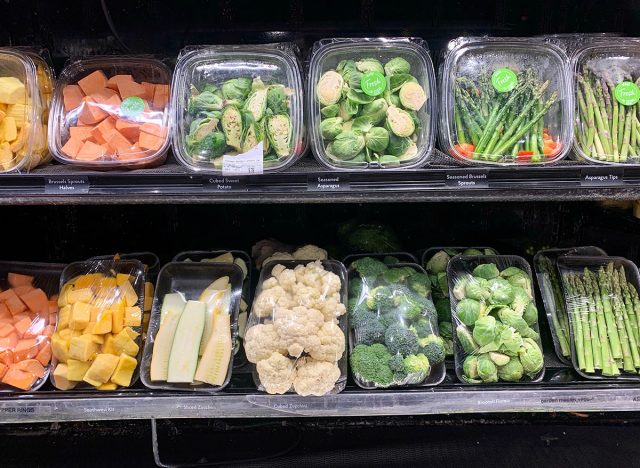
Always check prices, as pre-packaged produce can be much more expensive than buying it fresh from the shelf. “Compare the prices of loose and prepackaged produce,” says Fresh Farms. “When compared to prepackaged options, buying loose, single-unit produce is frequently a better value. Choosing your own produce allows you to choose higher-quality fruits and vegetables.”
Bagged Salad Danger
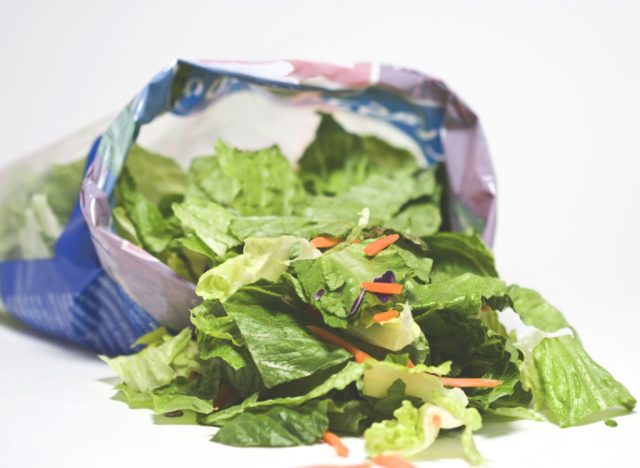
Speaking of bagged produce, be very wary of bagged salads due to an increased risk of E. coli. “While consumers expect convenience and safety, the reality is that prewashed bagged greens remain one of the riskiest items in the grocery store due to contamination risks throughout the supply chain,” says Darin Detwiler, a professor of food policy at Northeastern University.
Pesticide Problems
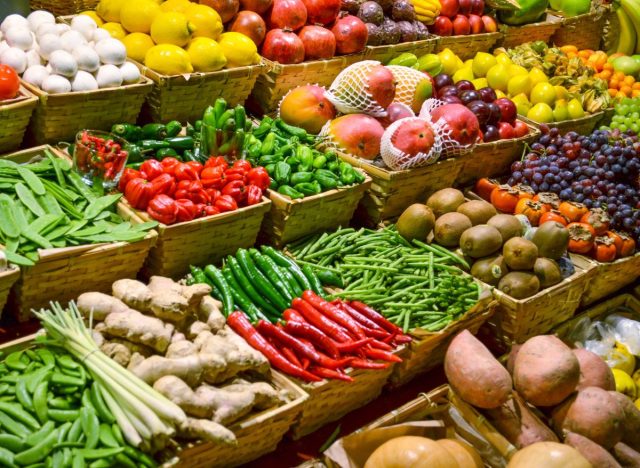
Be aware of which fruits and vegetables have the highest amounts of pesticides, as per the EWG‘s Dirty Dozen list. “These chemicals are used when growing produce or after it’s harvested, and can remain on items when they’re sold. This includes fungicides like pyrimethanil and fludioxonil, which may be linked to hormone disruption, as well as pyrethroids like permethrin and cypermethrin, which recent studies in people have linked to harm to the developing nervous system,” the EWG says.