If You Can Hold a Plank This Long After 60, Your Core Strength Is Top-Tier
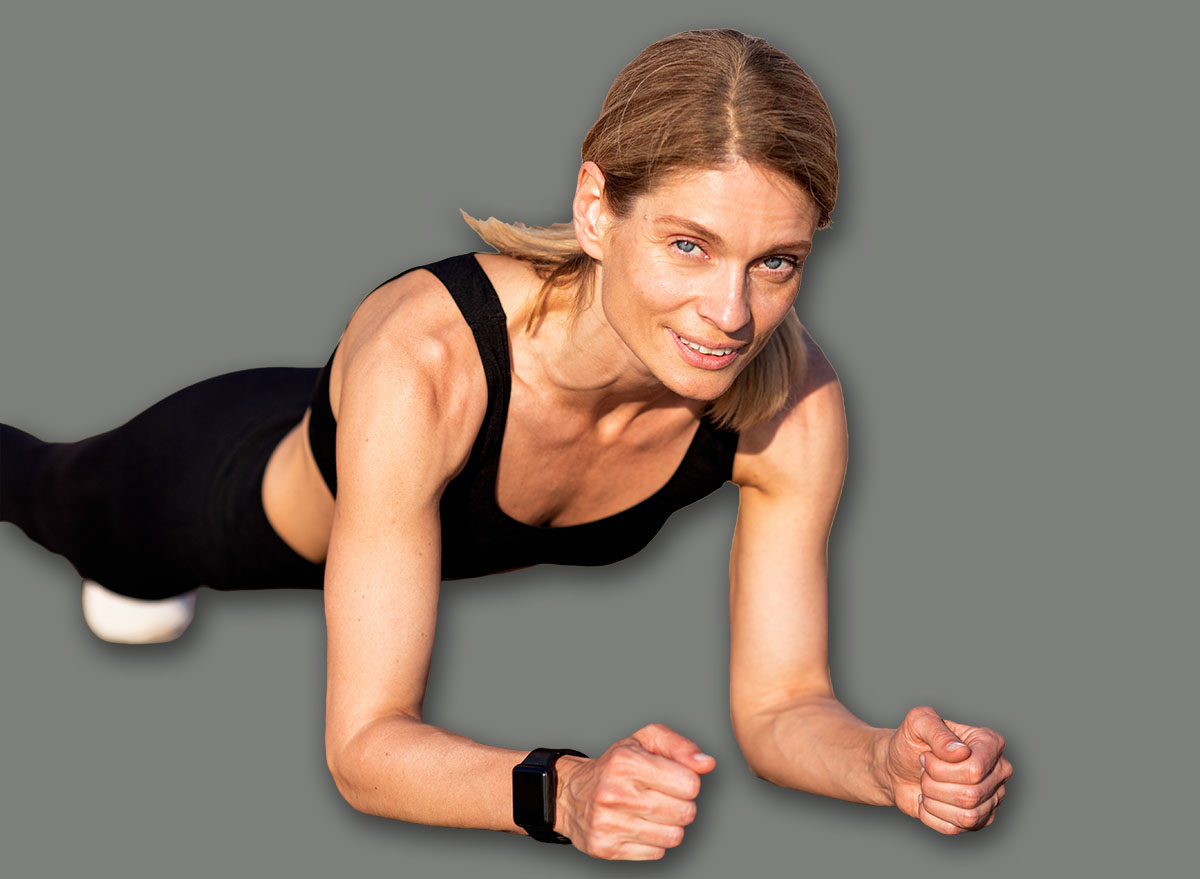

A strong plank has a distinct look. Your body stays long, your hips hold steady, your ribs stay tucked, and the whole position feels intentional. It’s one of those exercises that looks quiet from the outside, but once you’re in it, every second asks for more focus. The clock starts moving slowly, your shoulders start working, and your midsection has to keep the whole system connected.
After 60, that connection makes a real difference. Your core helps you stay upright, move with control, and handle daily tasks with more confidence. Walking through a store, carrying groceries, standing for longer stretches, and getting up from the floor all require your midsection to support your spine while the rest of your body moves. A plank gives you a simple way to see how well that support system holds together.
From a coaching standpoint, I use planks because they reveal more than most people expect. I’m looking at how someone creates tension, how well they breathe under tension, and how long they can keep their hips and ribs organized. Time matters, but position tells the bigger story. A long hold only means something when the body stays lined up from start to finish.
That’s why this test works so well. It measures core endurance, body control, and the ability to maintain tension as fatigue builds. Up next, we’ll break down why the plank deserves a spot in your routine, how to perform it correctly, what your hold time says about your strength, and how to build a stronger core after 60.
Why the Plank Builds Core Strength After 60
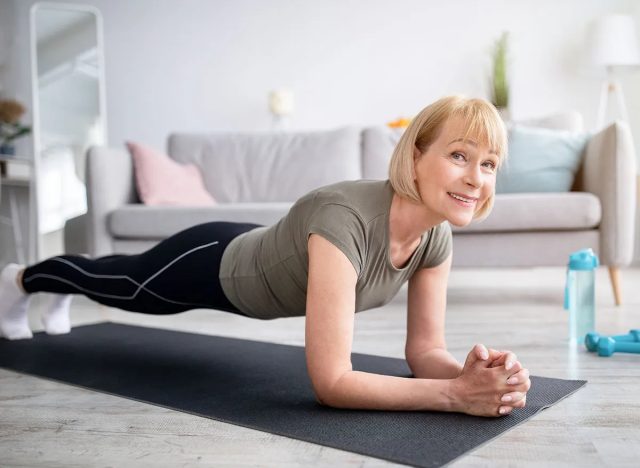
The plank trains your core to hold your spine and pelvis in a strong, steady position. Your abs brace the front of your body, your obliques help keep you from shifting side to side, and your glutes help control your pelvis. Your shoulders and upper back also stay active to support your body as you move your arms.
That full-body connection makes the plank valuable for functional strength. Your core acts as the link between your upper and lower body. When that link is strong, force transfers more effectively through your body during walking, lifting, carrying, and getting up from the ground. The plank reinforces that connection without requiring much equipment or a complicated setup.
The plank also trains endurance in the muscles that support posture. Holding the position requires constant tension while you breathe and stay still. As time builds, the goal is to keep your body organized without letting your hips sag, your lower back arch, or your shoulders collapse. A strong plank shows your core can maintain control while fatigue builds.
How to Perform a Proper Plank Hold
A strong plank starts with alignment. You want your elbows stacked under your shoulders, your ribs pulled down, and your hips in line with the rest of your body. Once you create that position, the focus shifts to maintaining tension through your core, glutes, and upper back. The cleaner your setup, the more accurate your test becomes.
How to Do It:
- Place your forearms on the floor with your elbows directly under your shoulders.
- Extend your legs behind you with your feet about hip-width apart.
- Brace your core by tightening your midsection and pulling your ribs down.
- Squeeze your glutes to keep your hips level with your shoulders.
- Hold a straight line from your head through your hips to your heels.
- Breathe steadily while maintaining the same position for the entire hold.
A quick note on the movement standard. The hold counts when your body stays in a straight line, and your hips remain level. If your hips drop, your lower back arches, or your shoulders lose position, shorten the hold and build from there.
Best Variations: High Plank, Side Plank, Incline Plank, RKC Plank, Stability Ball Plank.
Your plank time gives you a simple look at how well your core maintains tension. The number matters most when your position stays consistent. Keep your ribs down, hips level, glutes engaged, and breathing steady from start to finish.
- Under 30 seconds: You’re building the foundation. Focus on learning to brace, stay aligned, and maintain a clean position during shorter sets.
- 30 to 60 seconds: This is a solid base. Your core can support your body with good control, and you’re developing the endurance needed for daily movement.
- 60 to 90 seconds: You’re in strong territory. Your core holds position well, your hips stay steady, and your body maintains tension as the hold becomes more demanding.
- 90+ seconds: This is top-tier. Your core, hips, and shoulders work together with impressive endurance. Holding this position with steady form shows excellent strength and control after 60.
How to Build Core Strength and Plank Endurance
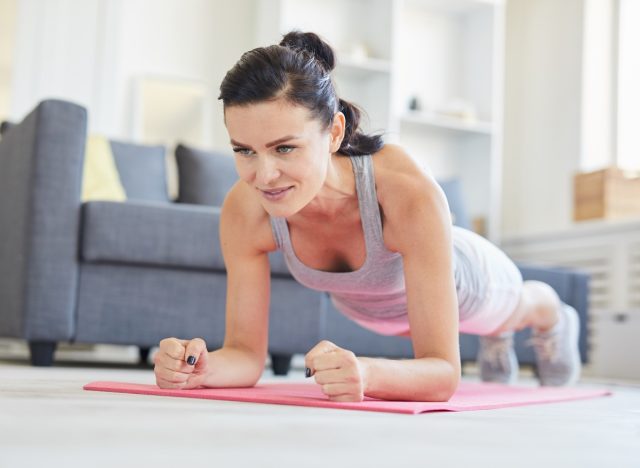
Building a better plank comes down to improving the tension you can maintain. The goal is a strong brace, steady hips, and a consistent body position from start to finish. This type of strength carries into daily movement because your core learns to support your spine while your arms and legs do their jobs. Stronger plank endurance can also help improve posture, control, and confidence during longer periods of activity. A few focused sessions each week can make the plank feel more stable and help your hold time climb.
- Practice planks regularly: Start with two to three sets a few times per week. Keep each hold clean and controlled.
- Set your position before starting the timer: Stack your elbows under your shoulders, pull your ribs down, and squeeze your glutes.
- Use shorter, higher-quality holds: Sets of 20 to 40 seconds with strong form lay the foundation for longer holds.
- Train your breathing: Slow, steady breaths help you maintain tension without bracing so hard that you burn out early.
- Strengthen your glutes and hips: Bridges, hip thrusts, and carries help support better pelvic control during planks.
- Add anti-rotation work: Pallof presses, suitcase carries, and side planks build the stability that keeps your body from shifting.
- Progress gradually: Add five to 10 seconds at a time as long as your position stays consistent.
- Retest every few weeks: A simple retest gives you a clear target and helps you track progress without overcomplicating your training.
The plank gives you more than a core exercise. It shows how well your body can create tension, hold alignment, and stay steady as fatigue builds. If you can hold a clean plank past 90 seconds after 60, your core strength is in a top-tier range, and your body has a strong foundation for the movement you rely on every day.
References
- Eimiller, Kira et al. “The Core of the Issue: Plank Performance and Pain in the Lower Back.” Journal of clinical medicine vol. 14,11 3926. 3 Jun. 2025, doi:10.3390/jcm14113926
- Park, Sihwa et al. “Plank exercise improves respiratory capacity through positive changes in body composition, abdominis function, and autonomic nerves’ activities.” European Journal of Sport Science vol. 24,3 330–340. 15 Feb. 2024, doi:10.1002/ejsc.12086