If You Can Do This Many Pushups After 60, Your Upper-Body Strength Is Stronger Than 90% of Peers


Upper-body strength after 60 shapes how you move through everyday life. It determines how easily you push yourself up from a chair, carry groceries, or brace yourself during a fall. I’ve coached clients in this age group for years, and one pattern shows up again and again, those who maintain the ability to move their own body weight tend to hold onto muscle far longer than those who rely only on machines. That’s exactly why the pushup remains one of the most honest and useful strength tests you can use.
Pushups demand more than just arm strength. They challenge the chest, shoulders, triceps, and core all at once while requiring full-body control. Unlike seated exercises, there’s no support system to hide weaknesses. If your core sags or your arms fatigue early, the movement exposes it immediately. That’s what makes this such a powerful benchmark.
Many people underestimate how difficult strict pushups actually become over time. That’s not a failure, it’s feedback. And the good news is, progress here tends to come quickly when you train it correctly.
If you want a clear, no-nonsense measure of your upper-body strength, this test delivers.
How to Perform the Pushup Properly
Form determines everything. I’ve seen plenty of people count reps that don’t actually reflect their true strength. When you clean up the technique, the number might drop—but the result becomes far more meaningful.
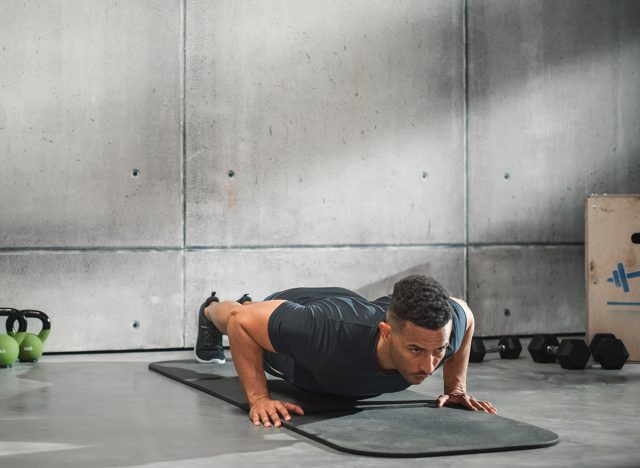
Start in a strong plank position with your hands slightly wider than shoulder-width apart. Keep your body in a straight line from head to heels, with your core braced and glutes engaged. Lower your chest toward the floor under control, then press back up without letting your hips drop or your elbows flare excessively.
Every rep should look the same from start to finish. That consistency separates real strength from momentum.
How to Do It
- Place hands slightly wider than shoulders
- Extend legs into a plank
- Brace your core and squeeze glutes
- Lower chest toward the floor
- Press back up fully
- Maintain strict form throughout.
What Your Number Means After 60
Pushup performance varies based on training history, but clear benchmarks help you understand where you stand. These ranges assume strict form and continuous reps without long breaks.
- Under 5 reps: Strength needs rebuilding
- 5–10 reps: Below average for this age group
- 10–20 reps: Solid, functional strength
- 20–30 reps: Strong upper-body endurance
- 30+ reps: Stronger than roughly 90% of peers
If you can hit 30 clean pushups, you’re operating at a level most people over 60 never reach. That reflects not just arm strength, but strong coordination and core stability as well.
How to Improve Your Pushup Count
Improvement comes from consistency and smart progression, not maxing out every day. I coach clients to train pushups three times per week using controlled sets that stop just before failure. That approach builds strength without overloading the joints.
If full pushups feel too difficult, elevate your hands on a bench or sturdy surface. This reduces the load while allowing you to maintain proper form. As strength improves, gradually lower the height until you’re back on the floor.
Tempo also matters. Lower yourself for three seconds and press up with control. That increased time under tension strengthens the chest, shoulders, and triceps more effectively than rushing through reps.
Supporting exercises like dumbbell presses, rows, and shoulder work help build the muscles involved in pushing strength. When those muscles get stronger, your pushup count climbs faster than expected.
Stay consistent, focus on quality reps, and progress gradually. I’ve seen clients double their pushup numbers within weeks once they commit to the process, that strength carries over into everything else they do.