If You Can Walk This Many Steps in 10 Minutes, You’re in Peak Cardio Shape at Any Age


I’ve worked in the fitness industry for over 40 years, as a personal trainer and now educating the next generation of fitness professionals through TRAINFITNESS, the leading provider of in-person and online personal training courses in the UK. The simplest yet effective advice I’ve always given to clients is just to move. When it comes to movement, walking is among the easiest; however, it’s surprisingly effective and offers significant benefits for both physical and mental health. Read on to discover how a simple 10-minute walking test can reveal your true cardiovascular fitness level and what you can do to improve it.
Why Walking Is Perfect for the Busy Holiday Season

Walking doesn’t need special equipment, a gym membership or even workout clothes. You can do it between shopping trips, after meals or while catching up with family. No setup time, no travel to a facility and you don’t need to block out an hour in your schedule.
Our bodies don’t care if we walk for 30 minutes in one go or break it up into chunks across the day. The benefits are still there. This flexibility is really helpful during holidays when our routines often go out of the window.
Walking is also brilliant for dealing with all that holiday stress and the inevitable food overload that comes with this time of year. Don’t worry—you’re not alone in this! A quick stroll after you’ve demolished a massive meal actually helps your body handle that glucose spike way more efficiently. Plus, it’s a lifesaver when family dynamics start getting a bit tense. It clears your head beautifully. And here’s the thing—you’re burning some extra calories without it feeling like you’re punishing yourself for actually enjoying the festivities.
Most importantly, though, you can get other people involved. Walking with your relatives or mates turns exercise into proper socialising rather than just another thing on your endless to-do list. You’re moving your body and connecting with people at exactly the same time—it’s brilliant, really.
Why the 10-Minute Walking Test Works

This test measures how efficiently your heart and lungs deliver oxygen to your working muscles under continuous effort. Walking as far as possible in 10 minutes at a pace you can maintain pushes your cardiovascular system hard enough to reveal its current capacity.
The distance you cover directly reflects your aerobic fitness. Better cardiovascular conditioning means your heart pumps more blood with each beat, your lungs exchange oxygen more efficiently, and your muscles extract and use that oxygen better. All of this translates into covering more ground in those 10 minutes.
Walking is weight-bearing and uses large muscle groups continuously, which makes it an excellent cardiovascular challenge without the impact stress of running. Almost everyone can walk at a challenging pace, which makes this test accessible regardless of your starting fitness level.
The test is repeatable and measurable. You can do it monthly to track genuine progress. The distance you cover doesn’t lie—it’s objective feedback about how your cardiovascular system is performing.
How to Perform the Test Correctly
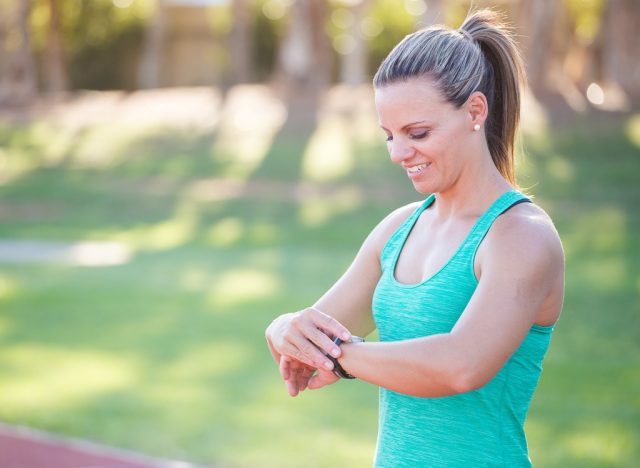
Find a flat route where you can walk without stopping. A track works perfectly, but any safe path with minimal interruptions will do. Measure the distance beforehand using a map app or fitness watch so you know exactly how far you’ve gone.
Warm-up:
- Walk at an easy pace for 5 minutes
- This gets blood flowing to your muscles and prepares your cardiovascular system for the harder effort to come
During the test:
- Start your timer and walk as fast as you can maintain for the full 10 minutes
- You’re looking for a pace that feels challenging but sustainable—you shouldn’t be able to have a comfortable conversation, but you shouldn’t be gasping either
- Your breathing should be heavy and deliberate
- Keep your posture upright with your shoulders relaxed
- Swing your arms naturally to help drive your pace
- Don’t let your form break down as you get tired
After the test:
- When the timer hits 10 minutes, note exactly where you are and measure the total distance
- Record both the distance and how you felt during the test
Common Mistakes to Avoid

Don’t start too fast—this is the biggest mistake you can make. If you go out at a pace you can’t maintain, you’ll slow down significantly in the last few minutes and your total distance will suffer. Aim for consistent speed throughout, not a sprint followed by a crawl.
Avoid routes with hills or uneven surfaces, as these skew your results. Uphills slow you down and downhills artificially inflate your distance. Stick to flat ground for accurate measurements, you can compare over time.
Don’t stop to check your phone, tie your shoe or catch your breath—this invalidates the test. Those pauses give your heart rate time to drop, which defeats the purpose of measuring sustained cardiovascular effort.
Don’t take the test when you’re already fatigued from other activities or haven’t eaten properly—this will drag your results down. You need to be reasonably rested and fuelled to see what your cardiovascular system can actually do.
Wear proper footwear. Dress shoes, sandals and worn-out trainers affect your walking mechanics and limit your pace. Proper walking or running shoes really make a difference.
What Your Results Mean for Your Health

Most people will cover between 800 and 1,200 metres in 10 minutes. Here’s how to interpret your distance:
1,000 metres or more: Your cardiovascular fitness is solid for daily activities and you’ve got a good base to work from.
Between 800 and 1,000 metres: This suggests average fitness. You can handle normal daily activities without much trouble, but there’s definitely room to improve your cardiovascular capacity. You’d benefit from regular walking or other cardio activity.
Under 800 metres: This indicates your cardiovascular system needs work. This doesn’t mean you’re in immediate danger, but it does mean everyday activities probably feel harder than they should. Climbing stairs leaves you breathless. Walking any distance tires you out quickly. This level of fitness predicts higher risk for cardiovascular disease and limits your independence as you age.
The number matters less than what it reveals about your daily function. Can you keep up with friends on a walk? Can you climb several flights of stairs without needing to stop? Can you do physical activities without feeling exhausted? Your test result should align with how these activities feel.
Does Age Affect Your Target?

Age does matter, but not as much as most people think. A 70-year-old won’t cover the same distance as a 30-year-old at their respective maximum efforts, but the gap shouldn’t be enormous if both people have maintained their fitness.
What really matters is whether your cardiovascular fitness supports your independence and quality of life. A 65-year-old covering 900 metres might have excellent functional fitness for their age, while a 45-year-old covering the same distance might be significantly below where they should be.
After 50, your goal should be maintaining as much cardiovascular capacity as possible rather than chasing arbitrary numbers. If you’re covering 800-1,000 metres in your 60s or 70s, you’re doing well. If you’re under 700 metres at any age, that’s a red flag that needs addressing.
The real measure is how your result changes over time. If you’re declining by 50-100 metres every few years, that’s a problem regardless of your age. If you’re maintaining or improving your distance, you’re on the right track.
A Simple Plan to Improve Your Results

Weeks 1-3: Build your base
- Walk for 20-30 minutes at a pace where you can still talk but your breathing is noticeably heavier than normal
- Do this 4-5 times per week
- This builds your aerobic base without beating you up
Weeks 3-5: Add intervals
- Walk at your test pace for 2-3 minutes, then recover at an easy pace for 2-3 minutes
- Repeat 4-6 times
- Do this twice a week while keeping your other walks at a steady pace
Weeks 5-6: Extend the intervals
- Increase your hard intervals to 4-5 minutes with equal recovery time
- You’re training your body to sustain harder efforts for longer periods
After 6 weeks:
- Retest—you should see an improvement of 50-150 metres depending on your starting point
- If you don’t, you’re either not walking hard enough during the intervals or not doing it frequently enough
The key is consistency. Missing sessions sets you back more than you’d think. Four walks per week done consistently will beat seven walks per week that you only manage for two weeks before giving up.