If You Can Do These 5 Exercises After 50, Your Biological Age Is 10 Years Younger
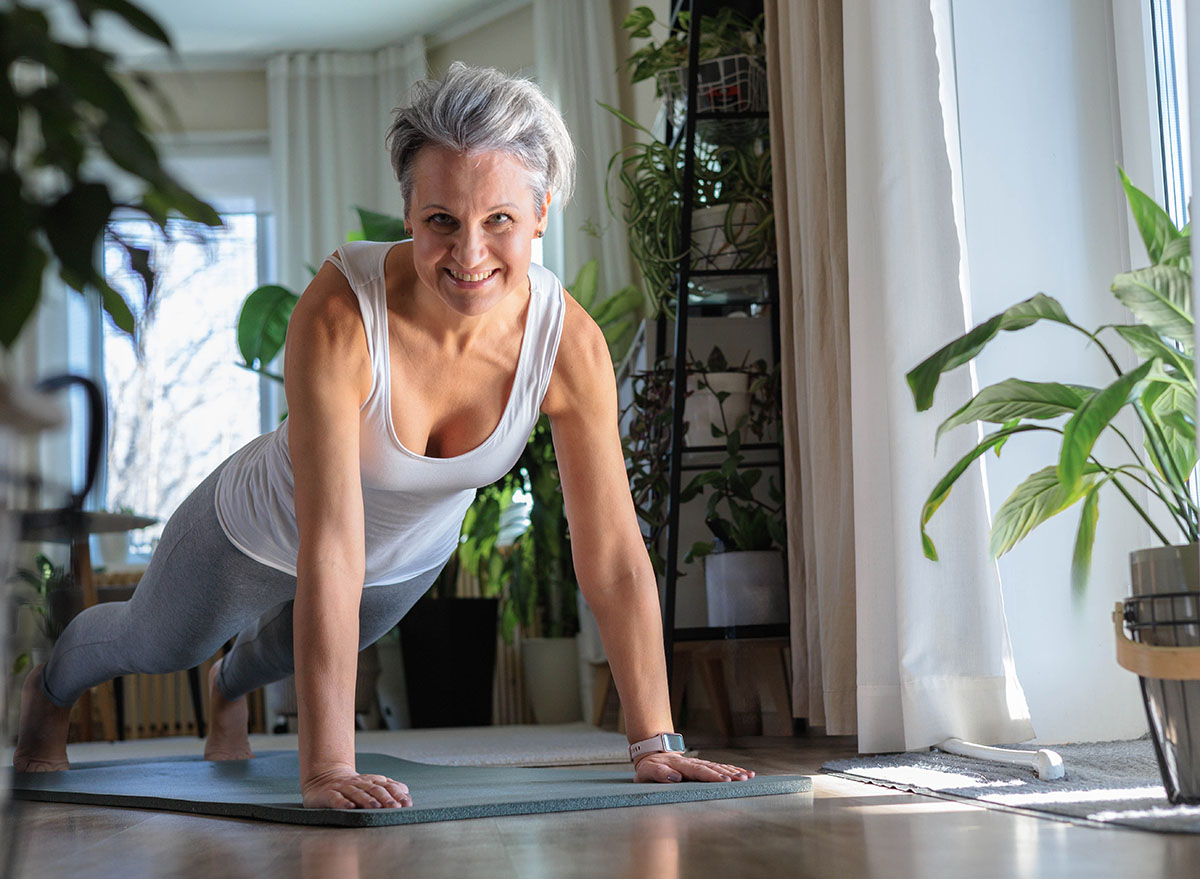

They never measure biological age when you walk into the gym or step onto a trail. They measure it every time you stand up off the floor, climb the stairs, lift groceries, or steady yourself on an uneven sidewalk. Real aging shows up through movement quality, joint integrity, strength endurance, and how fast you recover between everyday demands. After 50, your training stops being about flashy showpieces and starts becoming a personal performance standard for how capable you remain in the real world.
Strength markers tell a deeper story than body weight or the mirror. Your ability to pull your body upward, push from the floor, stabilize on one arm, step powerfully onto a box, or hinge heavy weight with one hand reveals how well your muscles coordinate with your nervous system and connective tissues. These patterns directly reflect joint health, balance, power transfer, and total-body resilience. Consistently passing these tests means your tissues respond like those of someone much younger, your metabolism remains responsive, and your nervous system continues to fire quickly and efficiently.
The five exercises below represent a complete functional snapshot of youthfulness after 50. Each one challenges a different but essential physical quality, ranging from upper-body strength to unilateral stability and grip-based loading. If you can perform all of them with solid technique and consistency, your body moves through the world with a biological advantage that most of your peers no longer maintain.
Pull-Ups
Pull-ups are one of the clearest indicators of preserved strength after 50 because they require a high strength-to-body-weight ratio. They load your shoulders through a full range of motion while requiring your core to stabilize without external support. Pull-ups also strengthen postural muscles that counteract years of sitting, driving, and device use. Regular work here improves shoulder resilience, grip endurance, and upper-back density, which protect against neck and shoulder pain. Maintaining this capacity keeps you able to climb, pull, lift, and control your body weight with confidence.
Muscles Trained:
Latissimus dorsi, biceps, rear deltoids, lower trapezius, core stabilizers
How to Do It:
- Grip the bar slightly wider than shoulder width with your palms facing away from you.
- Hang with your arms fully extended and brace your core tight.
- Pull your chest toward the bar by driving your elbows toward your ribs.
- Pause briefly when your chin clears the bar without craning your neck.
- Lower yourself with control until your arms fully straighten again.
Recommended Sets and Reps: Perform 3 to 5 sets of 3 to 8 reps. Rest for 90 seconds between each set.
Best Variations: Assisted pull-up, banded pull-up, eccentric pull-up
Form Tip: Keep your chest up and ribs down to maintain a strong pull-up and keep your shoulders aligned.
Push-Ups
Push-ups measure full-body tension and upper-body pressing endurance in a joint-friendly format. Your shoulders, chest, arms, core, and hips must work together to maintain straight posture throughout every repetition. This pattern builds resilience for pushing activities you use daily, such as rising off the floor, bracing during trips or stumbles, and supporting yourself during transitional movements. Higher push-up capability also correlates with cardiovascular health and muscular stamina. Mastering push-ups preserves joint control while reinforcing coordination of total-body strength.
Muscles Trained:
Pectorals, triceps, front deltoids, core stabilizers, glutes
How to Do It:
- Plant your hands under your shoulders and extend your legs behind you.
- Brace your core and squeeze your glutes to hold a straight body line.
- Lower your chest toward the floor while keeping your elbows angled slightly back.
- Press the floor away until your arms fully extend.
- Reset your brace before your next rep.
Recommended Sets and Reps: Perform 3 to 5 sets of 10 to 20 reps. Rest for 60 seconds between each set.
Best Variations: Incline push-up, decline push-up, tempo push-up
Form Tip: Lock your ribcage down to your beltline to prevent sagging hips or a flared posture.
RELATED: 5 Best Daily Exercises That Make Your Body Younger Than Your Age After 60
Step-Ups
Step-ups showcase unilateral leg strength while reinforcing balance and joint stability. Each repetition simulates the demands of climbing stairs, stepping over curbs, and accelerating during walks or hikes. Training this pattern after 50 protects knee integrity by promoting even weight distribution between the hip and quadriceps. Strong step-ups also correlate with reduced fall risk because they challenge coordination alongside power production. Maintaining this movement preserves the ability to move confidently on variable terrain.
Muscles Trained: Quadriceps, glutes, hamstrings, calves, core stabilizers
How to Do It:
- Place one foot firmly on a box or step around knee height or lower.
- Drive through your lead foot to lift your body upward.
- Fully extend your hip and knee at the top while staying tall.
- Lower back under control to the starting position.
- Switch legs after completing the prescribed reps.
Recommended Sets and Reps: Perform 3 to 4 sets of 8 to 12 reps per leg. Rest for 75 seconds between each set.
Best Variations: Weighted step-up, deficit step-up, lateral step-up
Form Tip: Push the floor down through your entire foot instead of bouncing off the trailing leg.
Single-Arm Plank
The single-arm plank challenges cross-body stability in a way standard planks cannot. Your shoulders, obliques, and hips must coordinate to resist rotation while maintaining total-body rigidity. This pattern protects spinal mechanics and enhances balance reactions that become increasingly important with age. Training this movement improves the efficiency with which force is transferred from the ground through your torso during walking, lifting, and athletic motion. A stable plank foundation supports everything from joint health to posture maintenance.
Muscles Trained: Obliques, rectus abdominis, transverse abdominis, shoulders, glutes
How to Do It:
- Set up in a push-up plank position.
- Shift your weight onto one arm while keeping your hips level.
- Extend your free arm forward or alongside your body.
- Hold steady without rotating or sagging.
- Switch arms after the prescribed hold time.
Recommended Sets and Reps: Perform 3 to 4 sets of 20 to 40 seconds per side. Rest for 45 seconds between each set.
Best Variations: Feet-wide single-arm plank, single-arm plank drag, elevated single-arm plank
Form Tip: Imagine balancing a glass of water across your low back to maintain level hips.
Suitcase Deadlift
The suitcase deadlift reinforces real-world lifting patterns through offset loading. Holding a single weight builds grip strength while training your core to prevent side bending under load. This lift strengthens the hip hinge and reinforces lateral stability, protecting your spine during daily lifting tasks. It teaches safe mechanics for carrying groceries, bags, and equipment without compromising posture. Maintaining capability here improves spinal resilience while preserving full lower-body strength.
Muscles Trained: Glutes, hamstrings, quadriceps, obliques, forearms
How to Do It:
- Stand with a dumbbell or kettlebell beside your foot.
- Hinge at your hips and grip the weight while keeping your chest tall.
- Drive through your heels to stand fully upright.
- Lower the load back to the floor with controlled tempo.
- Switch hands after completing prescribed reps.
Recommended Sets and Reps: Perform 3 to 4 sets of 6 to 10 reps per side. Rest for 90 seconds between each set.
Best Variations: Suitcase carry, pause suitcase deadlift, elevated suitcase pull
Form Tip: Keep your rib cage stacked over your pelvis to prevent side lean.
Best Tips for Preserving Youthful Strength After 50

Your biological age reflects what your tissues can still handle, adapt to, and recover from. These exercises build the foundation, but how you train them determines long-term success. Consistency and intelligent progression preserve physical capacity far longer than heroic one-off workouts. Daily habits related to movement quality, recovery, and nutrition reinforce the work you do in the gym or at home.
- Train full-body patterns weekly: Rotate through pulling, pushing, hinging, stepping, and stabilization movements each week to maintain balanced strength.
- Progress small details: Increase reps, load, or range of motion slowly rather than chasing large jumps that spike joint stress.
- Prioritize clean technique: Quality reps reinforce joint alignment and maintain healthy connective tissues.
- Recover like it matters: Sleep, hydration, and daily light movement accelerate muscle repair and maintain nervous system readiness.
- Fuel muscle maintenance: Consume adequate protein and a balanced mix of carbohydrates to support recovery and preserve lean tissue after training.