If You Can Walk This Many Steps in 60 Seconds After 60, You’re in Great Shape


Walking might be the most accessible fitness test we have. You can do it outside, around the neighborhood, at a park, through a grocery store, or on a walking pad at home. It doesn’t require a gym, a long warm-up, or much planning. After 60, that low barrier matters because the best exercise is usually the one you can repeat often.
Walking also gives you a lot back for the effort. It supports cardiovascular fitness, increases daily calorie burn, keeps your joints moving, and helps build an aerobic base you can use everywhere else. A brisk walk may look simple, but your heart, lungs, legs, hips, core, and posture all have to work together to keep you moving well.
A 60-second walking test gives you a practical, low-stress way to measure fitness. It won’t capture everything, but it does show how well your body manages pace, coordination, posture, and steady effort in a short window. Walking speed and step rhythm can reflect broader movement quality, especially after 60. When your body can move briskly and stay controlled for the full minute, it points to solid conditioning and strong day-to-day mobility.
The goal here is simple. Count how many steps you can take in 60 seconds while keeping your posture tall and your pace steady. Below, we’ll break down what this test reveals, how to perform it correctly, what your score means, and how to improve your walking speed and conditioning.
What a 60-Second Walking Test Reveals

A 60-second walking test gives you a practical look at movement efficiency. Your step count reflects how well your stride, posture, coordination, and pace work together. You’re not sprinting or turning this into a max-effort drill. You’re walking briskly, staying controlled, and seeing how many clean steps you can take in one minute.
This also gives you a small window into your cardiovascular fitness. Your heart and lungs have to support the pace while your legs keep moving. A higher step count usually means you can maintain a quicker turnover without your rhythm falling apart. Walking also adds real value to your weekly activity. A steady pace can burn around 80 to 120 calories per mile for many adults, depending on body size, speed, and terrain.
As the minute goes on, the goal stays simple: keep your steps quick, stay tall, and hold your rhythm. When you can maintain that pace from start to finish, it shows your body handles steady movement well. That’s a strong sign for daily activity, longer walks, travel days, and anything else that keeps you on your feet.
How to Perform the 60-Second Walking Test
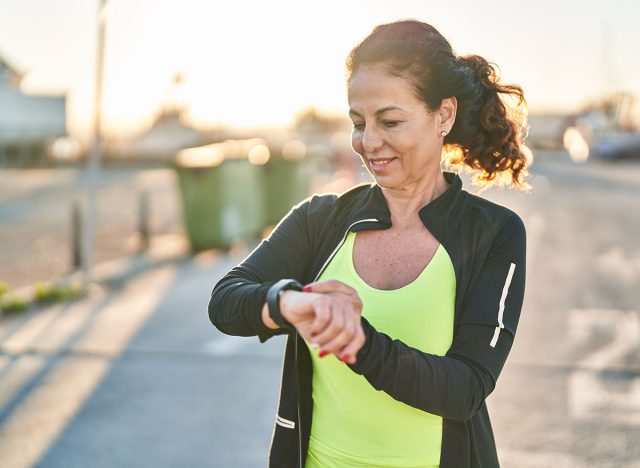
A clean setup keeps the test simple and repeatable. You can walk in place, walk across a flat surface, use a hallway, step outside, or use a walking pad. Pick the same setup each time you retest so your numbers stay consistent.
How to Do It:
- Stand tall with your feet under your hips.
- Set a timer for 60 seconds.
- Walk at a brisk, steady pace.
- Count each step every time one foot hits the ground.
- Keep your posture tall and your arms swinging naturally.
- Record your total step count when the timer ends.
Movement Standard: A step counts each time one foot contacts the ground while you maintain a brisk, controlled walking rhythm. Keep your posture tall, avoid shuffling, and use the same setup each time you test.
Best Variations: Walking in Place, Hallway Walk, Outdoor Flat Walk, Track Walk, Walking Pad Test.
Walking Test After 60: What Your Step Count Means
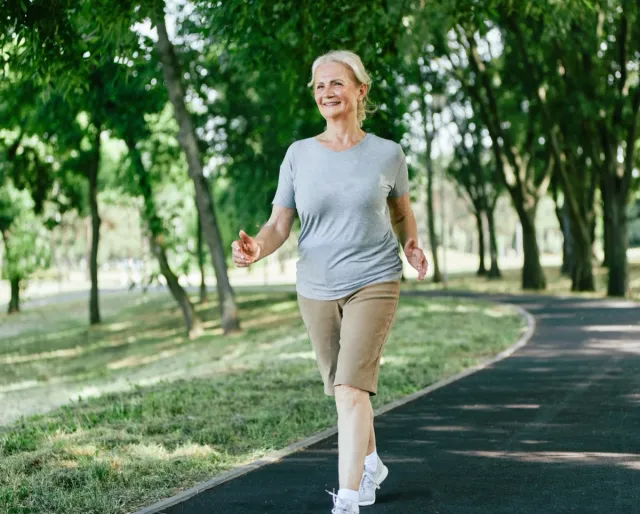
Your step count should come from a steady, controlled effort. Keep your feet moving, your posture tall, and your pace consistent for the full minute. If you’re testing on a walking pad or treadmill, use the same speed and setup each time to track progress clearly.
- Under 80 steps: You’re building your base. Focus on posture, rhythm, and regular walking to help your body get more comfortable with sustained movement.
- 80 to 110 steps: This is a solid range after 60. Your walking rhythm is steady, and your body can handle a full minute of brisk movement with good control.
- 111 to 130 steps: You’re in great shape. Your coordination, stride, and conditioning work together well, and you can maintain a quicker pace without losing rhythm.
- 131+ steps: This is excellent. A score in this range shows strong walking speed, solid conditioning, and efficient movement for your age group.
How to Improve Walking Speed and Conditioning After 60

Improving your 60-second step count starts with walking more often and paying attention to how you move. You don’t need to turn every walk into a workout. Some walks can stay easy, while others can include short bursts where you pick up the pace. Over time, your stride gets smoother, your breathing feels more controlled, and faster walking starts to feel more natural. The biggest wins usually come from consistency, smart pacing, and small improvements that stack up week after week.
- Walk most days: Regular walking builds your aerobic base and helps your body handle longer efforts.
- Add short pace pickups: Walk faster for 20 to 30 seconds, then return to your normal pace. Repeat a few times during a walk.
- Keep your steps quick and light: A slightly quicker cadence often works better than overstriding.
- Use your arms: Let your arms swing naturally to help drive your rhythm and keep your stride coordinated.
- Stay tall: Keep your chest up, eyes forward, and posture relaxed so your steps stay smooth.
- Build longer walks gradually: Extra time on your feet improves endurance and makes faster paces feel easier.
- Use gentle inclines: Slight hills or treadmill inclines add a strength and cardio challenge without needing to run.
- Retest every few weeks: Use the same setup and count your steps for 1 minute to track progress clearly.
A strong 60-second walking score says your body can move quickly, stay coordinated, and maintain effort. If you can land in the 111 to 130 step range after 60, you’re in great shape. If you’re over 131 steps, your walking fitness sits in an excellent range.
References
- Ungvari Z, Fazekas-Pongor V, Csiszar A, Kunutsor SK. The multifaceted benefits of walking for healthy aging: from Blue Zones to molecular mechanisms. Geroscience. 2023 Dec;45(6):3211-3239. doi: 10.1007/s11357-023-00873-8. Epub 2023 Jul 26. PMID: 37495893; PMCID: PMC10643563.
- Kim K, Lee HY, Lee DY, Nam CW. Changes in cardiopulmonary function in normal adults after the Rockport 1 mile walking test: a preliminary study. J Phys Ther Sci. 2015 Aug;27(8):2559-61. doi: 10.1589/jpts.27.2559. Epub 2015 Aug 21. PMID: 26356048; PMCID: PMC4563314.