This 8-Minute Standing Routine Builds More Core Strength Than 30 Minutes of Crunches After 50
A strong core after 50 comes from movements that challenge your balance, posture, and stability. Standing exercises give your midsection a training effect that floor routines rarely touch. Your abs, obliques, and deep stabilizers work every second to keep your body aligned. This style of training doesn’t rely on long workouts or fancy equipment. It depends on tension, control, and real-world movement patterns that help you feel stronger in everything you do.
Most people associate core work with sit-ups and crunches, but your body responds with better strength when you stand tall and move with intent. Standing positions force your hips, spine, and shoulders to work together. This creates a full-body contraction that challenges every layer of muscle from your ribcage to your pelvis. You train your body to resist rotation, manage shifting forces, and hold a solid position during everyday tasks.
This routine takes only 8 minutes and targets your core from multiple angles. You’ll rotate, stabilize, and move through patterns that build real strength. Each exercise is suitable for any fitness level and requires only your bodyweight or light resistance. The following section outlines the whole workout and step-by-step coaching so you can bring the routine to life today.
The 8-Minute Standing Core Builder
What you need:
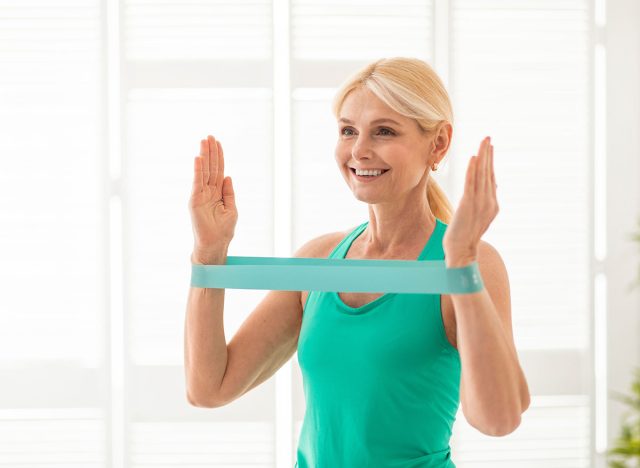
A light resistance band or a cable machine, and a small amount of space. The routine takes eight minutes from start to finish.
The Routine
- Standing Band Pallof Hold (3 sets of 20 to 25 seconds per side)
- Standing Cross-Body Knee Drive (3 sets of 12 reps per side)
- Standing Torso Rotations With Band (3 sets of 10 reps per side)
- Standing Hip Hinge Reach (3 sets of 10 reps)
Directions
Move from one exercise to the next with purpose. Keep your core braced, ribs aligned, and body tall. Rest only briefly when needed. Focus on smooth movement and steady breathing. You should feel your entire midsection working from the first minute.
Read on for the detailed instructions.
Standing Band Pallof Hold
This drill strengthens the deep stabilizers in your core by challenging your ability to resist rotation. As the band pulls your torso to the side, your abs and obliques create tension to keep you centered. This builds real-world strength, improving posture, balance, and overall control. You train your midsection to handle shifting forces, which helps protect your lower back during lifting, bending, and twisting.
How to do it:
- Stand tall with your feet shoulder-width apart.
- Hold a resistance band at your chest with tension pulling from the side.
- Brace your core and press your hands straight in front of you.
- Keep your torso still while the band tries to pull you off-center.
- Hold the position for the whole interval with steady breathing.
Best Variations: Tall-kneeling Pallof Hold, Pallof Press with slow reps, Overhead Pallof Hold
Standing Cross-Body Knee Drive
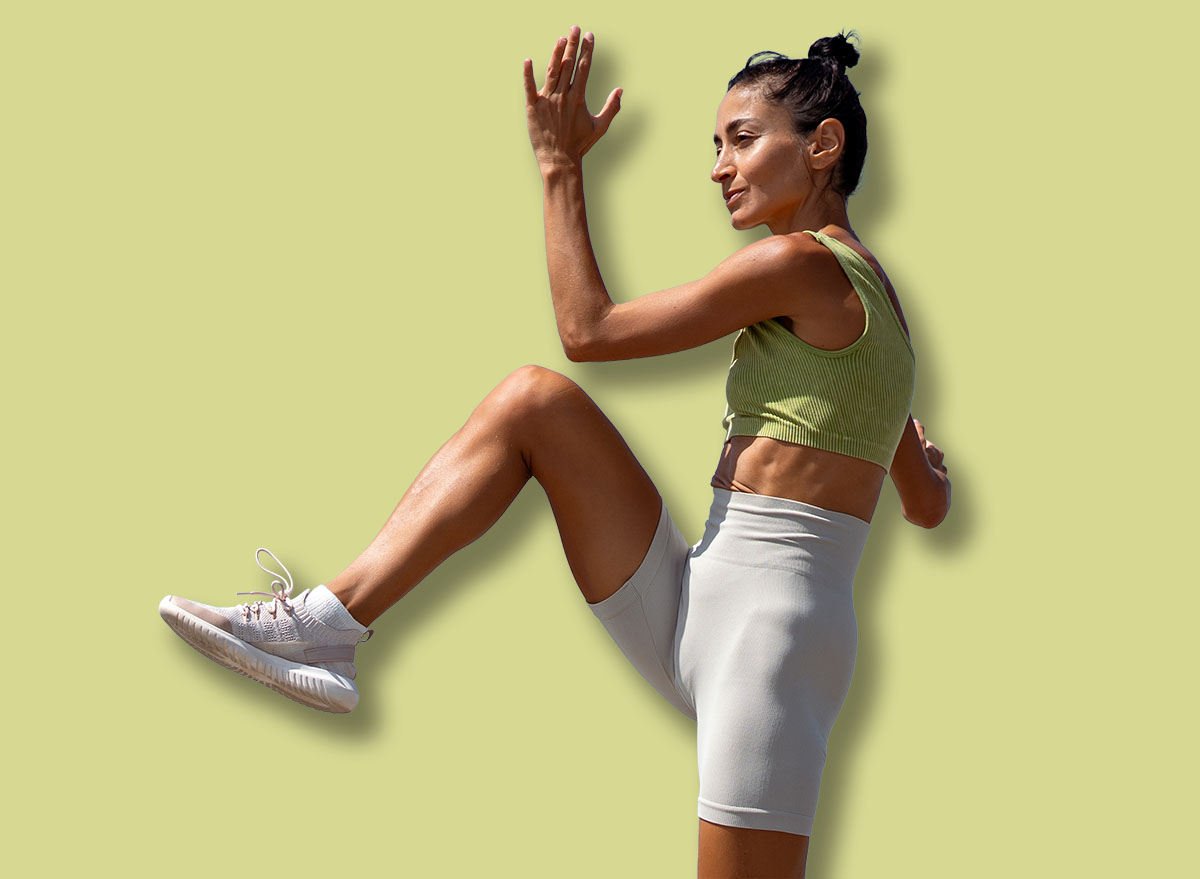
This move teaches your core to coordinate rotation, balance, and hip drive simultaneously. Your obliques fire as your knee moves upward, and your deep core muscles stabilize your spine every second. The movement pattern elevates your heart rate and increases calorie burn, which helps reveal a firmer midsection as your training progresses.
How to do it:
- Stand tall with your hands behind your head.
- Lift one knee toward the opposite elbow.
- Crunch your ribs toward your hip while staying tall.
- Return to the start position with control.
- Repeat all reps on one side, then switch.
Best Variations: Alternating knee-to-elbow, Slow-tempo knee drives, Knee drive with a light ankle weight
Standing Torso Rotations With Band
Your core thrives when you train rotation with intention. This exercise targets your obliques, hips, and deep spinal stabilizers. Rotational control is one of the most critical abilities to maintain strength after 50 because it supports everything from walking to carrying groceries. A controlled rotation builds tissue resilience and helps you move with more fluidity.
How to do it:
- Stand tall with your feet set and the band anchored at chest height.
- Hold the band with both hands and extend your arms slightly.
- Rotate your torso away from the anchor point.
- Keep your hips still and let your upper body drive the movement.
- Rotate back slowly and repeat.
Best Variations: High-to-low rotations, Low-to-high rotations, Single-arm band rotations
Standing Hip Hinge Reach
This pattern teaches your core to brace while your hips move through a strong hinge. Your lower back, glutes, and abs work together to hold a solid position. This creates tension that strengthens the midsection and improves your ability to bend, lift, and stabilize during real-life tasks. The reach adds lengthening tension across the posterior chain and demands greater control.
How to do it:
- Stand with your feet hip-width apart and reach your hands forward.
- Push your hips back while keeping your spine aligned.
- Reach slightly forward as your torso lowers.
- Drive through your feet to return to standing.
- Squeeze your glutes at the top to stabilize your hips.
Best Variations: Single-leg hinge reach, Hinge reach with light dumbbells, Tempo hinge with long pauses at the bottom
The Best Tips for Building Core Strength After 50

A strong core after 50 comes from consistent training that challenges more than your abs. Your midsection thrives when you train rotation, anti-rotation, balance, bracing, and hip control. Daily habits also influence how well your muscles recover and adapt. The following tips help you build strength that lasts and keeps your body feeling capable in every setting.
- Train across multiple planes: Include rotation, anti-rotation, side bending, and hip hinging in your weekly routine to strengthen every layer of your core.
- Prioritize posture during every rep: Keep your ribs stacked over your pelvis and avoid leaning to one side. This creates the strongest training effect.
- Use controlled breathing: Exhale during the hardest part of each movement to maintain tension and keep your spine stable.
- Add small bursts of movement throughout your day: Walks, stair climbs, and light mobility help your core stay active even outside the gym.
- Increase resistance gradually: Use heavier bands, longer hold times, or slower tempos as your control improves.
- Stay consistent: A few minutes of quality work several days per week builds more strength than long, inconsistent sessions.