If You Can Hold a Wall Sit This Long After 55, Your Lower-Body Strength Is Elite
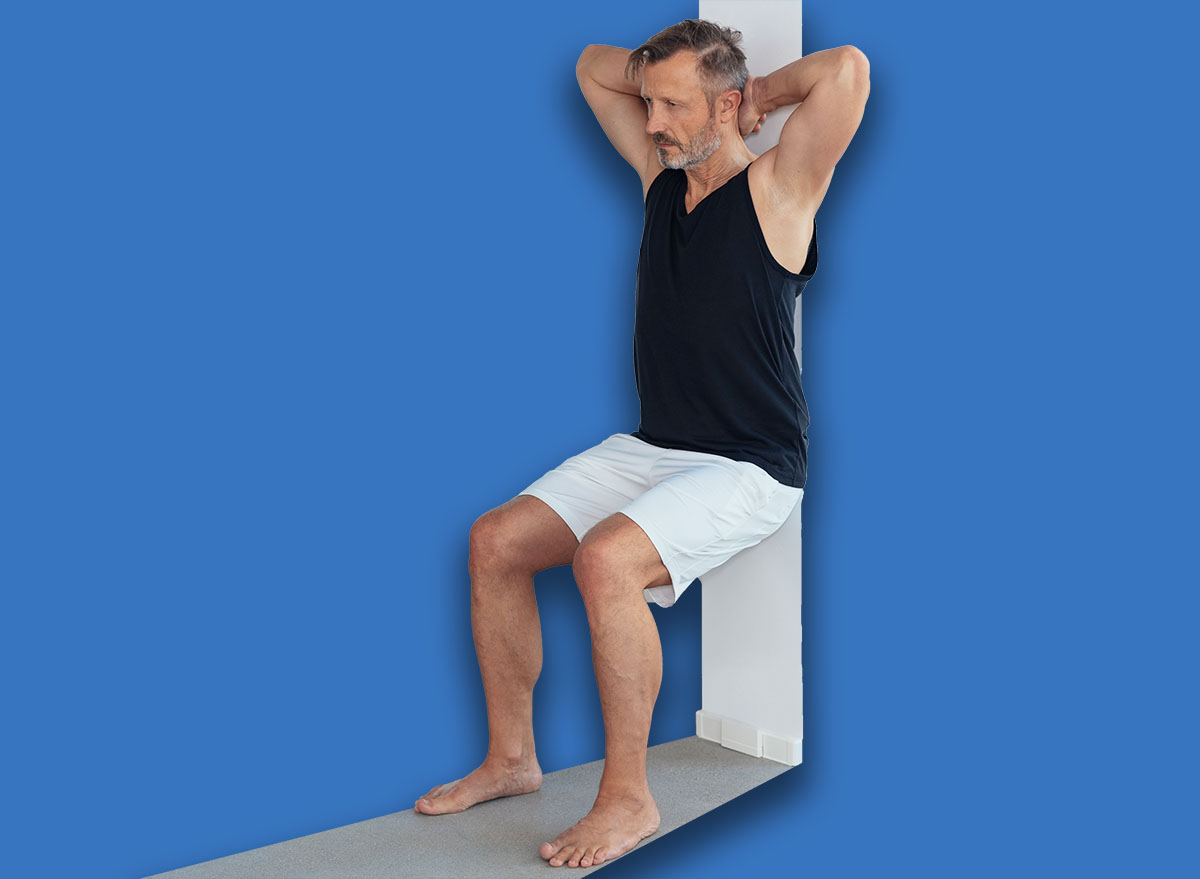

There are certain powerhouse exercises that, if easily done, are an excellent gauge of strength. The wall sit is one of them, as your lower body endures intense tension while your muscles contract to perform this isometric movement. If you don’t do wall sits already, adding them to your workouts is an excellent way to build endurance without placing stress on your joints—all while strengthening your core, glutes, quads, and hamstrings.
If you want to test your overall lower-body strength, get ready to wall sit. If you can hold this movement this long after 55, your lower-body strength is considered elite.
What To Know About the Wall Sit
If you’re wondering how to perform a wall sit with proper form, Rachel Pieroni, NASM CNC, CPT, with Pure Barre/Xponential Fitness, breaks it down.
“A wall sit is an isometric bodyweight exercise, where one holds a narrow squat position against a wall, with their back flat and their thighs parallel to the ground. Knees are stacked above the ankles at a 90-degree angle, and shoulders are stacked above the hips, also, at a 90-degree angle,” Pieroni explains, adding, “It is considered a high-intensity, no-impact exercise that primarily targets the quadriceps, glutes, and calves while also bracing and engaging the core muscles.”
What Makes it an Effective Measure of Lower-Body Strength?
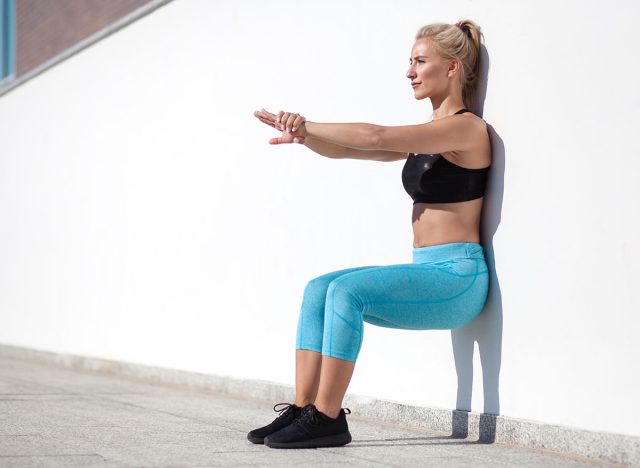
The wall sit is a common exercise found in Pure Barre classes, often called the “reverse chair,” where your back is placed against the barre versus a wall. There are several ways to rev up the challenge, including adding weight or a resistance band across the hips, rising into your toes, or lifting your arms. Holding the pose for a longer period of time is an excellent way to boost overall strength.
“Given all these variables, the wall sit is an incredibly effective measure of functional lower-body strength and endurance in anyone, especially for 55+ adults,” Pieroni says. “As we age, lower-body strength becomes increasingly important to maintain in order to support one’s body weight for daily activities, such as walking or climbing stairs.”
What Constitutes “Elite” Wall-Sit Performance?

According to Pieroni, if you’re able to hold a wall sit for longer than two minutes with proper form, your performance is “elite.” For beginners, Pieroni suggests starting with a 30-second hold and then gradually increasing the time by 30-second increments.
“It is also important to note that you do not need to reach the 90-degree angle in the hips and knees immediately. Instead, focus on proper alignment: keeping knees stacked over ankles and shoulders stacked over hips,” she stresses. “This is a common modification offered in a Pure Barre class. As your endurance begins to build over time, focus on improving alignment and form: lowering your hips a few inches until they are in line for your knees and thighs are parallel to the floor. Then proceed to increase the time and/or play around with other variations, such as added weight, lifting the arms or rising to tippie toes.”
Improving Lower-Body Endurance Helps Prevent Falls
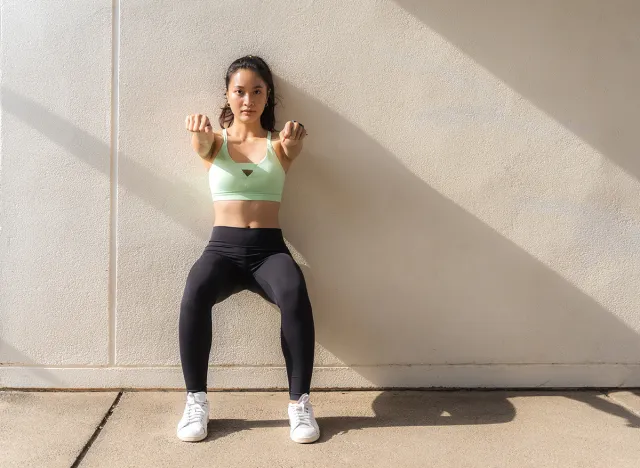
Building and enhancing lower-body endurance helps prevent falls and maintain a confident, independent lifestyle as you age. According to Pieroni, leg strength is a main indicator of long-term functional health and mobility.
“The wall sit is an effective exercise that challenges the stabilizer muscles in the hips and core, which can help improve balance and posture; thus significantly decreasing the risk of falls,” she tells us. “It is important to note that the wall sit is both joint-friendly and high-intensity, offering a low-impact option to more repetitive joint-bearing movements, such as traditional squats. This makes it more accessible for the older 55+ adults to safely perform, allowing them to elevate their heart rate while minimizing added stress on their joints.”