If You Can Complete These 3 Exercises Without Stopping After 50, Your Endurance Is Exceptional
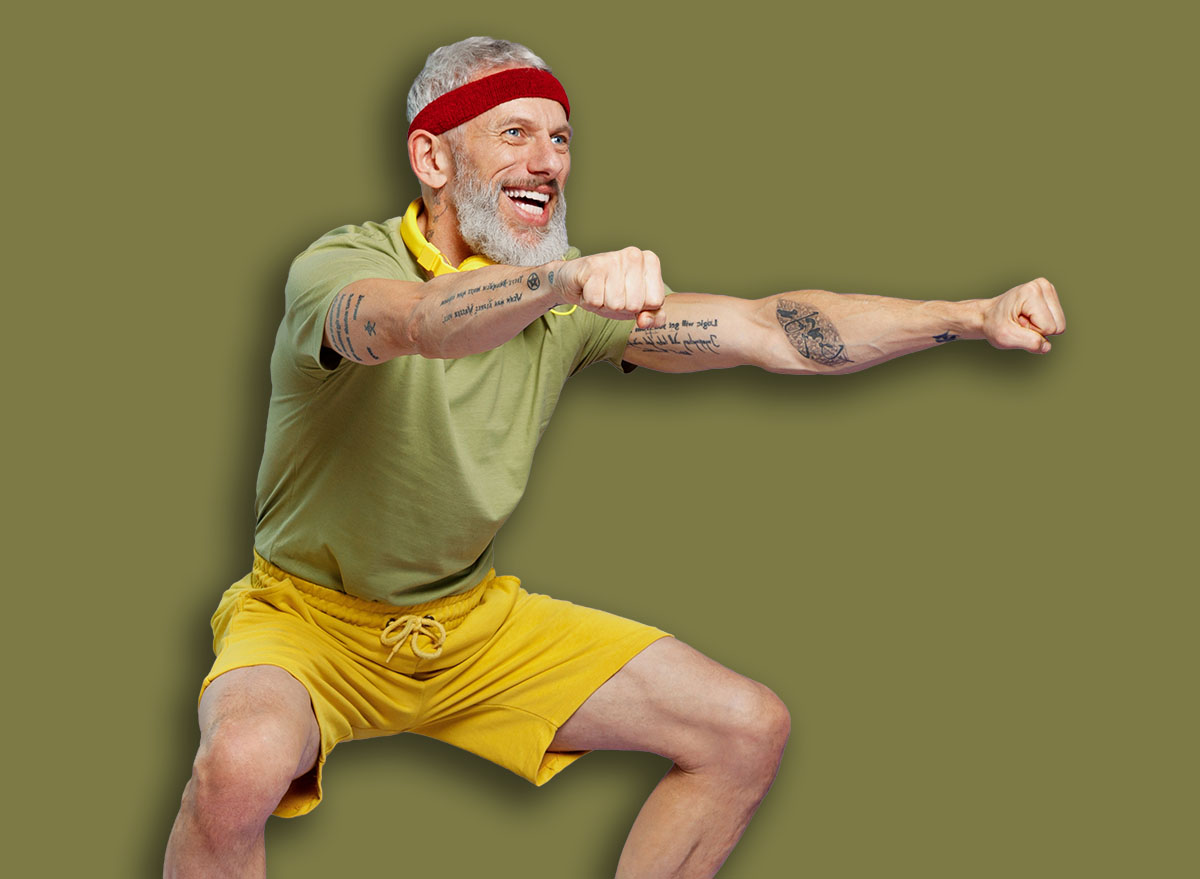

Endurance after 50 is a different game than when you were younger. It’s no longer about how fast or how hard you train, but how long your body can sustain effort with control.
As you age, your cardiovascular capacity and muscular endurance decline, resulting in reduced muscle mass, less aerobic efficiency, and slower neuromuscular coordination. Research shows that adults can lose both strength and stamina steadily with age if they don’t challenge their muscles and heart regularly.
Fortunately, we have some good news: endurance is highly trainable well into later life. Studies consistently link higher muscular endurance and aerobic capacity to better metabolic health, reduced fall risk, and improved longevity markers.
We spoke with Abbie Watkins, CPT, a certified personal trainer with OriGym, who shares three essential exercises that if you can do without stopping after 50 are clear indicators your endurance is still in excellent form. These tests will engage your full body, assessing how well your legs, core, lungs, and nervous system work together over time.
Read on for the exercises and detailed instructions. If you can complete all three without stopping (and while maintaining good form), you’re not just “doing okay” for your age—you’re operating at a level of endurance that many adults never reach, even decades earlier.
(Next up: If You Can Master These 4 Standing Moves at 60, You’re Fitter Than Most 40-Year-Olds.)
Bodyweight Squats
Bodyweight squats are one of the clearest indicators of lower-body endurance after 50. This classic movement will challenge your quads, glutes, and cardio all at once, requiring sustained oxygen delivery and muscular output. “A strong benchmark is 40 to 50 controlled reps of bodyweight squats without pausing, using a steady tempo and full range of motion,” says Watkins.
How to do it:
- Stand tall with your feet shoulder-width apart.
- Keep your chest lifted and your eyes looking forward.
- Flex your core lightly before initiating the movement.
- Push your hips back as you bend your knees.
- Lower until your thighs are at least parallel to the floor.
- Drive through your heels to stand back up.
- Fully extend your hips at the top without locking the knees.
- Immediately begin the next repetition at a steady pace.
- Aim for 40 to 50 reps without pausing.
Plank Hold
A sustained plank hold is a reliable test of core endurance and total-body conditioning. Unlike short plank variations, longer holds require consistent engagement of your deep abdominal muscles, shoulders, hips, and cardio system. Watkins tells us, “Holding a front plank for 90 to 120 seconds without dropping or adjusting is considered exceptional at this age.”
How to do it:
- Start on the floor in a forearm plank position.
- Place your elbows directly under your shoulders.
- Extend your legs straight behind you with your toes on the ground.
- Form a straight line from head to toe.
- Engage your glutes and gently brace your core.
- Keep your neck neutral with your eyes looking down.
- Breathe steadily throughout the hold.
- Maintain position until time expires or your form breaks.
- Push yourself to hold this position for 90 to 120 seconds with perfect form.
Step-ups
Step-ups directly mirror everyday stair climbing, making them a top tier endurance test for adults 50 and older. This exercise challenges multiple leg muscles, heart rate, balance, and coordination. “Being able to perform 60 continuous steps at a smooth, controlled pace demonstrates excellent cardiovascular endurance and leg stamina,” explains Watkins.
How to do it:
- Stand facing a sturdy step or platform.
- Place your entire foot firmly on the step.
- Press through your heel to drive your body upward.
- Bring the opposite foot up to meet it.
- Step back down with control.
- Keep your torso upright throughout the movement.
- Maintain a steady rhythm without rushing.
- Continue alternating steps without pausing.
- Aim for 60 continuous steps without pausing.
How to use these tests safely
Like any new fitness test, it’s essential to warm up properly before attempting these endurance tests. Doing some light marching-in-place, dynamic leg movements, and gentle core activation can help prime your muscles and joints for movement. If you have knee, hip, or back issues, modify your range of motion during the exercise, or speak with a health professional or certified personal trainer before testing yourself.
Note: These tests are not pass-or-fail assessments. They’re checkpoints. Falling short simply identifies where your endurance needs improvement and is not a limitation of your age or ability.
What if you can’t hit the benchmarks yet?
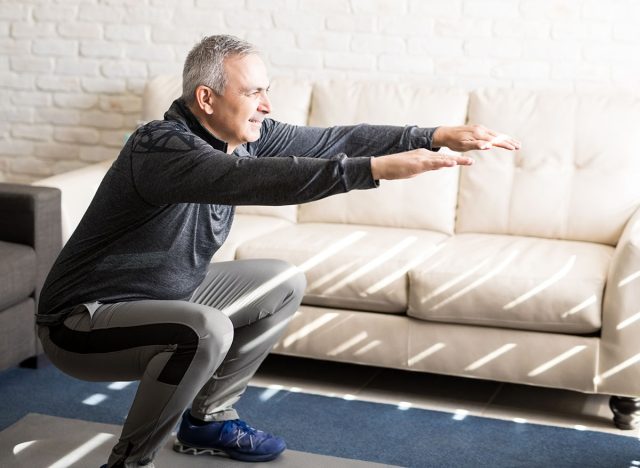
Endurance improves through progressive exposure. If 50 squats feels out of reach, start with sets of 15 to 20 and gradually build volume. If a 90-second plank isn’t possible yet, use shorter holds with rest in between. Step-ups can be scaled by reducing the height of the step or alternating with marching in place.
Research shows that even modest improvements in muscular endurance can lead to meaningful gains in functional capacity over time. As always, consistency, not intensity, is what matters most.
- Source: https://pmc.ncbi.nlm.nih.gov/articles/PMC12565082/
- Source: https://www.ahajournals.org/doi/10.1161/CIRCRESAHA.125.325531
- Source: https://pmc.ncbi.nlm.nih.gov/articles/PMC12358568/
- Source: https://pmc.ncbi.nlm.nih.gov/articles/PMC12565082/
- Source: https://pmc.ncbi.nlm.nih.gov/articles/PMC5118611/
- Source: https://pmc.ncbi.nlm.nih.gov/articles/PMC4037310/