If You Can Hold a Bridge This Long After 55, Your Full-Body Strength Is Elite

One of the best things you can do for your future is to keep your body in top shape. Doing so will help you live independently. Just think about it: If you don’t have full-body strength, little things you do each day, like stepping into the shower, doing laundry, and even emptying the garbage, can become difficult or even impossible to perform. Every bit of exercise you do is beneficial. But how can you tell if you are strong enough? We spoke to the experts and learned how to find out.
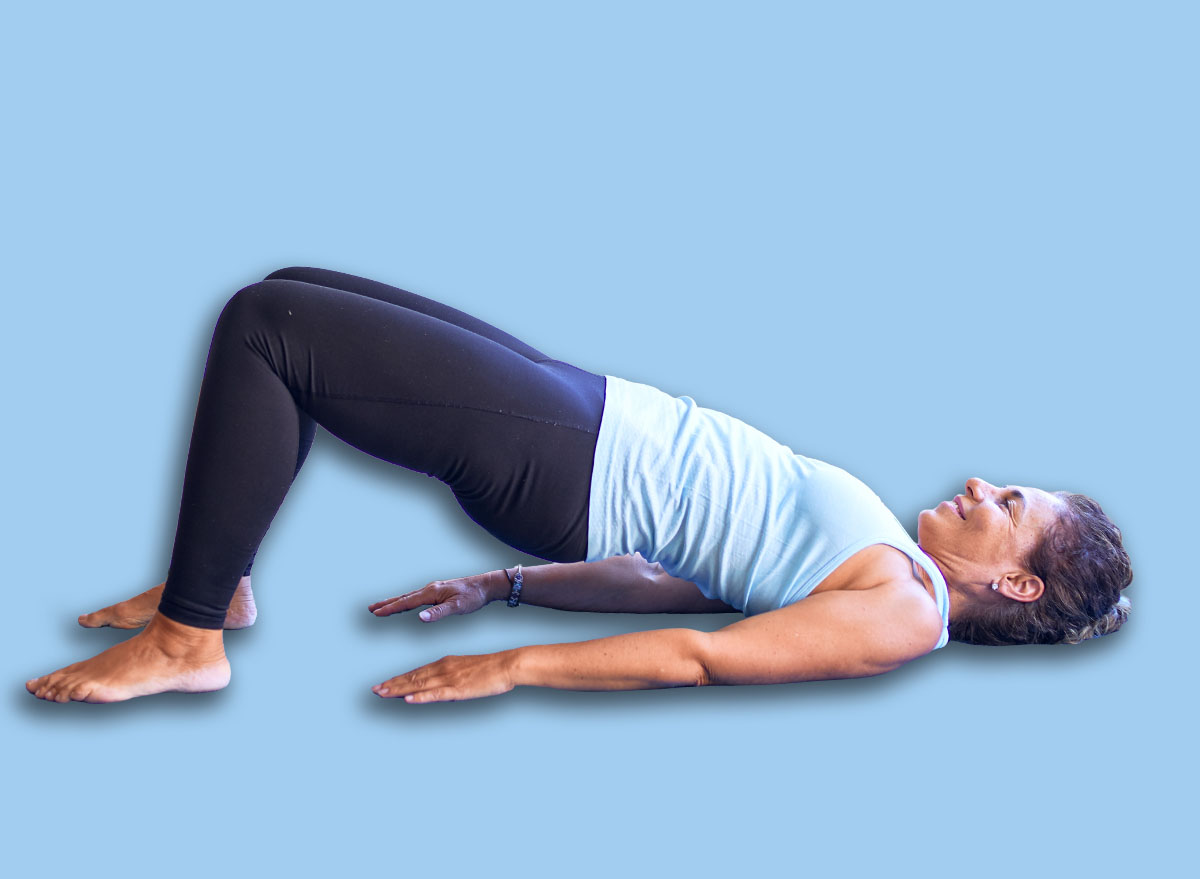
Get into a bridge position, and hold it! If you can hold a bridge this long after 55, your full-body strength is considered elite.
Holding a Bridge for This Long Means Your Strength Is Elite
We spoke with Josh York, Founder and CEO of GYMGUYZ, the world’s largest in-home and on-site personal training company, to find out the scoop. With years of experience in personal training, York spearheads a nationwide network delivering personalized fitness programs to all ages, including a significant number of adults 50+ with a focus on boosting mobility, strength, and long-term function.
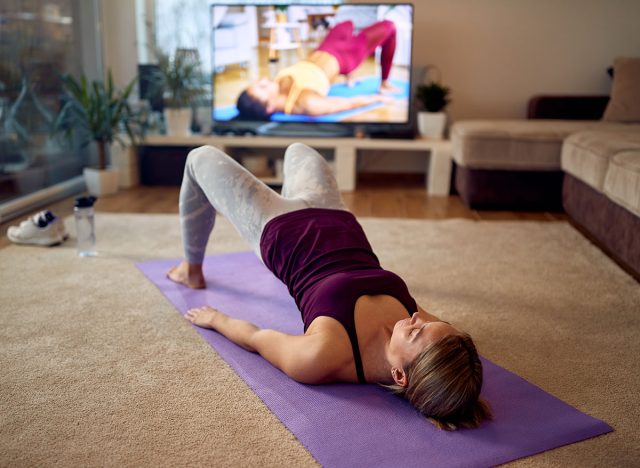
According to York, for adults 55+, holding a glute bridge for 30 to 45 seconds with proper form signals solid strength and control. If you’re able to hold it for 45 to 60 seconds without your lower back fatiguing, you’re in “elite” status.
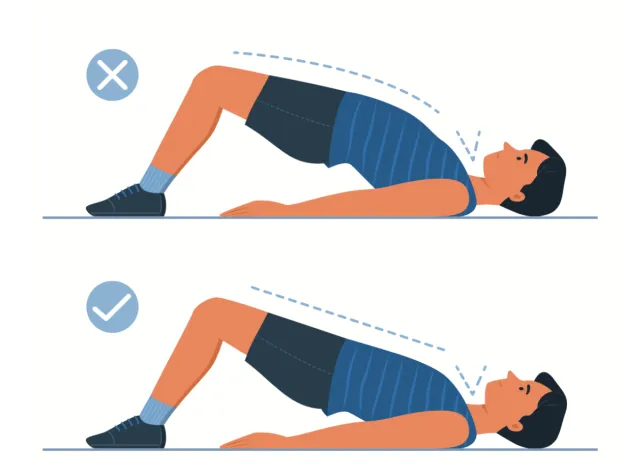
“The key is maintaining full alignment the entire time. Hips should stay lifted, the core should be engaged, and you should not be arching through your lower back. Duration only counts if the form stays consistent,” York stresses.
Why the Glute Bridge Is a Solid Indicator of Full-Body Strength
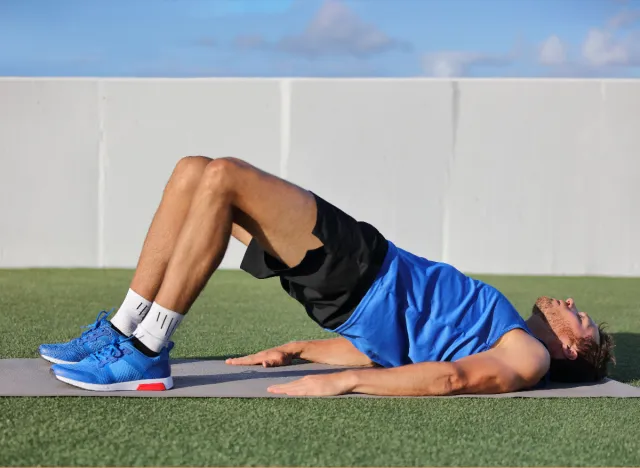
Even though this exercise is called the “glute bridge,” the move requires multiple muscles throughout the body to work in unison to successfully hold the position. Your glutes drive the lifting motion while your core stabilizes the spine, your hamstrings provide control, and your lower back helps preserve posture.
“All these muscles work together to keep the body in a straight line from shoulders to knees. The glutes create the movement, while the core, hamstrings, and back stabilize and prevent breakdown in form,” York tells us. “If one of those areas is weak, it becomes difficult to hold the position for long. That’s why it reflects overall strength and stability rather than just glute strength alone.”
The Importance of a Strong Posterior Chain
Building and maintaining strength in the posterior chain helps keep your body upright and aligned. It promotes improved posture by preventing your body from hunching forward, which is a common occurrence as you age.
“Strong posterior chain strength also improves balance by strengthening the muscles that stabilize the hips and spine. This reduces the risk of falls and makes everyday movement more controlled,” York tells us. “From an injury perspective, the muscles that the bridge glute are working take pressure off the joints, especially from the knees to the lower back, which helps reduce strain during daily activities like squatting down and lifting objects.”
Why the Glute Bridge Is Often Used as a Benchmark for Functional Strength
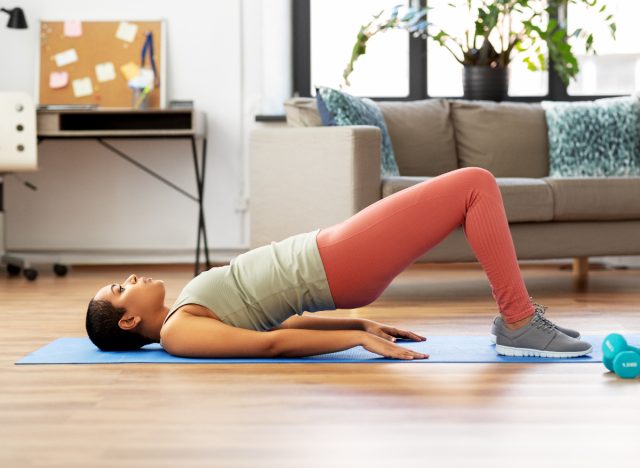
Even though the glute bridge is simple, safe, and seamless to assess, it can tell you a lot about how your body is functioning.
“It tests strength, endurance, and the ability to maintain proper alignment over time,” York shares. “Because it involves the same muscles used for standing, walking, lifting, and stabilizing the body, it gives a clear picture of someone’s functional strength. If a person can hold a bridge with good form, it usually translates to better performance in everyday movements.”