If You Can Do This Many Push-Ups Without Stopping After 50, Your Upper Body Strength Is Elite


Push-ups have earned their place as a go-to strength test. They’re simple to set up, easy to measure, and tough to fake once the reps start adding up. After 50, they become especially useful. You’re not only pressing your body away from the floor. You’re showing how well your chest, shoulders, arms, core, and hips can work together through repeated effort.
In coaching, I like push-ups because they reveal more than upper-body strength. A clean set shows control, coordination, and the ability to hold tension while fatigue builds. The first few reps may feel comfortable, then the set starts asking better questions. Can your body stay straight? Can your elbows track well? Can your breathing stay steady enough to keep the pace moving?
That’s why a continuous push-up test carries so much value. It gives you a clear look at relative strength, which means how strong you are relative to your own bodyweight. For adults over 50, that matters. Strong relative strength often shows up in daily life through better floor transitions, stronger posture, steadier shoulders, and more confidence handling physical tasks. Ahead, we’ll break down why push-ups work so well, how to test them properly, what your number says, and how to build more reps with better form.
Why Push-Ups Are a Strong Test of Upper-Body Strength
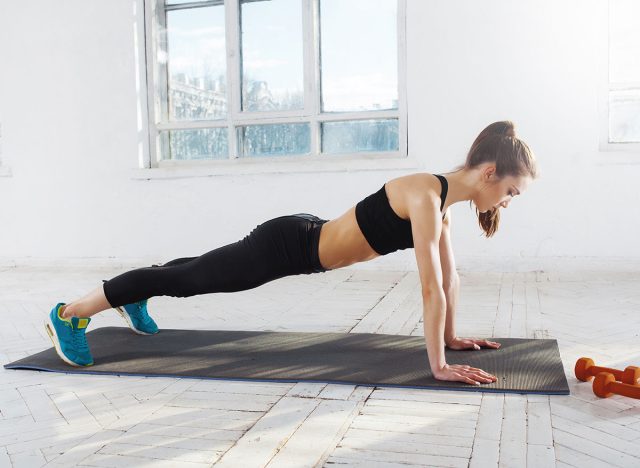
Push-ups train pressing strength while forcing the rest of your body to stay organized. Your chest, shoulders, and triceps drive the movement, but your core keeps your torso from sagging, and your glutes help keep your hips from drifting. That combination turns a basic bodyweight exercise into a full-body strength check.
They also ask your shoulders to stay stable as you move through each rep. That’s a big reason push-ups carry over well to everyday tasks. Pushing yourself up from the floor, bracing your body during a stumble, moving furniture, loading gear, or carrying heavier items all require strength through the arms and shoulders, with the trunk staying tight behind it.
The endurance piece matters just as much as the strength piece. One strong rep shows you can produce force. A longer set shows you can repeat that force while keeping your position. That’s where push-ups separate themselves as a test. The movement starts to reveal how well your upper body, core, and breathing can stay synced under fatigue.
How to Perform Push-Ups With Proper Form
A strong push-up starts before the first rep. Your setup determines how well you’ll move, how much strength you can use, and how consistent the set will look as fatigue builds. Think of each rep as a full-body movement where the chest and arms lead, while the core and hips keep the body lined up.
How to Do It:
- Place your hands on the floor slightly wider than shoulder-width apart.
- Extend your legs behind you, creating a straight line from your head to your heels.
- Brace your core and squeeze your glutes before you lower.
- Bend your elbows and lower your chest toward the floor with control.
- Reach at least 90 degrees at your elbows while keeping your body straight.
- Press through your hands to return to the top position.
- Repeat each rep at a steady pace until your form changes.
A quick note on the movement standard. A rep counts when your elbows reach at least 90 degrees, and your body stays in a straight line. Modify with incline push-ups, countertop push-ups, or hands-elevated push-ups to match your current level as you build toward the floor.
Best Variations: Incline Push-Up, Tempo Push-Up, Close-Grip Push-Up, Pause Push-Up, Decline Push-Up.
Push-Up Standards After 50: What Your Rep Count Means
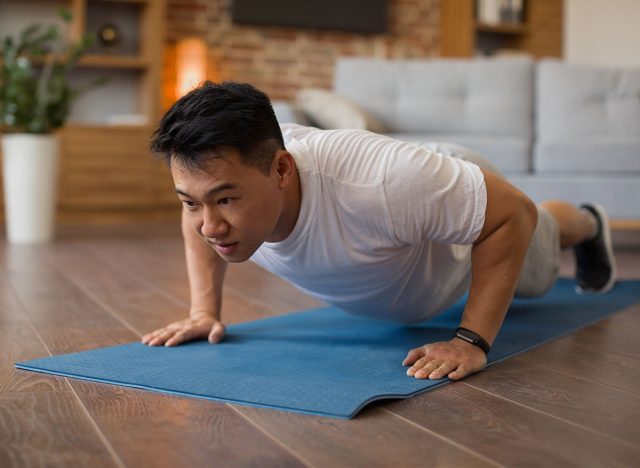
Your number should come from clean reps. Keep the same depth, body line, and pace from the first rep to the last. Once your elbows stop reaching the target range, your hips drop, or your tempo turns into a rush, record the reps you completed with solid form.
- Under 10 reps: You’re building the base. This range gives you plenty to work with, especially if you focus on strong alignment, controlled lowering, and a consistent press.
- 10 to 20 reps: This is a solid range after 50. Your upper body can handle repeated effort, and your core has enough endurance to support a longer set.
- 20 to 35 reps: You’re showing strong upper-body strength. Your pressing muscles, shoulders, and core are working well together, and your form can stay organized through fatigue.
- 35+ reps: This is elite. Completing 35 or more clean push-ups without stopping shows excellent relative strength, upper-body endurance, and full-body control for your age group.
How to Build More Push-Ups After 50
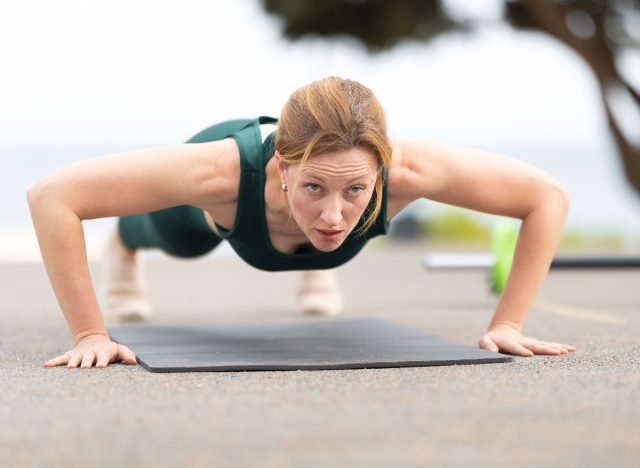
Improving your push-up number comes from better reps, stronger supporting muscles, and enough practice to make the movement feel natural. You’ll make the best progress when every set has a purpose. Some sets can build strength with slower reps. Others can build endurance with moderate rep ranges. Over time, those pieces come together, and your max set climbs. Keep the focus on clean movement, because better form usually leads to better numbers.
- Use incline push-ups to build volume: Elevating your hands lets you practice more quality reps while still training the same pattern.
- Add slow lowering reps: Take three to five seconds to lower yourself. This builds strength through the range and improves control.
- Train presses and rows: Dumbbell presses, cable presses, rows, and pulldowns help build the chest, shoulders, triceps, and upper back that support stronger push-ups.
- Build core tension separately: Planks, dead bugs, and carries help your body stay tight during longer sets.
- Practice submaximal sets: Stop a few reps before form changes. This builds strength and endurance without turning every set into a grind.
- Use short rest clusters: Try sets like 5 reps, rest 20 seconds, then repeat for several rounds. This helps build volume while keeping reps clean.
- Retest every few weeks: Give your body time to adapt, then test again with the same movement standard.
Push-ups give you a simple, honest look at upper-body strength after 50. If you can complete 35 or more clean reps without stopping, you’ve built a level of strength that stands out. More importantly, you’ve built strength you can use, with your upper body, core, and hips working together rep after rep.
References
- Yang, Justin et al. “Association Between Push-up Exercise Capacity and Future Cardiovascular Events Among Active Adult Men.” JAMA network open vol. 2,2 e188341. 1 Feb. 2019, doi:10.1001/jamanetworkopen.2018.8341
- Roberts, Christian K et al. “Strength fitness and body weight status on markers of cardiometabolic health.” Medicine and science in sports and exercise vol. 47,6 (2015): 1211-8. doi:10.1249/MSS.0000000000000526