If You Can Hold a Single-Leg Stand This Long After 60, Your Balance Is Top-Tier


Taking care of your body now is an investment in a healthy, active future. Regular exercise is truly one of the best gifts you can give yourself, and if you already do, kudos to you! In fact, there are several ways to check to see just how well your diligence is paying off. We spoke with Samantha Barker, co-founder of I Am Woman Retreat, certified yoga and Pilates instructor, and 200-hour breathwork facilitator who specializes in transformational experiences that bring together movement, nervous system regulation, and community. Barker let us in on a little test, and it has to do with balance.
Balance is something on the aging checklist that is critical to be mindful of. It’s what will help keep you from falling, which is the #1 cause of injuries for adults 65 and older. Making sure your balance is in top shape translates to strong muscles and joints, better mobility, and ultimately, a longer lifespan. The best part? Solid balance can enable you to move around safer and live independently.
So now that you understand the importance of building and maintaining good balance, you may be intrigued about testing yours. To get started, you’ll need to form a single-leg stand. If you can hold the position this long after 60, we want to be the first to congratulate you; your balance is top-tier.
Why Balance Declines With Age
A decline in balance isn’t simply about “getting older.”
According to Barker, “Women can experience changes in muscle mass, reaction time, joint stability, and especially after menopause… bone density. As osteoporosis risk rises, balance becomes even more important because falls carry higher consequences. That’s one reason I’m such a proponent of Pilates for women as they age. Pilates develops deep stabilizing strength, postural alignment, coordination, and weight-bearing control. All supportive for balance and bone health.”
If You Can Hold a Single-Leg Stand This Long After 60, Your Balance Is Top-Tier
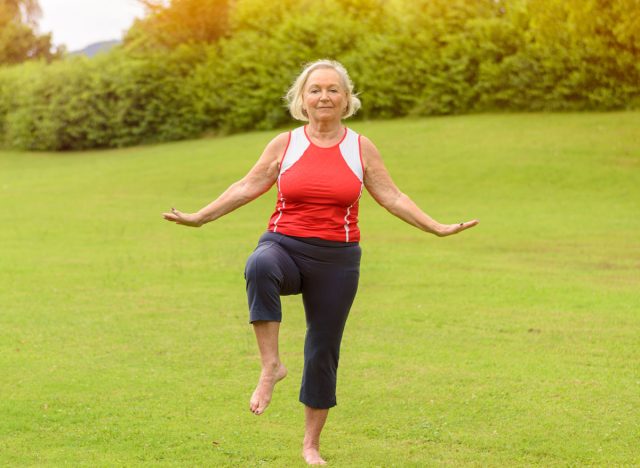
“As a Pilates instructor, former professional ballet dancer, and women’s wellness expert, I see single-leg balance as one of the simplest but most revealing longevity markers for women as they age,” explains Barker.
A solid benchmark to strive for after 60 is typically holding for 20 to 30 seconds on each side while maintaining steady posture and control.
“I’d consider 30 seconds or more without significant wobbling or compensating a top-tier result,” Barker adds.
If you lose your balance during this test, here’s what may be going on. According to Barker, you may be dealing with weak glutes and hip stabilizers, core instability, poor foot and ankle stabilizers, decreased proprioception, or postural compensation.
How to Do It:
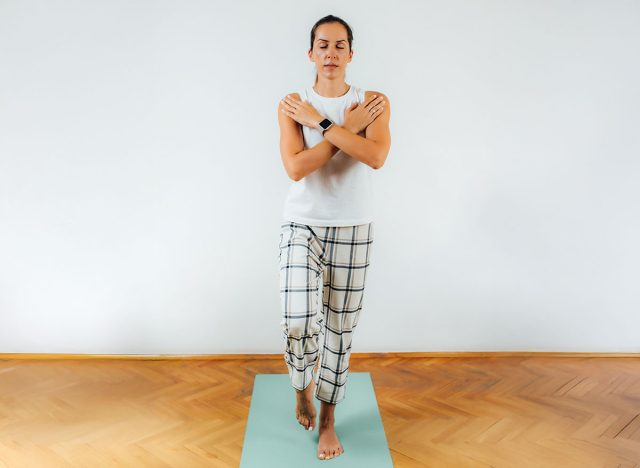
- Balance on one leg, barefoot, on a flat, solid surface without using additional support.
- Keep your gaze forward and your arms crossed. The lifted leg should not touch your grounded leg.
- The time begins once your leg comes off the floor and stops when your foot touches the ground.
Why This Balance Test Matters
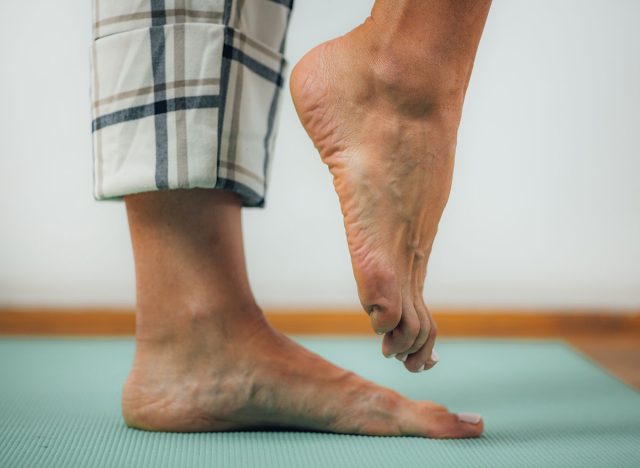
According to Barker, a single-leg stand puts your posture, strength, coordination, and joint stability to the test at the same time. It channels real-life tasks like climbing stairs, stepping off a curb, and catching yourself from a trip or fall. It can provide you with solid insights into mobility and fall risk.
A strong single-leg balance typically signals stronger neuromuscular function and a reduced fall risk.
“It tells me someone likely has better functional resilience in everyday life,” explains Barker.