4 Wall Exercises That Tighten Loose Skin Better Than Expensive Treatments After 60
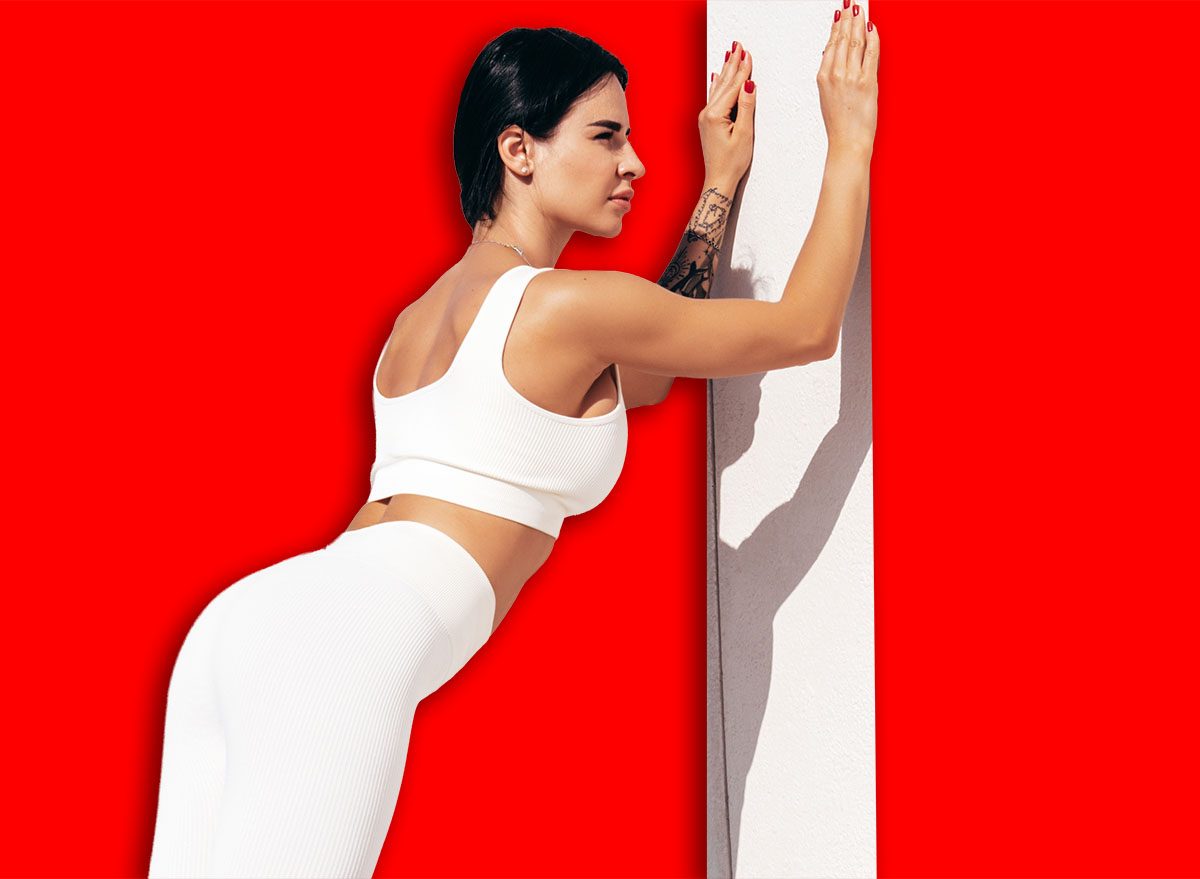

If you’re over 60 and dealing with loose skin on your arms, belly, or thighs, you’ve probably tried a cream or two that promised more than it delivered. I get it. After almost 40 years working as a personal trainer and 25 years running TRAINFITNESS, the UK’s favorite provider of in-person and online personal training courses, loose skin is one of the most common cosmetic concerns women bring to me from 60 onwards. Exercise can’t tighten skin itself, but it can build the muscle underneath, which changes how the skin sits on the body. These four wall exercises produce more visible change than any cream on the market.
Where Loose Skin Shows Up Most
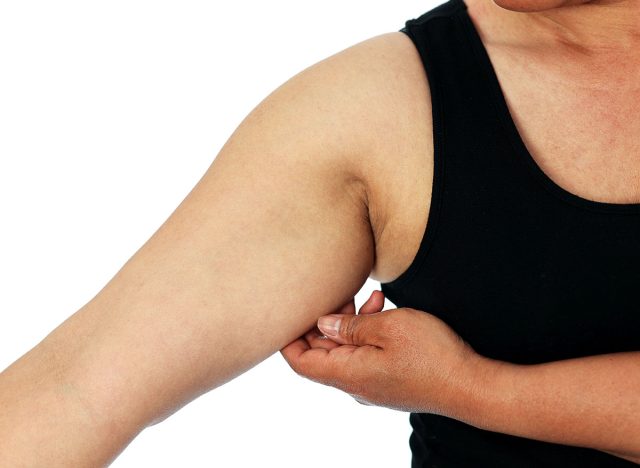
The most common complaints I hear, in order, are the upper arms, the belly, the neck under the chin, and the inner thighs. These are the four areas where skin sits over relatively small amounts of muscle, so once the muscle underneath fades, the skin loses its support and starts to hang.
The underlying issue is a combination of things. Collagen and elastin, the proteins that give skin its bounce, both decline after 40 and drop faster after menopause. That means skin holds its shape less well and doesn’t spring back the way it did.
Then there’s the muscle underneath, which fades from lack of use. Skin that used to sit over a firm bicep or a full glute now sits over a smaller, softer muscle. Most of the visible change comes from the muscle underneath fading, not from the skin itself changing shape.
And there’s the weight fluctuation history. Anyone who’s gained and lost a lot of weight over the decades has stretched their skin, and it doesn’t fully recover. This is genetic to a large extent. Some people’s skin snaps back, and others’ doesn’t.
Why Wall Exercises Beat Expensive Treatments

Exercise builds muscle, and muscle is what fills out the space under the skin. Creams work on the surface of the skin, which is only a fraction of a millimeter thick. Wraps are temporary. Lasers do have some effect on collagen, but it’s modest and doesn’t touch the muscle underneath, which is what determines the shape.
Wall exercises specifically load the muscles in a stable position, which means older adults can push harder than they could freestanding without any risk of falling. This is what actually builds muscle, not the light, careful movements many over-60s have been sold as safe.
There’s also the cost. A course of laser skin tightening runs into the thousands and needs repeating. Wall exercises cost nothing, need no equipment, and produce ongoing improvements as long as you keep doing them. And they improve strength, balance, and bone density at the same time, which no cosmetic treatment does.
I’ll be honest with you here. Exercise doesn’t literally tighten skin. What it does is fill out the muscle underneath, which changes how the skin looks even though the skin itself hasn’t changed much. For most areas of the body, that’s enough to produce a visible difference. For very loose skin from major weight loss, exercise plus time is the best you’ll get without surgery.
Wall Push-Up
This builds muscle across the chest, shoulders, and back of the upper arms. The back of the upper arm is where “bat wing” skin sags, and adding muscle there fills out the whole area from underneath, which changes the shape immediately.
How to Do It:
- Stand facing a wall, two to three feet away, palms on the wall at shoulder height
- Keep the body straight from heels to head
- Bend the elbows and lower the chest towards the wall over 3 seconds
- Push back in 1 second
Avoid These Mistakes:
- Don’t stand too close to the wall. It makes the exercise too easy to build any real muscle. Walk the feet back until you can feel the arms actually working, and progress to a kitchen counter as the wall version becomes easy.
Sets and Reps: 12 to 15 reps.
Wall Sit
This builds muscle in the thighs and glutes, which fills out the inner-thigh and back-of-the-leg areas where loose skin is most noticeable. Wall sits are also isometric, which means the muscle works at maximum contraction without any impact on the joints.
How to Do It:
- Stand with your back against a wall, feet about two feet away from it
- Slide down the wall until your knees are bent at about 90 degrees, or as close as you can manage
- Keep your back flat against the wall
- Hold for 30 seconds, breathing normally
- Rest for 30 seconds
Avoid These Mistakes:
- Don’t let your knees drift forward over the toes as you slide down. The knees should stay behind the toes, which puts more of the work into the glutes and less into the front of the knee. If you can’t manage that, walk the feet further out from the wall.
Sets and Reps: 3 rounds of 30 seconds.
Wall Plank
This trains the deep muscles of the trunk that hold the belly in and support the lower back. Building these muscles pulls the abdomen in from underneath, which changes the belly shape even before any fat has been lost. And it does it in a much gentler position than a floor plank.
How to Do It:
- Stand facing a wall, one to two feet away
- Place your forearms on the wall at shoulder height, elbows bent to 90 degrees
- Walk your feet back so the body is at a comfortable angle, straight from heels to head
- Squeeze the bottom muscles and brace the belly
- Hold for 30 seconds
- Rest 20 seconds
Avoid These Mistakes:
- Don’t let the belly sag towards the wall or the bottom lift up. Both take the load off the trunk muscles. The whole body should be one straight line. If you can’t feel the belly working, adjust the angle until you can.
Sets and Reps: 3 rounds of 30 seconds.
Wall Glute Squeeze With Hip Extension
This builds the glute muscles, which fill out the back of the upper thigh and the bottom itself. Loose skin over a flat bottom sits noticeably differently from loose skin over a strong bottom, and the difference is visible in trousers within a few weeks.
How to Do It:
- Stand facing a wall, hands lightly on the wall for balance
- Shift your weight onto the left leg
- Keeping the right leg straight, sweep it backward behind you, squeezing the glute at the top
- Only go as far as you can without arching the lower back
- Lower under control
- Do 12 reps, then swap sides
Avoid These Mistakes:
- Don’t arch your lower back to lift the leg higher. The range is small, and the squeeze is everything. Two inches with a proper glute squeeze changes the shape of the bottom far more than a big kick that comes from the lower back.
Sets and Reps: 12 reps per side
How Often to Do This
Three or four times a week is the target. Muscle needs a day of recovery between sessions to actually grow, which is when the change shows up in the mirror. Doing this daily doesn’t produce faster results.
All four exercises in one session take about 15 minutes with short rests. Do 2 sets of each in the first fortnight, then progress to 3 sets. That’s when the visible change begins.
Add walking on the days you’re not doing the wall routine. Walking supports overall body composition, and the combination of muscle building plus walking is what actually produces the “toned” look people are after.
After the first month, either progress the wall exercises to harder versions or add weight. Wall push-ups can move to a lower surface. Wall sits can be held longer. Hip extensions can add an ankle weight. Progress is what keeps the muscles growing.
What to Expect
Within the first two weeks, most people notice their arms and thighs feel firmer to the touch, even before any visible change. That’s the muscle waking up and holding tension.
By 4 to 6 weeks, the mirror starts to catch up. Arms look tighter, especially the underside. The bottom sits higher. The belly looks less soft. Clothes fit slightly differently, particularly around the arms and hips.
By 8 to 12 weeks, family members and friends notice. The change is real and visible, though it’s the muscle underneath doing the work rather than the skin itself. Most people find that clothes they’d shelved come back into rotation.
Beyond 3 months, the process continues. Muscle takes 6 months to a year to fully build in this age group, and each month adds a bit more shape. For anyone whose skin has been stretched by decades of weight fluctuation, the honest answer beyond that point is time, patience, and sometimes a conversation with a doctor.