5 Wall Exercises That Rebuild Knee Strength Faster Than Floor Exercises After 60

Knee strength after 60 often declines due to reduced muscle support, not just joint wear. Many people assume discomfort means they need to avoid movement, but in reality, the right kind of movement restores strength and stability. I’ve worked with older clients for years, and I’ve seen knees improve faster when the surrounding muscles, quads, hamstrings, and calves, start doing their job again. That’s where targeted, controlled exercises make all the difference.
Wall-based exercises create a safe and stable environment to rebuild that strength. The wall provides support, helping you maintain proper alignment while reducing unnecessary strain on the joints. That stability allows you to focus on slow, controlled movement, which increases muscle activation and improves joint support.
Another major factor involves consistency. Short, daily sessions with controlled tension outperform occasional long workouts. When the muscles around the knee receive regular activation, they begin to support the joint more effectively, which leads to improved strength and confidence in movement.
The following exercises use the wall to guide proper positioning while strengthening the muscles that protect and stabilize the knees. Move slowly, stay controlled, and focus on engaging the working muscles during every rep.
Wall Sit Hold
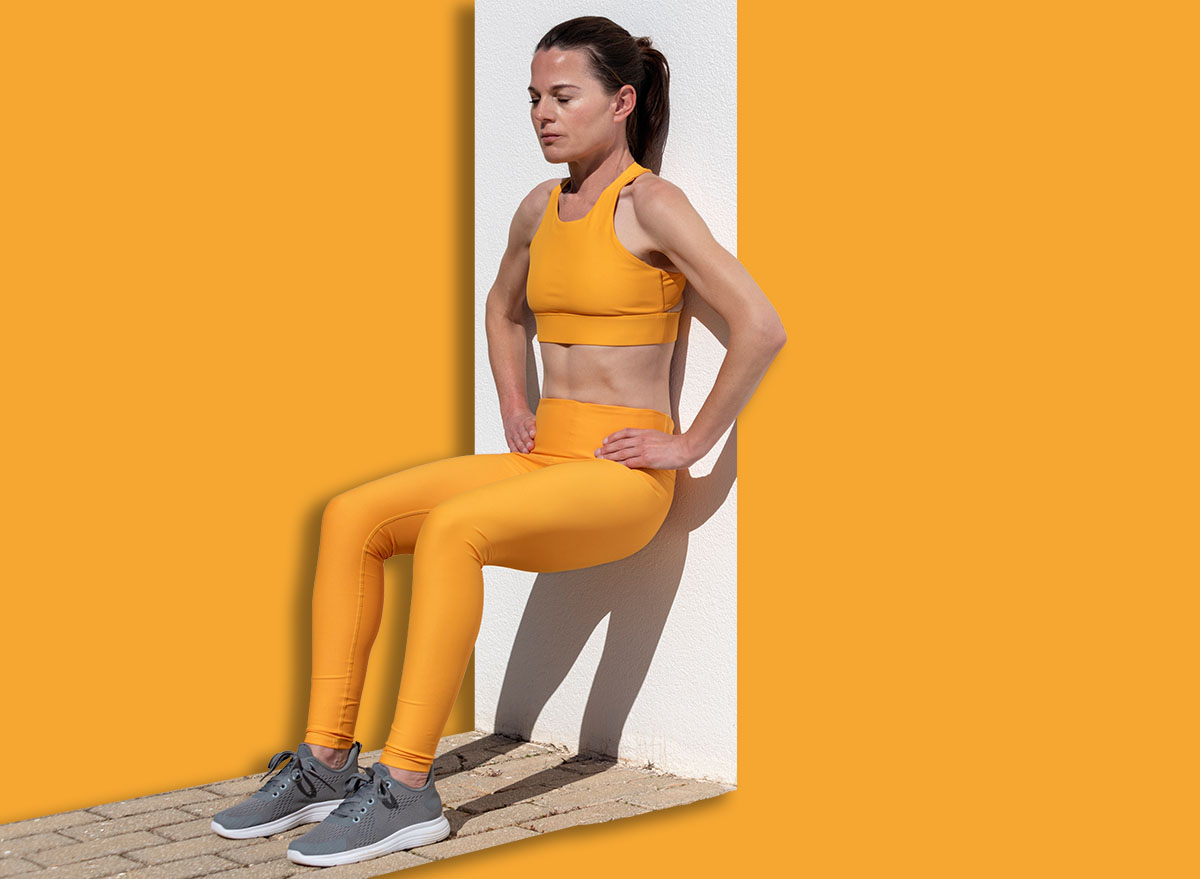
The wall sit remains one of the most effective exercises for rebuilding knee strength because it places the quads under steady, controlled tension. I use this movement frequently with clients because it strengthens the muscles that support the knee without requiring movement that could cause discomfort. Instead of bending and straightening repeatedly, the muscles stay engaged the entire time.
Holding the seated position forces the quads to work continuously, which builds endurance and strength. Keeping the knees aligned over the ankles ensures the load stays in the muscles rather than shifting into the joint. Over time, this helps improve knee stability and reduces strain during everyday movement.
How to Do It
- Stand with your back against a wall
- Slide down until thighs are parallel
- Keep knees aligned over ankles
- Hold the position
- Maintain steady breathing
working muscles during every rep.
Wall-Assisted Squats
Wall-assisted squats provide a controlled way to strengthen the legs while reinforcing proper movement patterns. I include this exercise often because it guides your form, helping you avoid common mistakes that place stress on the knees.
Sliding down the wall keeps your torso upright and encourages proper alignment. As you lower and rise, the quads and glutes handle the work, building strength without excessive joint pressure. Performing this movement slowly increases time under tension and improves muscle activation.
How to Do It
- Stand with your back against a wall
- Step feet slightly forward
- Slide down into a squat
- Push through your feet to stand
- Repeat with control
working muscles during every rep.
Wall Heel Raises
This exercise strengthens the calves, which play a key role in supporting the knees during walking and standing. I often add this movement because improving calf strength helps reduce strain on the knee joint.
Rising onto your toes while using the wall for balance allows you to focus entirely on the movement. Lowering slowly keeps the muscles under tension, which improves strength and control. Over time, stronger calves contribute to better knee stability.
How to Do It
- Stand facing a wall
- Place hands lightly on the wall
- Rise onto your toes
- Hold briefly at the top
- Lower slowly
working muscles during every rep.
Wall-Supported Step-Backs
Step-backs build strength through controlled movement while improving balance. I use this exercise because it trains the muscles around the knee to stabilize during motion, which is critical for everyday activities.
Stepping one foot back while using the wall for support allows you to move confidently without losing balance. The front leg handles most of the work, strengthening the quads and glutes. Slow, controlled reps keep the muscles engaged and reduce unnecessary stress on the joint.
How to Do It
- Stand facing a wall for support
- Step one foot backward
- Bend the front knee slightly
- Return to standing
- Alternate legs.
working muscles during every rep.
Wall Knee Extensions
This final movement isolates the quadriceps, which play a major role in stabilizing the knee. I often include this exercise because it targets the muscle directly without requiring complex movement patterns.
Pressing the back of your knee gently toward the wall activates the quads and reinforces proper joint positioning. Holding the contraction increases time under tension and improves muscle engagement. Over time, this helps rebuild strength and support around the knee.
How to Do It
- Stand with one knee slightly bent toward the wall
- Press the back of your knee toward the wall
- Tighten the thigh muscle
- Hold for a few seconds
- Release and repeat.