If You Can Hold a Wall Sit This Long After 60, Your Leg Strength Is Stronger Than 90% of Your Peers
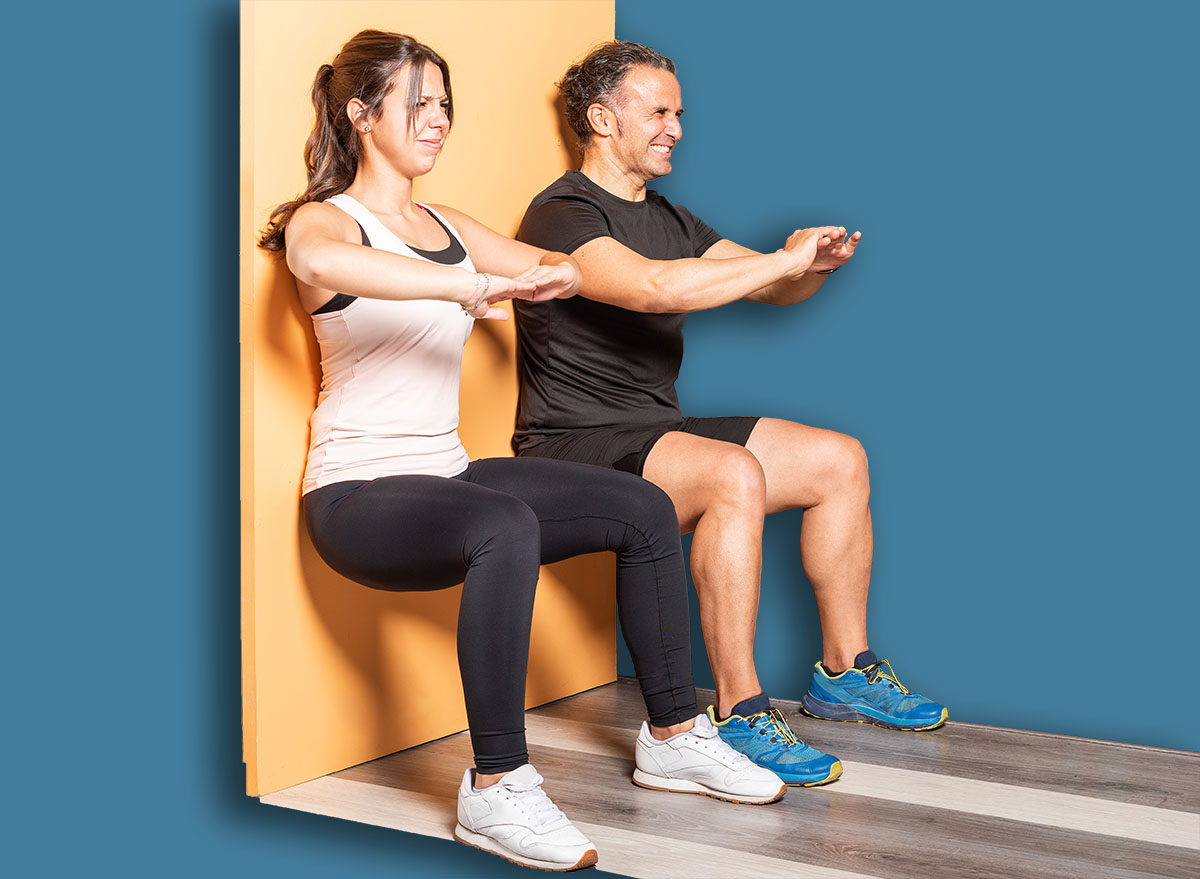

Walk into any gym or even just watch people move through a busy day, and you’ll notice a gap. Some people sit down and stand up without thinking twice. Others hesitate, shift their weight, or rely on their hands for support. That difference almost always comes back to leg strength.
Over the years, coaching athletes and everyday clients, I’ve found that lower-body strength holds onto independence longer than almost anything else. Strong quads and glutes make daily movement feel automatic. When those muscles fade, even simple things start to feel like effort. It’s rarely one big moment. It’s a slow buildup of fatigue, stiffness, and hesitation.
One of the simplest ways I’ve tested this with clients is the wall sit. No equipment, no complicated setup. Just you, a wall, and your legs doing the work. The amount of time you can hold that position says a lot about how strong and capable your lower body really is. Let’s break down why it matters, how to do it right, and what your score actually means.
Why This Simple Hold Tells You So Much
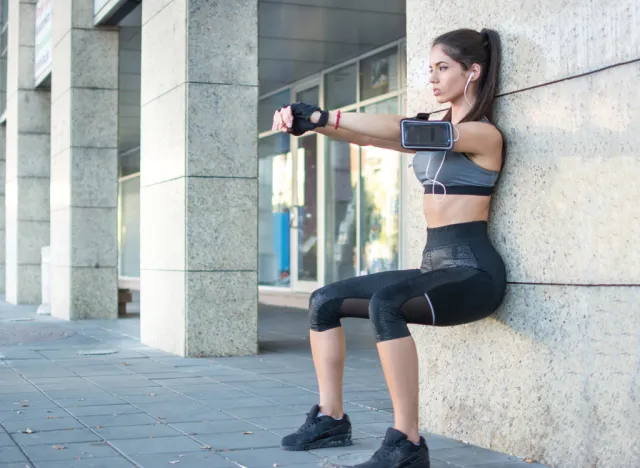
The wall sit looks simple, but it digs into something many people overlook: muscular endurance. Your legs have to keep producing force without a break while your body stays in one position. There’s no bouncing in and out of reps and no chance to hide behind momentum. You settle into the position, and your muscles have to hold their ground.
That’s where isometric strength comes into play. Holding a position like this trains your muscles to stay switched on under constant tension. Your quads, glutes, and core work together to keep your joints stacked and your posture steady. Over time, that kind of training builds better joint stability, improves control, and helps your body handle longer stretches of activity without breaking down.
It also carries over directly to real life. Think about standing in line, walking through an airport, or lowering yourself into a chair and controlling the descent. Your muscles don’t get to relax between reps in those situations. They stay engaged and keep working. The wall sit builds that exact quality, which is why it’s such a reliable test.
You’ll also feel weak links show up pretty quickly. When your quads start to fade, your depth changes. When your hips lose tension, your knees drift or your posture softens. Holding a clean position for time shows that your legs can stay strong, controlled, and consistent even as fatigue builds.
How to Set Up a Proper Wall Sit
Form matters here. A sloppy wall sit turns into a test of how long you can tolerate discomfort. A clean wall sit becomes a real measure of strength.
How to Do It:
- Stand with your back against a wall and your feet about two feet in front of you.
- Slide your back down the wall while bending your knees.
- Lower until your thighs reach roughly parallel to the floor.
- Place your feet flat with your knees stacked over your ankles.
- Keep your chest tall and your core tight as your back stays in contact with the wall.
- Hold the position until your legs can no longer maintain it.
Best Variations: Single-Leg Wall Sit, Weighted Wall Sit, Heels-Elevated Wall Sit, Alternating Leg Lift Wall Sit, Banded Wall Sit.
What Your Wall Sit Time Says About Your Leg Strength
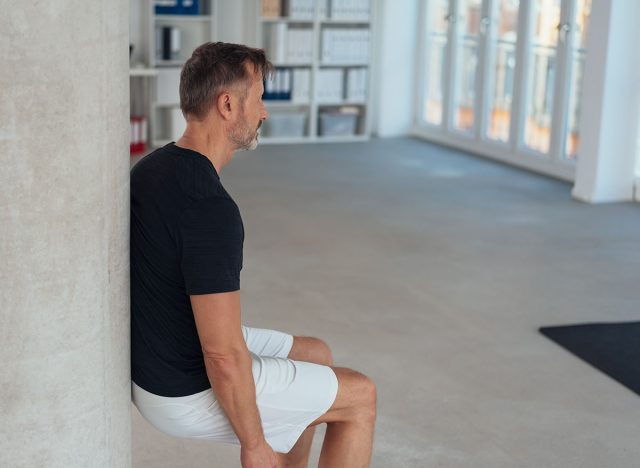
This isn’t about chasing a number just to say you did it. It’s about understanding where your lower-body strength stands right now.
- Under 25 seconds: Room to Build
Your legs likely fatigue quickly during longer tasks. This is a starting point, not a limitation.
- 25 to 60 seconds: Solid Base
You’ve got a good foundation. Your legs can handle everyday movement, though longer efforts may still wear you down.
- 60 to 90 seconds: Stronger Than Most
This is where things separate. Your legs show real strength and control under fatigue.
- 90+ seconds: Stronger Than 90% of Peer
At this level, your lower body holds tension, maintains alignment, and keeps working even when it gets uncomfortable. That’s a strong sign of long-term durability.
How to Build Legs That Don’t Fade Mid-Task
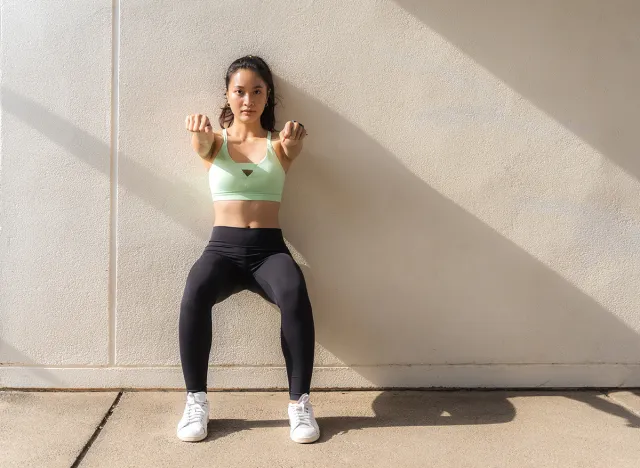
Improving your wall sit time comes down to building strength you can actually use. The goal isn’t just to last longer against a wall. It’s to make daily movement feel easier.
- Practice the wall sit regularly: Hold for 2 to 3 minutes, 2 to 3 times per week, and gradually push your limit.
- Add controlled squats: Focus on slow reps to build strength through a full range of motion.
- Use step-ups and split squats: These improve balance and strengthen each leg individually.
- Train your glutes directly: Bridges and hip thrusts help support your knees and take pressure off your lower back.
- Pay attention to position: Strong legs still need good alignment. Keep your knees tracking well and your posture steady.
Strong legs don’t just show up in workouts. They show up when you move through your day without thinking about it. If you can hold a wall sit past that 90-second mark, you’re not just doing well for your age. You’re setting the pace.
References
- Frith, Emily, and Paul D Loprinzi. “The Association between Lower Extremity Muscular Strength and Cognitive Function in a National Sample of Older Adults.” Journal of lifestyle medicine vol. 8,2 (2018): 99-104. doi:10.15280/jlm.2018.8.2.99
- Grgic, Jozo, and Pavle Mikulic. “Effects of Attentional Focus on Muscular Endurance: A Meta-Analysis.” International journal of environmental research and public health vol. 19,1 89. 22 Dec. 2021, doi:10.3390/ijerph19010089
- Oranchuk, Dustin J et al. “Isometric training and long-term adaptations: Effects of muscle length, intensity, and intent: A systematic review.” Scandinavian journal of medicine & science in sports vol. 29,4 (2019): 484-503. doi:10.1111/sms.13375