If You Can Hold a Wall Sit This Long After 60, Your Lower-Body Power Is Top-Tier
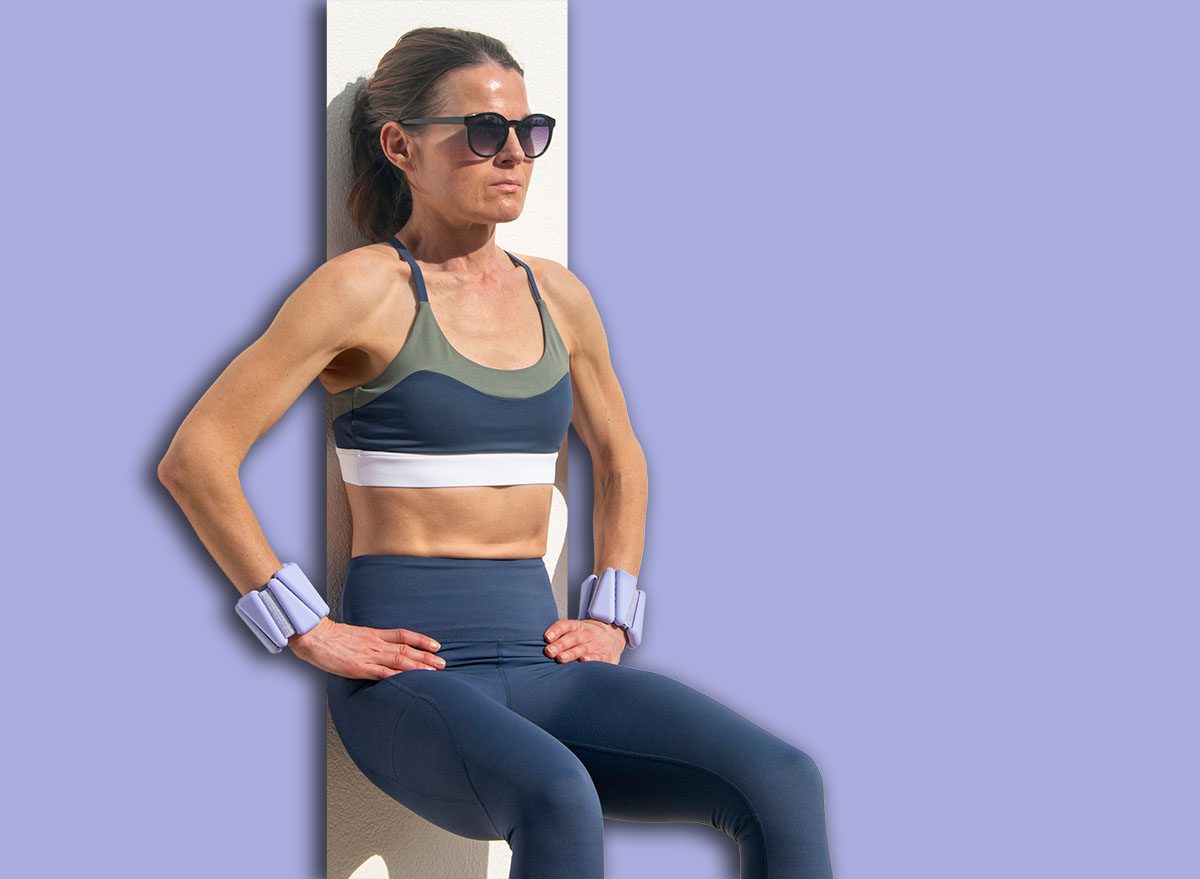

A wall sit can light up your legs in a hurry. You slide down the wall, settle into position, and suddenly your quads and glutes have to keep you there. There’s no bouncing through reps or leaning on momentum. Your lower body has to create force and hold it.
After 60, that strength carries into a lot more than exercise. Strong quads and glutes help you stand up with more pop, climb stairs with more control, and move through hills or uneven ground with a steadier base. They also help your hips and knees stay supported when you walk, step down, or change direction.
Lower-body power starts with the ability to produce force. Your muscles need to turn on quickly and stay active long enough to support the movement. Wall sits help build that foundation by keeping the quads, glutes, and hips under steady tension. The more comfortable your body gets creating and holding that tension, the better prepared your legs are for stronger squats, step-ups, stairs, and everyday movement.
I use wall sits with clients when I want to build leg endurance without overcomplicating the session. They’re easy to set up, easy to measure, and they give a clear picture of how well someone can hold a strong lower-body position. Ahead, you’ll see why wall sits work, how to test yourself, what your score means, and how to build stronger legs after 60.
Why Wall Sits Support Lower-Body Power After 60
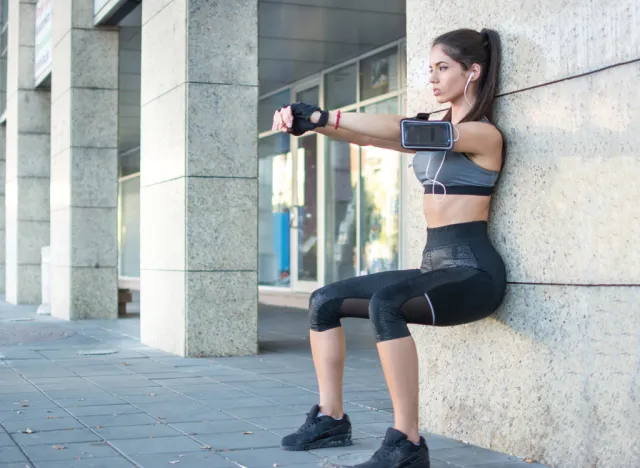
Wall sits train your quads and glutes in a position that shows up all over daily life. You use similar leg angles when you sit into a chair, stand back up, walk downstairs, or lower yourself toward the floor. Holding the position gives those muscles more time under tension, which helps build endurance and strength throughout a useful range of motion.
The wall sit also reinforces muscle activation. Your quads have to stay switched on to support your knees, while your glutes help stabilize your hips and keep your pelvis from shifting. That steady effort gives your body a stronger base for more dynamic movements. When you stand up from a chair or climb a set of stairs, your legs can produce force more efficiently because they’ve spent time learning how to hold strong positions.
There’s also a control piece here. Your hips, knees, and ankles need to stay aligned while your legs work. Building that control supports smoother movement and greater confidence on steps, hills, and during longer periods on your feet. A wall sit won’t replace squats, step-ups, or loaded strength training, but it fits nicely alongside them and builds a lot of useful leg capacity.
How to Perform a Proper Wall Sit
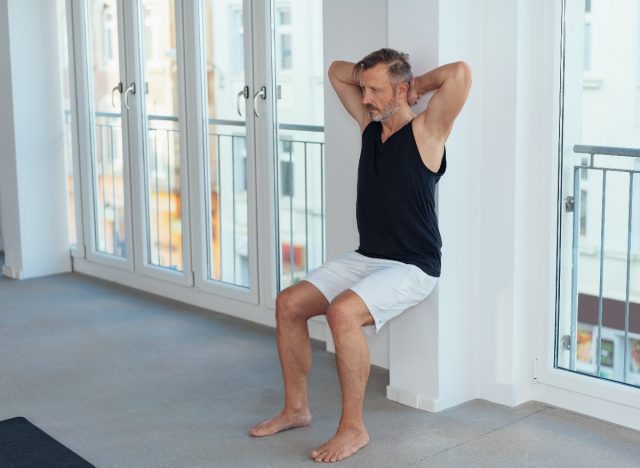
A good wall sit should feel challenging in your quads and glutes while your torso stays supported against the wall. Set your feet far enough forward that your knees stay stacked over your ankles. Once you find a comfortable depth, settle in and hold the same position without sliding up or down.
How to Do It:
- Stand with your back against a wall and your feet about two feet in front of you.
- Slide down the wall while bending your knees.
- Lower until your thighs reach roughly parallel to the floor.
- Keep your feet flat and your knees stacked over your ankles.
- Brace your core and keep your chest tall against the wall.
- Hold the position while breathing steadily.
Movement Standard: Your wall sit counts when your back stays against the wall, your knees stay in line with your ankles, and your thighs stay near parallel to the floor. Start at a slightly higher position if you’re building toward that depth.
Best Variations: High Wall Sit, Weighted Wall Sit, Banded Wall Sit, Single-Leg Wall Sit, Heels-Elevated Wall Sit.
Wall Sit Test After 60: What Your Time Means
Your score comes from a clean hold, not from grinding through a position that keeps changing. Stay at the same depth, keep your feet planted, and let your breathing stay calm as the clock runs.
- Under 20 seconds: Building Your Base
This is a useful starting point for learning how to hold tension through your legs. Keep the position comfortable and repeat shorter holds a few times per week. Your quads and glutes will start building endurance quickly when the reps stay clean.
- 20 to 45 seconds: A Solid Everyday Foundation
Your legs can support the position with good control, and you’ve got a base for daily movement like stairs, walking, and getting up from chairs. Building toward longer holds can improve your confidence during more demanding lower-body tasks.
- 45 to 75 seconds: Strong Leg Endurance
Your quads and glutes are staying active for a meaningful amount of time. This range usually reflects good control through the hips and knees, as well as the ability to keep your lower body working as fatigue builds.
- 75+ seconds: Top-Tier Lower-Body Power and Control
This is an impressive result after 60. Your legs can maintain force, your hips stay stable, and your position holds together through a longer effort. That gives you a strong foundation for stairs, hills, squats, step-ups, and more athletic movement.
How to Build Stronger Legs and Better Wall Sit Endurance
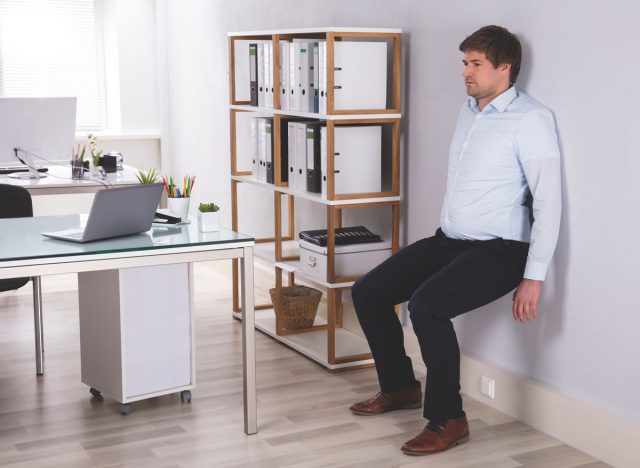
Getting better at wall sits comes from a mix of strength, time under tension, and regular practice. Your legs respond well when you give them a clear challenge, then build gradually from week to week. Keep the hold quality high, use a depth you can control, and add other lower-body movements that support the same muscles. Over time, the wall sit feels less like a burn test and more like a position you can own.
- Practice wall sits two to three times per week: Start with two or three holds and give yourself enough rest to keep the position clean.
- Build time gradually: Add five to 10 seconds once your current hold feels steady from start to finish.
- Train full-range squats: Bodyweight squats, goblet squats, and box squats target the same major muscles.
- Use step-ups for practical leg strength: Step-ups build power through one leg at a time and carry over well to stairs and hills.
- Strengthen your glutes directly: Bridges, hip thrusts, and split squats help your hips stay strong and stable.
- Add controlled tempo work: Slow squats and pause squats increase time under tension while improving control.
- Keep your knees and hips moving well: gentle ankle and hip mobility, along with warm-up sets, can make the wall sit feel smoother and more comfortable.
- Retest every few weeks: Use the same wall, depth, and setup to see real progress.
A strong wall sit shows that your legs can generate force, stay active, and maintain a solid position as the effort builds. That carries into the everyday movements that keep you active and confident after 60.
References
- Jones MD, Tan E, Woo J, Bui E, Wong R, Fotheringham A, Schutte AE, Parmenter BJ. Acute blood pressure responses to plank and wall sit isometric exercise in adults. J Hypertens. 2026 Feb 1;44(2):288-294. doi: 10.1097/HJH.0000000000004191. Epub 2025 Nov 14. PMID: 41252651; PMCID: PMC12746770.
- Steves, Claire J et al. “Kicking Back Cognitive Ageing: Leg Power Predicts Cognitive Ageing after Ten Years in Older Female Twins.” Gerontology vol. 62,2 (2016): 138-49. doi:10.1159/000441029
- Strollo SE, Caserotti P, Ward RE, Glynn NW, Goodpaster BH, Strotmeyer ES. A review of the relationship between leg power and selected chronic disease in older adults. J Nutr Health Aging. 2015 Feb;19(2):240-8. doi: 10.1007/s12603-014-0528-y. PMID: 25651453; PMCID: PMC4840887.