5 Walking Exercises That Protect Brain Health Faster Than Crossword Puzzles After 60
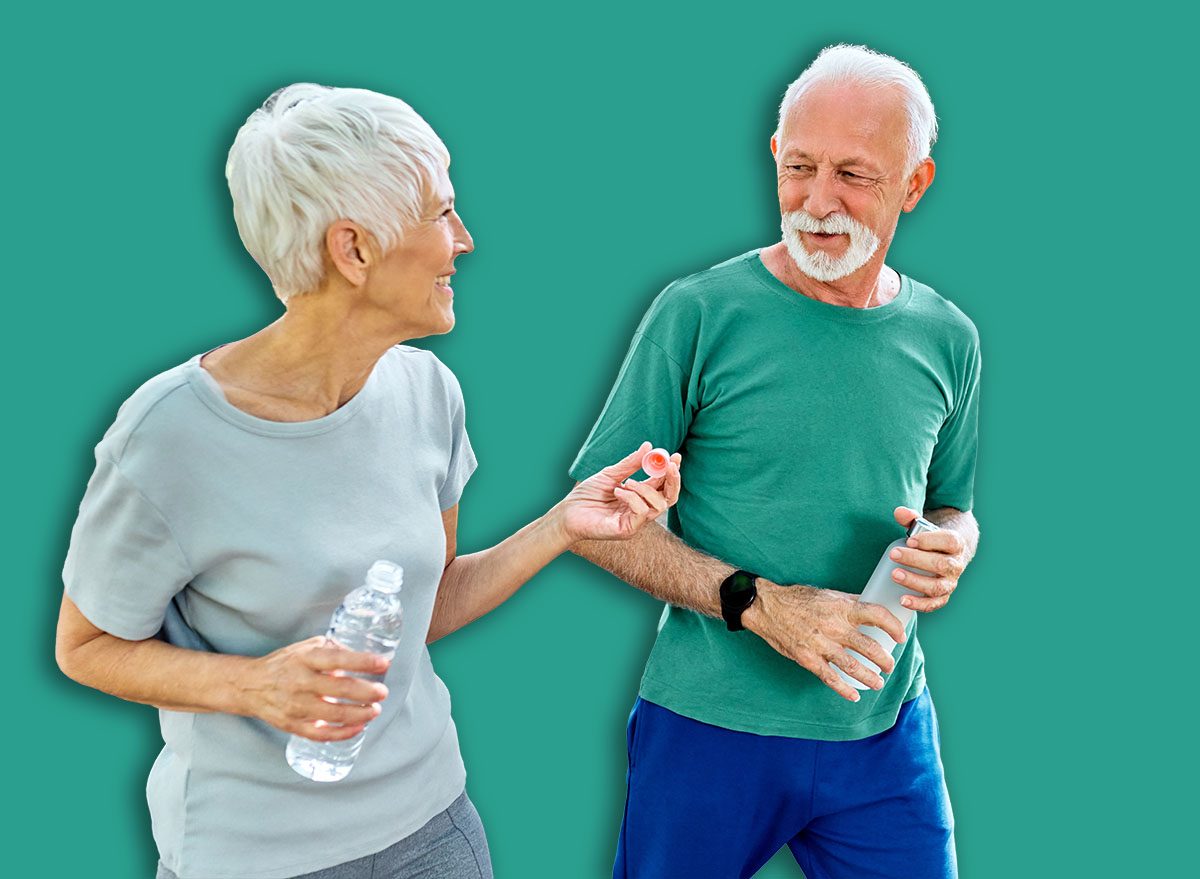

When older adults want to sharpen their brain health, many turn to crossword puzzles, Sudoku, word finds, and the like. Those are all great ways to maintain mental sharpness. But physical exercise, like walking, is surprisingly beneficial as well. The reason is simple. When you take a brisk walk, it increases blood flow to your head. Along with it come healthy nutrients and oxygen. This process can also help your memory, lower stress hormones, and generate new brain cells. Plus, walking will put you in an overall better mood.
Crossword puzzles and walking are two surefire ways to keep your brain happy and healthy, but they go about it differently.
“A crossword gives your brain a focused workout. It challenges skills like memory, vocabulary, and problem-solving, but it mainly strengthens abilities you’re already using. That’s why brain games tend to make you better at the game itself, rather than improving overall cognitive function,” explains Rachel Lambert, LPC, BCN, Founder of Braincode Centers, where she helps people improve brain health through neurofeedback and brain mapping. “Walking works from the opposite direction. Physical movement increases blood flow to the brain and stimulates the release of brain-derived neurotrophic factor (BDNF), a protein that helps brain cells grow, adapt, and form new connections. Instead of exercising a single mental skill, walking supports overall brain health.”
If Lambert had to choose one over the other, she would recommend walking, as it supports the brain as a whole—a benefit that goes beyond completing a puzzle.
So, if you’re ready to sharpen your brain, we spoke with experts who share five walking exercises that help protect brain health.
Brisk Interval Walking
“Brisk interval walking provides a greater cardiovascular challenge for the body compared to steady-state walking, and research indicates that greater cardiovascular challenge is associated with better brain perfusion,” says Dr. Mariam Zakhary, DO, Clinical Advisor of Ikon Recovery Center, located in New Jersey, who’s double board-certified in Physical Medicine and Rehabilitation as well as Sports Medicine.
Here’s how to do it:
- Alternate between walking at a brisk pace for 1 to 2 minutes.
- Then, walk at a comfortable speed for 2 to 3 minutes.
Backwards Walking
“The act of backward walking requires more attentional resources as well as increased coordination and balance than forward walking. Additionally, when individuals walk backward, the processing demands on the brain increase as the brain is required to interpret movement patterns differently,” Dr. Zakhary points out.
Here’s how to do it:
- Stand tall with your feet hip-width apart and your core engaged.
- Step one foot straight back, landing on the ball of your foot before lowering your heel.
- Shift your body weight onto your back foot.
- Step the opposite foot back, and continue to alternate.
Dual-Task Walking
When you perform an additional task while walking, there are substantial executive function processing demands on the brain.
“Executive function is often described as involving ‘thinking’ versus automatic processes. Research has demonstrated that dual-tasking during walking can improve cognitive processing speed over time, indicating improved performance across multiple tasks,” Dr. Zakhary tells us.
Here’s how to do it:
- Stand tall with your feet hip-width apart.
- Start to walk at a comfortable speed in a clear path.
- While walking, perform a secondary task. Examples include naming animals as you walk or reciting numbers backward.
Uneven Surface Walking
Uneven surface walking can be completed on surfaces such as the beach, dirt trails, gravel, and grassy areas. Make sure the surface is completely stable and free of obstacles.
“Uneven surface walking engages additional neural networks compared to walking on smooth flat surfaces such as sidewalks. In particular, uneven-surface walking places greater emphasis on proprioceptive processing, where individuals use their senses to determine their position and orientation in space,” Dr. Zakhary says.
Here’s how to do it:
- Choose a safe, uneven surface to walk on.
- Stand tall with your feet hip-distance apart, and brace your core.
- Start to walk at a slow, comfortable pace.
- Keep your gaze ahead rather than looking down at your feet.
Direction Change Walking
This exercise involves turning into a figure-eight pattern, making gentle turns as you walk and incorporating side-stepping motions.
“All of these direction changes require enhanced agility and spatial awareness, which are critical components of successful navigation through complex environments,” Dr. Zakhary explains.
Here’s how to do it:
- Begin by setting up two markers, roughly 6 to 10 feet apart.
- Stand tall with your feet hip-distance apart, and brace your core.
- Start to walk at a comfortable pace in a figure-eight pattern around the markers.
- Make sure to make smooth, controlled turns as you follow the pattern.