If You Can Finish This 7-Minute Bodyweight Test After 60, You’re in Peak Shape

Staying fit after 60 has less to do with how much weight you can lift and far more to do with how well your body holds itself together. Strength still matters, but control, coordination, and endurance often determine whether daily movement feels confident or cautious. Getting up from a chair, carrying groceries, or holding a steady position without discomfort all rely on these qualities working together.
Bodyweight testing provides a clear window into how well your muscles, joints, and nervous system work together. There is no equipment to mask weak links, and no momentum to hide behind. You either control your body or you do not. That honesty makes simple movements powerful indicators of real-world fitness.
Short tests also reward consistency over intensity. You do not need a long workout to reveal whether your legs fatigue quickly, your core loses tension, or your hips struggle to stay engaged. When positions break down early, it often reflects gaps in strength endurance, and postural control that show up in everyday life.
This 7-minute bodyweight test brings all of that together. It challenges your legs, core, and hips with timed holds that demand focus and composure. Finishing it with solid form sends a clear signal that your body still performs at a high level. Let’s break down why this approach works and how to tackle the test with confidence.
The Top Benefits of Bodyweight Exercise
Bodyweight training remains one of the most effective ways to build and maintain fitness after 60 because it trains the body as a unit. Each movement requires coordination, balance, and muscle engagement without relying on machines or external support. That transfer to daily life is where the real payoff shows up.
- Improves joint stability and control: Holding positions like planks and wall sits trains the muscles that protect your joints during everyday movement.
- Builds strength and endurance: Timed holds teach muscles to sustain tension, supporting posture, walking efficiency, and fatigue resistance.
- Enhances balance and body awareness: Supporting your own body weight sharpens proprioception and coordination.
- Requires minimal equipment and space: You can train anywhere without barriers, which makes consistency easier to maintain.
- Supports long-term mobility: Controlled bodyweight work reinforces movement patterns that keep you active and independent.
The 7 Minute Stability and Strength Test
What You Need
This test requires only a clear wall, a mat or comfortable floor surface, and a timer. The whole test takes 7 minutes, including rest periods, and focuses on controlled holds rather than repetitions.
The Routine
- Wall Sit for :30, Rest :30
- Plank Hold for :30, Rest :30
- Glute Bridge Hold for :30, Rest :30
Repeat the full sequence two times for a total of six work intervals. Take a one-minute rest period between rounds.
Directions
Move through each exercise in order, holding the position for the full 30 seconds. Rest exactly 30 seconds between exercises. Focus on posture and breathing rather than pushing through sloppy form. If your form breaks down, stop the hold, rest, and note where fatigue showed up. Read on for the detailed instructions.
Wall Sit
The wall sit challenges lower body strength and endurance while reinforcing upright posture. It targets the quads, glutes, and core simultaneously, mirroring the demands of standing and walking for extended periods. Holding this position reveals how well your legs support you when fatigue builds. Strong performance here often correlates with better stair climbing and reduced knee stress.
How to Do It:
- Stand with your back against a wall and your feet about hip-width apart.
- Walk your feet out and slide down until your thighs reach a comfortable depth.
- Gently press your lower back into the wall and keep your chest upright.
- Distribute weight evenly through both feet.
- Breathe steadily and hold for 30 seconds.
Best Variations:
- Higher wall sit for reduced knee stress
- Single heel elevated wall sit to increase challenge
- Dumbbell goblet wall sit, if added load feels appropriate
Plank Hold
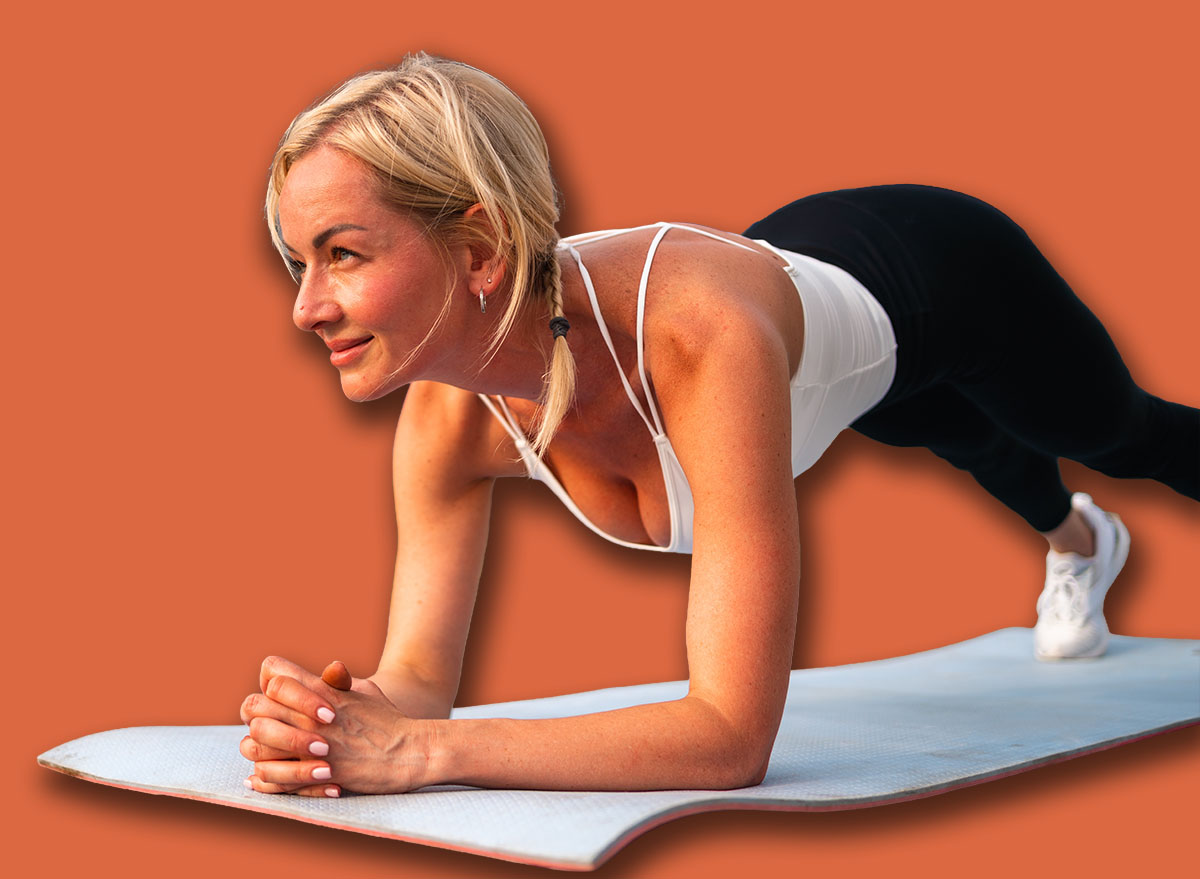
The plank tests core stability from the shoulders to the hips. It requires continuous engagement without movement, reflecting how your core supports posture throughout the day. A strong plank indicates that your trunk muscles can resist fatigue and protect your spine. That support plays a significant role in balance, lifting mechanics, and back comfort.
How to Do It:
- Place your forearms on the floor with elbows under your shoulders.
- Extend your legs behind you and support your weight on your toes.
- Squeeze your core tight.
- Keep your body in a straight line from head to heels.
- Hold for 30 seconds while breathing slowly.
Best Variations:
- Elevated plank with hands on a bench or chair
- Knee plank to reduce intensity
- Plank with alternating shoulder taps for added challenge
Glute Bridge Hold
The glute bridge hold focuses on hip strength and pelvic control. Strong glutes support walking mechanics, reduce low back strain, and improve balance. Holding the top position helps your hips stay engaged rather than relying on momentum. This movement often highlights asymmetries and weak links that show up during prolonged standing or walking.
How to Do It:
- Lie on your back with knees bent and feet flat on the floor.
- Place your arms by your sides for support.
- Drive through your heels and lift your hips.
- Squeeze your glutes and keep your ribs down.
- Hold the top position for 30 seconds.
Best Variations:
- Single-leg glute bridge for added difficulty
- Feet elevated glute bridge
- Short-range bridge hold for beginners
Smart Tips for Passing Bodyweight Tests After 60

Finishing this test with a strong form requires more than grit. Preparation, pacing, and consistency play a significant role in how your body responds. These strategies help reinforce the qualities this test measures.
- Prioritize breathing control: Slow, steady breaths help maintain tension without spiking fatigue.
- Train isometrically regularly: Isometric work two to three times per week builds endurance efficiently.
- Warm up your hips and spine: Gentle mobility before testing improves comfort and positioning.
- Focus on posture cues: Small alignment adjustments can significantly extend hold time.
- Respect recovery: Adequate rest between sessions helps improve strength endurance without joint irritation.
If you can complete this 7-minute test after 60 with steady form and controlled breathing, your body demonstrates strength, stability, and resilience that support long-term independence. That combination defines peak shape at any age.
References
- Gronek, Joanna et al. “Exercise in Aging: Be Balanced.” Aging and disease vol. 12,5 1140-1149. 1 Aug. 2021, doi:10.14336/AD.2021.0107
- Luke Del V, Shannon G, Hays D. Bodyweight Training for Muscular Strength & Endurance. J Yoga & Physio. 2022; 10(2): 555783. DOI: 10.19080/JYP.2022.10.555783
- Source: https://pmc.ncbi.nlm.nih.gov/articles/PMC8279522/
- Source: https://pmc.ncbi.nlm.nih.gov/articles/PMC8279522/
- Source: https://www.researchgate.net/publication/364308569_Bodyweight_Training_for_Muscular_Strength_Endurance/fulltext/65be3067790074549760bace/Bodyweight-Training-for-Muscular-Strength-Endurance.pdf