4 Bed Exercises That Restore Knee Strength Faster Than Resistance Bands After 60

Knee strength is rarely just about the knee itself. It’s the result of how well everything around the joint works together, from your glutes and hamstrings to your quads and core, all contributing to how your knee handles force, absorbs impact, and stays aligned. Over the years, working with athletes and everyday clients, I’ve seen that the people who move the best don’t just have strong legs. They have strong support systems around the joint that keep everything working smoothly without extra strain.
As the years go on, that system can start to lose some of its sharpness. Strength doesn’t show up quite the same way, coordination becomes a little less automatic, and muscles that once fired without thinking need more intention to do their job. When you layer in more time sitting, fewer strength-focused movements, and the wear and tear that naturally builds over time, the knees tend to feel the difference. It’s rarely one major issue. More often, it’s a gradual shift where the surrounding muscles stop contributing the way they used to.
That’s why simple, controlled training can go such a long way, especially when you set it up in a way that supports your body instead of fighting against it. A bed provides just enough stability to take pressure off your joints while still allowing your muscles to stay active and engaged, making it easier to focus on control, positioning, and consistency. I often use variations like these, especially when dialing things back for joint health without losing progress. Below, you’ll find four bed-based movements that build the kind of strength and stability your knees rely on, helping you move with more confidence and less hesitation.
Extended Leg Glute Bridge
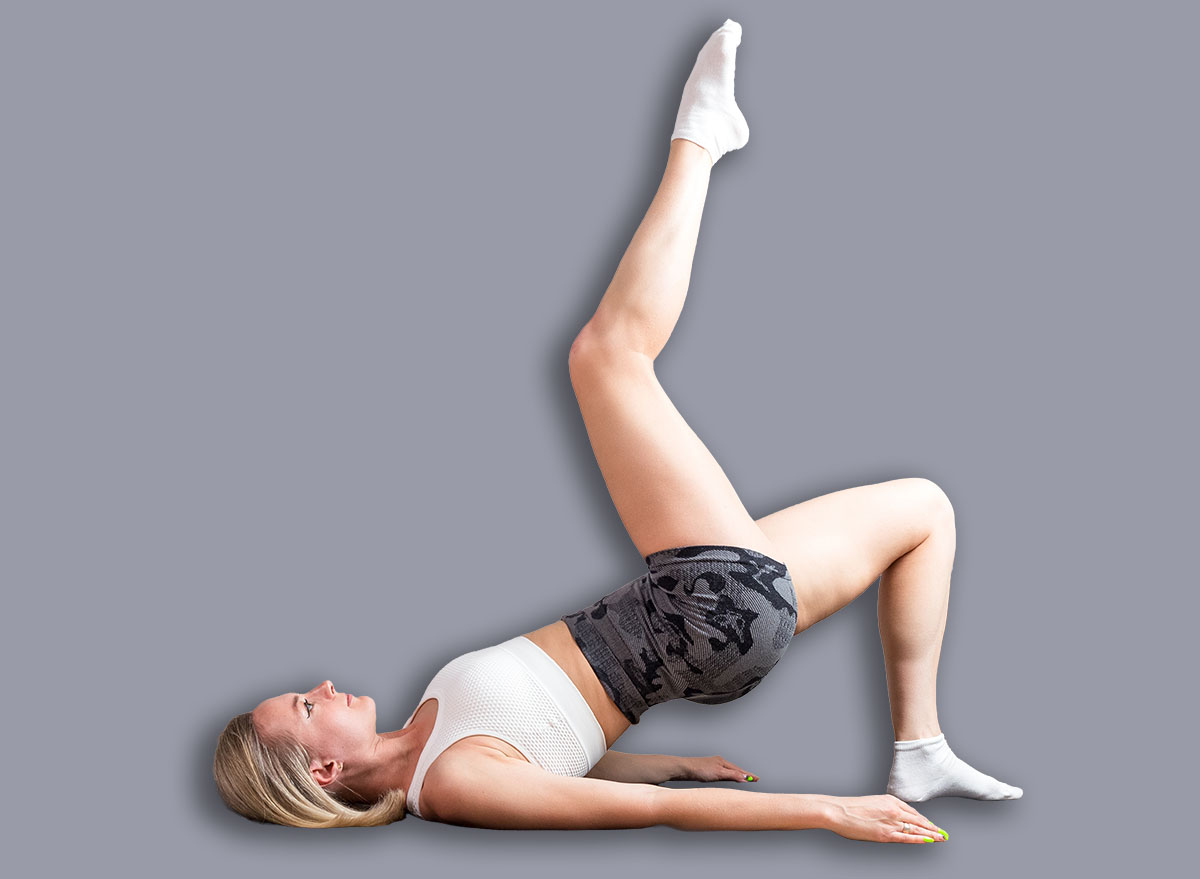
This variation challenges your body in a way that goes beyond a standard bridge by shifting more of the workload onto one side. As you extend one leg, the glutes and hamstrings on the working side have to stabilize your hips while keeping everything level, which directly affects how your knee moves. That added demand helps clean up small imbalances that tend to build over time and often go unnoticed until something starts to feel off. It also reinforces better control through your hips, which plays a big role in keeping your knees tracking properly. I like this one because it builds strength and control together, rather than treating them as separate pieces.
Muscles Trained: Glutes, hamstrings, core, and hip stabilizers
How to Do It:
- Lie on your back on your bed with one knee bent and one leg extended straight.
- Press your planted foot firmly into the bed.
- Drive your hips upward while keeping your extended leg in line with your body.
- Squeeze your glutes at the top position.
- Lower your hips back down with control.
Recommended Sets and Reps: Perform 3 sets of 8 to 10 reps per side. Rest for 45 to 60 seconds between each set
Best Variations: Feet elevated bridge, single-leg floor bridge, stability ball bridge
Form Tip: Keep your hips level so neither side drops as you lift.
Extended Leg Glute Bridge Hold
Holding the top position shifts the focus from movement to sustained control, which is where many people start to lose stability. Instead of moving in and out of each rep, your muscles have to stay engaged throughout, creating a steady demand on your glutes and hamstrings. That kind of tension helps build endurance in the muscles that support your knees during prolonged walking or standing. It also teaches your body how to maintain alignment without constantly adjusting or compensating. This one tends to look simple at first glance, but it builds quickly when you stay intentional with it.
Muscles Trained: Glutes, hamstrings, core, and hip stabilizers
How to Do It:
- Lie on your back with one knee bent and the other leg extended.
- Press your foot into the bed and lift your hips.
- Hold the top position while keeping your extended leg steady.
- Maintain tension through your glutes and core.
- Lower down after the hold is complete.
Recommended Sets and Reps: Perform 3 sets of 20 to 30 second holds per side. Rest for 45 to 60 seconds between each set
Best Variations: Shorter holds, double-leg bridge hold, feet elevated hold
Form Tip: Keep your core engaged so your lower back doesn’t take over.
Glute Bridge Hold
This is your baseline builder, and it sets the tone for everything that follows. With both feet grounded, you can focus on clean positioning and consistent muscle engagement without worrying about balance or shifting. That makes it easier to lock in proper hip extension, which directly influences how your knee tracks during everyday movement. When your glutes are doing their job, your knees don’t have to compensate as much, and things start to feel smoother overall. It’s simple, but it carries over more than people expect.
Muscles Trained: Glutes, hamstrings, core, and lower back stabilizers
How to Do It:
- Lie on your back with both knees bent and feet flat on the bed.
- Press through your heels and lift your hips upward.
- Hold the top position while squeezing your glutes.
- Keep your ribs down and core engaged.
- Lower your hips back down with control.
Recommended Sets and Reps: Perform 3 sets of 30 to 40 second holds. Rest for 45 to 60 seconds between each set
Best Variations: Feet elevated bridge, resistance band bridge, pause reps
Form Tip: Drive through your heels to engage your glutes more.
Glute Bridge Marching
This variation brings movement back into the equation while still demanding control, which is exactly what your body needs for real-world carryover. As you lift one foot at a time, your hips and core must stabilize without letting your pelvis shift, mirroring what happens when you walk, climb stairs, or change direction. That coordination between your hips and core plays a big role in keeping your knees supported during those movements. It also exposes any side-to-side differences, so you can start cleaning them up. If you want something that feels more functional and directly applicable, this one delivers.
Muscles Trained: Glutes, hamstrings, core, and hip flexors
How to Do It:
- Lie on your back with both knees bent and feet flat.
- Lift your hips into a bridge position.
- Slowly lift one foot off the bed while keeping your hips level.
- Place it back down and repeat on the other side.
- Continue alternating in a controlled marching pattern.
Recommended Sets and Reps: Perform 3 sets of 10 to 12 marches per side. Rest for 45 to 60 seconds between each set
Best Variations: Slower tempo marching, hold between steps, feet elevated marching
Form Tip: Move slowly so your hips stay steady instead of shifting side to side.
The Best Tips for Building Knee Strength After 60
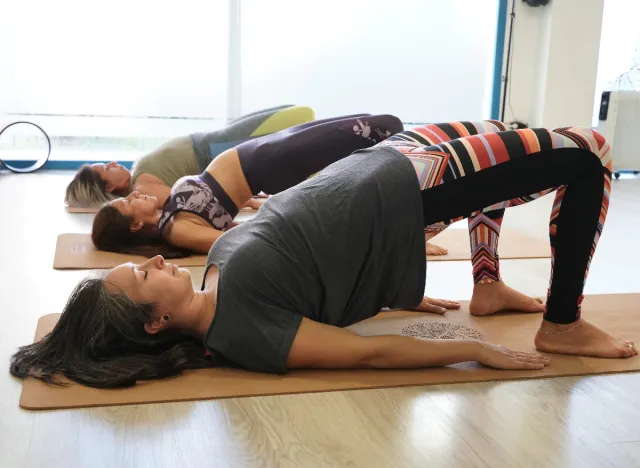
Improving knee strength is less about chasing intensity and more about building consistency with movements that actually support how you move day to day. When you focus on quality, control, and repetition over time, your joints start to feel more stable, and your movements become more efficient without forcing anything. I’ve seen people make steady progress with simple routines like this, especially when they stay patient and pay attention to how each rep feels instead of rushing through it. You don’t need a long list of exercises or a complicated plan. You just need the right movements done well and often enough to matter.
- Prioritize control over speed: Slowing down keeps your muscles engaged longer and improves joint stability.
- Focus on your glutes: Strong glutes take pressure off your knees and support better movement patterns.
- Stay consistent: Short, frequent sessions tend to produce better results than occasional longer workouts.
- Pay attention to alignment: Keep your knees tracking in line with your hips and feet during every rep.
- Progress gradually: Build up your reps and hold times slowly so your body can adapt without irritation.
Stick with these, and over time you’ll notice your knees feel more supported, more stable, and more capable during the movements that matter most.
References
- Sadeghi, Alireza et al. “Effectiveness of muscle strengthening exercises on the clinical outcomes of patients with knee osteoarthritis: A randomized four-arm controlled trial.” Caspian journal of internal medicine vol. 14,3 (2023): 433-442. doi:10.22088/cjim.14.3.433
- Maccarone, Maria Chiara et al. “Effects of the Full-Body in-Bed Gym program on quality of life, pain and risk of sarcopenia in elderly sedentary individuals: preliminary positive results of a Padua prospective observational study.” European journal of translational myology vol. 33,3 11780. 26 Sep. 2023, doi:10.4081/ejtm.2023.11780