5 Bed Exercises That Restore Leg Strength Faster Than Squats After 60
Believe it or not, every strength routine doesn’t need to start in a gym or even on the floor. Sometimes the best place to begin is right where you wake up. A few minutes of intentional movement in the morning can wake up the legs, get the joints moving, and remind the muscles that they’ve still got plenty left in the tank. Think of it as a strength tune-up before the day even gets going.
In my coaching work, I’ve found that people often stick with routines that minimize barriers. When an exercise feels easy to start and repeat, consistency increases. Bed-based movements are surprisingly effective because they provide support while still allowing the hips and thighs to work through meaningful ranges of motion. Clients often tell me their legs feel more awake and stable within just a few minutes.
The five exercises below target the glutes, thighs, and hips while encouraging smooth, controlled movement. They build strength in the muscles responsible for balance and stability. Perform them regularly, and you’ll build stronger legs, better coordination, and a morning routine that starts your day on a high note.
Glute Bridge
The glute bridge activates the glutes and hamstrings while encouraging strong hip extension. Many people spend long periods sitting during the day, which can make the glutes less active. This exercise quickly wakes up those muscles and helps restore strength in the hips. The movement also supports the lower back by strengthening the muscles that stabilize the pelvis. With consistent practice, glute bridges help rebuild lower-body strength and improve overall leg stability.
Muscles Trained: Glutes, hamstrings, and core stabilizers.
How to Do It:
- Lie on your back with your knees bent and your feet flat on the bed.
- Place your arms at your sides for support.
- Press through your heels and lift your hips upward.
- Squeeze your glutes at the top of the movement.
- Slowly lower your hips back to the starting position.
Recommended Sets and Reps: Perform 3 sets of 12 to 15 reps. Rest for 45 seconds between each set.
Best Variations: Single-leg glute bridge, pause glute bridge, elevated glute bridge.
Form Tip: Drive through your heels and focus on squeezing your glutes at the top.
Glute Bridge Marching
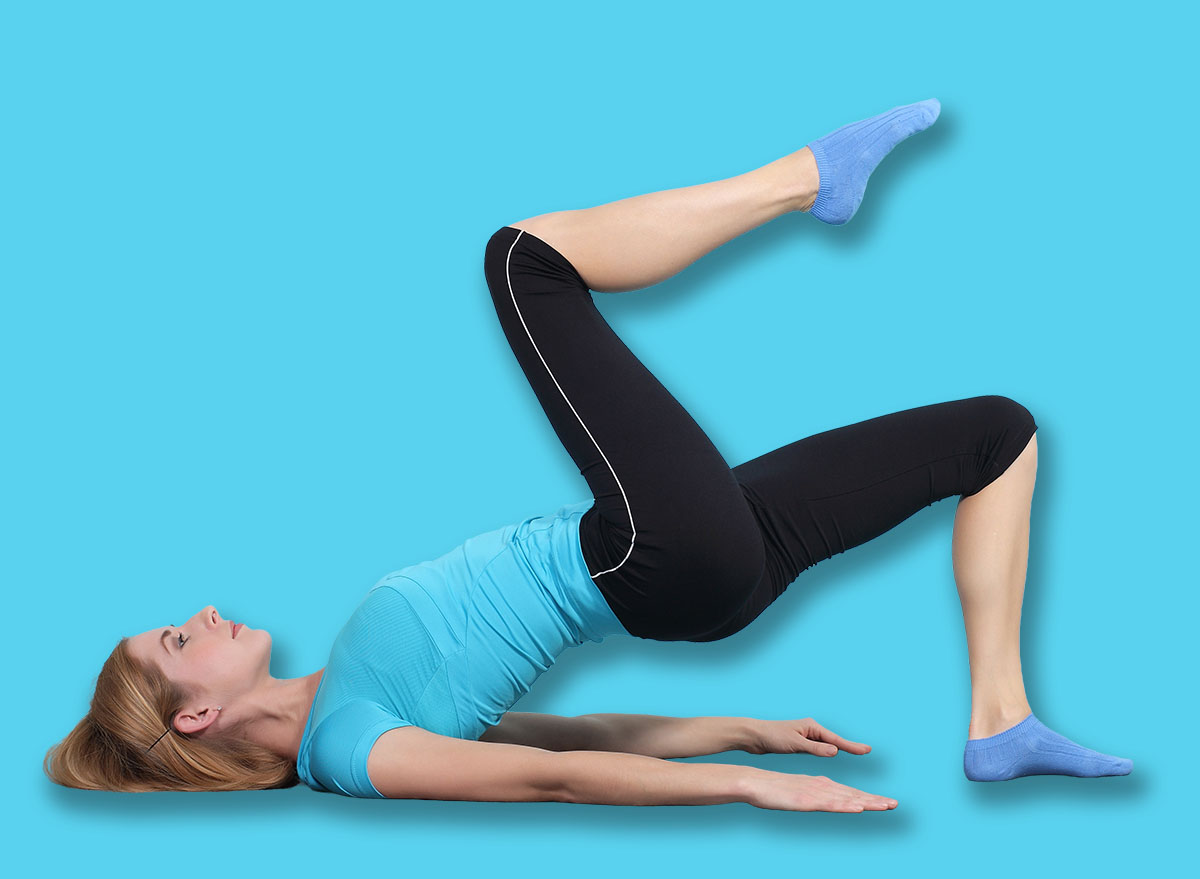
Glute bridge marching adds a stability challenge, forcing the hips and core to work harder. Holding the bridge position while lifting one foot encourages the glutes and hamstrings to stay active. This variation also strengthens the stabilizing muscles around the hips. Over time, these muscles improve balance and coordination during everyday activities. The movement builds strength while teaching the body to control each leg independently.
Muscles Trained: Glutes, hamstrings, and core stabilizers.
How to Do It:
- Begin in a glute bridge position with your hips lifted.
- Brace your core and keep your hips steady.
- Lift one foot a few inches off the bed.
- Lower the foot back down with control.
- Alternate legs while maintaining the bridge position.
Recommended Sets and Reps: Perform 3 sets of 10 to 12 marches per leg. Rest for 45 seconds between each set.
Best Variations: Slow tempo bridge march, pause bridge march, banded bridge march.
Form Tip: Keep your hips level as you alternate lifting each foot.
Sit-to-Stand
The sit-to-stand movement strengthens the thighs while reinforcing one of the most important patterns in daily life. Standing up from a seated position requires coordination between the quads, glutes, and hips. Practicing this movement repeatedly builds strength and confidence in the legs. The exercise also improves balance and encourages proper squat mechanics. Over time, it helps restore the strength needed for everyday activities.
Muscles Trained: Quads, glutes, hamstrings, and core.
How to Do It:
- Sit on the edge of the bed with your feet flat on the floor.
- Lean your torso slightly forward.
- Press through your feet and stand up.
- Pause briefly at the top.
- Lower yourself back down with control.
Recommended Sets and Reps: Perform 3 sets of 10 to 12 reps. Rest for 45 seconds between each set.
Best Variations: Slow tempo squat-to-stand, pause squat-to-stand, assisted squat-to-stand.
Form Tip: Drive through your heels and keep your chest tall as you stand.
Side-Lying Leg Lifts
Side-lying leg lifts strengthen the outer hips and glutes, which play an important role in balance and stability. These muscles help control hip alignment during walking and standing. Strengthening them improves overall leg strength and coordination. The controlled lift also encourages the hips to move through a comfortable range of motion. With regular practice, this exercise helps build stronger hips and more stable legs.
Muscles Trained: Glutes, outer hips, and hip stabilizers.
How to Do It:
- Lie on your side with your legs stacked.
- Support your head with your lower arm.
- Keep your top leg straight.
- Lift the leg upward slowly.
- Lower it back down with control.
Recommended Sets and Reps: Perform 3 sets of 12 to 15 reps per leg. Rest for 30 seconds between each set.
Best Variations: Banded leg lift, slow tempo leg lift, pulse raises.
Form Tip: Keep your hips stacked and avoid leaning backward during the lift.
Supported Split Squats
Supported split squats strengthen the legs while improving balance and coordination. The staggered stance encourages each leg to work independently. This helps rebuild strength evenly between both sides of the body. Holding onto the bed for support allows the movement to feel more stable and controlled. Over time, the exercise helps restore leg strength and improve confidence during single-leg movements.
Muscles Trained: Quads, glutes, hamstrings, and hips.
How to Do It:
- Stand beside the bed and hold the edge for support.
- Step one foot backward into a staggered stance.
- Bend both knees to lower into a lunge.
- Keep your chest upright and your core engaged.
- Push through your front foot to return to standing.
Recommended Sets and Reps: Perform 3 sets of 8 to 10 reps per leg. Rest for 45 seconds between each set.
Best Variations: Assisted split squat, pause split squat, tempo split squat.
Form Tip: Keep your front heel firmly planted throughout the movement.
Best Daily Tips for Restoring Leg Strength After 60
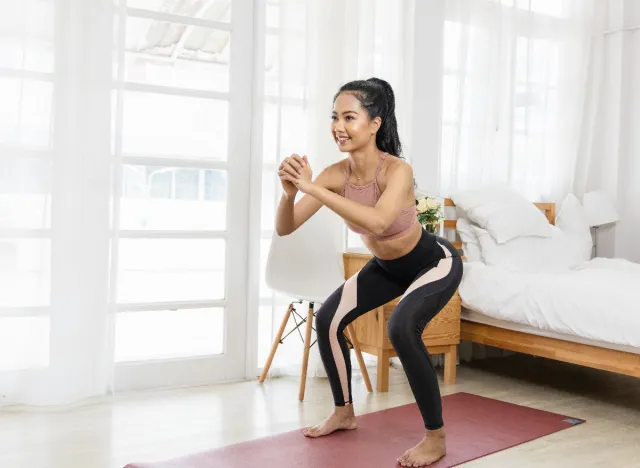
Rebuilding leg strength after 60 often comes down to consistency and smart exercise selection. The body responds best when the muscles receive regular stimulation through controlled movement. Small daily routines can create meaningful improvements in strength and stability over time.
- Focus on movements that mimic daily activities: Squatting, lunging, and bridging help strengthen the muscles used throughout the day.
- Move with control: Slow, steady repetitions improve muscle activation and joint stability.
- Train one leg at a time: Single-leg exercises help build balance and strengthen stabilizing muscles.
- Stay consistent with your routine: Short daily sessions often produce better results than occasional long workouts.
- Listen to your body: Progress gradually and increase effort as strength improves.
Stick with these exercises and your legs will grow stronger, steadier, and more capable with each passing week.
References
- Schumacher, Leah M et al. “Consistent Morning Exercise May Be Beneficial for Individuals With Obesity.” Exercise and sport sciences reviews vol. 48,4 (2020): 201-208. doi:10.1249/JES.0000000000000226
- Schumacher, Leah M et al. “Consistent exercise timing as a strategy to increase physical activity: A feasibility study.” Translational journal of the American College of Sports Medicine vol. 8,2 (2023): e000227. doi:10.1249/tjx.0000000000000227