5 Bed Exercises That Restore Thigh Strength Faster Than Gym Machines After 60
There’s something wonderfully powerful about starting your day with a few intentional movements before your feet ever hit the floor. Early exercise sets the tone, wakes up your muscles, and gets your body moving, helping you feel smooth and controlled rather than stiff and sluggish. These small, consistent efforts might seem simple, yet they tend to build momentum quickly, especially when the goal is restoring strength and confidence in your legs.
After 60, your body responds incredibly well to these “minimal dose” sessions. Rather than relying solely on length workouts, you gain the benefits of consistency and quality of movement. I’ve seen clients make noticeable improvements in strength and stability just by stacking these small wins day after day, especially when those movements target the muscles that support standing, walking, and getting up with ease.
The five bed exercises below are designed to activate and strengthen your thighs while also engaging the hips and core. They’re simple to perform, easy on the joints, and effective at building strength in a way that carries over into everyday movement. Perform them regularly, and you’ll start to feel your legs working better, responding quicker, and supporting you throughout the day.
Glute Bridge
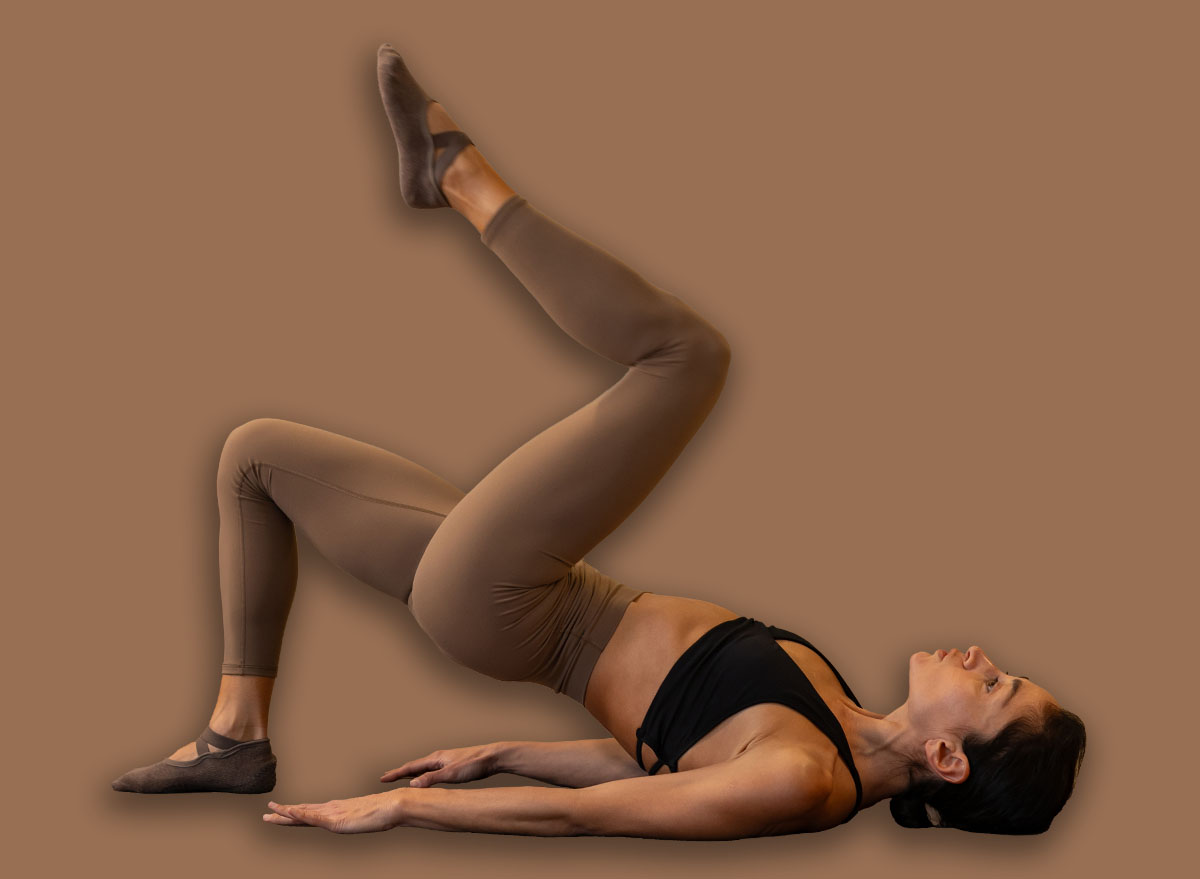
Glute bridges create a strong connection between the hips and thighs while encouraging the legs to produce force in a controlled position. As you press through your feet and lift your hips, the glutes and hamstrings engage while the quads assist in stabilizing the movement. This coordinated effort helps build strength across the entire lower body without placing unnecessary stress on the joints. Over time, it reinforces the same muscles you rely on when standing up and moving throughout the day.
Muscles Trained: Glutes, hamstrings, quads, and core stabilizers.
How to Do It:
- Lie on your back with your knees bent and feet flat on the bed.
- Place your arms at your sides.
- Press through your heels to lift your hips.
- Pause briefly at the top.
- Lower your hips back down with control.
Recommended Sets and Reps: Perform 3 sets of 12 to 15 reps. Rest for 30 seconds between each set.
Best Variations: Single-leg bridge, pause bridge, slow tempo bridge.
Form Tip: Drive through your heels and squeeze your glutes at the top.
Glute Bridge Marching
Glute bridge marching builds on the bridge’s foundation, adding a dynamic challenge that lights up the thighs and hips. As you lift one leg at a time, the supporting leg has to work harder to keep the hips level and stable. This creates a deeper level of engagement through the quads and glutes while also challenging balance and coordination. The alternating pattern closely mirrors how your body stabilizes while walking, making the carryover especially noticeable.
Muscles Trained: Glutes, quads, hamstrings, and core stabilizers.
How to Do It:
- Start in a glute bridge position.
- Lift one foot slightly off the bed.
- Hold briefly while keeping your hips level.
- Lower it back down.
- Alternate sides in a controlled rhythm.
Recommended Sets and Reps: Perform 3 sets of 10 to 12 reps per side. Rest for 30 seconds between each set.
Best Variations: Slow marching, pause marching, alternating holds.
Form Tip: Keep your hips steady and avoid letting them drop.
Squat-to-Stand
The squat-to-stand movement helps bridge the gap between lying down and standing up while reinforcing thigh strength. As you move from the bed to a standing position, your quads and glutes work together to produce force and control the transition. This makes the movement feel practical and directly tied to daily life. Over time, it builds confidence in your ability to stand up smoothly and without hesitation.
Muscles Trained: Quads, glutes, hamstrings, and core.
How to Do It:
- Sit near the edge of your bed.
- Place your feet flat on the floor.
- Lean slightly forward.
- Drive through your feet to stand up.
- Slowly sit back down with control.
Recommended Sets and Reps: Perform 3 sets of 8 to 10 reps. Rest for 30 seconds between each set.
Best Variations: Slow tempo sit-to-stand, pause sit-to-stand, assisted sit-to-stand.
Form Tip: Keep your chest tall and push through your heels.
Side-Lying Leg Lifts
Side-lying leg lifts target the outer thighs and hips, which play a key role in stabilizing your body during movement. As you lift your top leg, the muscles along the side of your hip engage to control the motion and keep your pelvis steady. This support becomes especially important for balance and walking. With consistent practice, these muscles help create a more stable and controlled stride.
Muscles Trained: Outer thighs, hip abductors, and glutes.
How to Do It:
- Lie on your side with your legs stacked.
- Support your head with your arm.
- Lift your top leg upward.
- Pause briefly at the top.
- Lower your leg back down with control.
Recommended Sets and Reps:
Perform 3 sets of 12 to 15 reps per side. Rest for 30 seconds between each set.
Best Variations: Slow tempo lifts, pause lifts, forward-angled lifts.
Form Tip: Keep your hips stacked and avoid rolling backward.
Supported Split Squats
Supported split squats add a single-leg strength component to the routine while still allowing you to control the movement. With one foot grounded and the other supported, the working leg builds strength through the quads and glutes while the core helps stabilize your position. This creates a balanced challenge that improves both strength and coordination. Over time, it helps restore confidence in each leg’s ability to function independently.
Muscles Trained: Quads, glutes, hamstrings, and core stabilizers.
How to Do It:
- Stand next to your bed and place one foot behind you on the mattress.
- Keep your front foot flat on the floor.
- Lower your body into a split squat.
- Push through your front foot to stand back up.
- Repeat and then switch sides.
Recommended Sets and Reps: Perform 3 sets of 8 to 10 reps per side. Rest for 30 seconds between each set.
Best Variations: Shallow range split squats, slow tempo split squats, assisted split squats.
Form Tip: Keep your front knee tracking over your toes.
Simple Habits That Help You Build Stronger Legs After 60
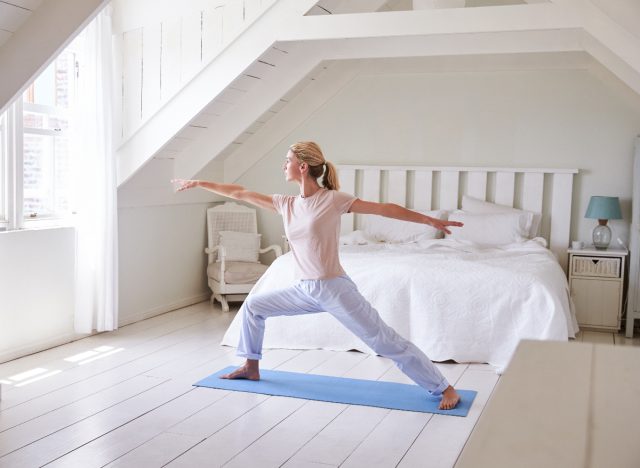
Building stronger thighs doesn’t require long, exhausting workouts. It comes from stacking small, effective efforts that reinforce the work you’re doing each morning. When these habits become part of your routine, your legs respond by getting stronger, more stable, and more reliable throughout the day.
- Start your day with movement: A few minutes of targeted exercise in the morning helps wake up your muscles and sets the tone for better movement throughout the day.
- Stay consistent with your routine: Repeating these exercises regularly builds momentum and reinforces strength gains.
- Focus on controlled reps: Moving with intention helps activate more muscle and improve coordination.
- Stay active throughout the day: Walking and light movement help maintain strength and endurance.
- Progress gradually: Small increases in reps or difficulty keep your muscles challenged.
- Support your training with proper nutrition: Eating enough protein helps your body rebuild and maintain muscle.
- Listen to your body: Adjust intensity as needed while staying consistent with movement.
Stick with these exercises and habits, and you’ll build stronger, more capable legs that support you from the moment you get out of bed.
References
- Schumacher, Leah M et al. “Consistent Morning Exercise May Be Beneficial for Individuals With Obesity.” Exercise and sport sciences reviews vol. 48,4 (2020): 201-208. doi:10.1249/JES.0000000000000226
- Iversen, Vegard M et al. “No Time to Lift? Designing Time-Efficient Training Programs for Strength and Hypertrophy: A Narrative Review.” Sports medicine (Auckland, N.Z.) vol. 51,10 (2021): 2079-2095. doi:10.1007/s40279-021-01490-1