4 Bed Exercises That Restore Thigh Strength Faster Than Squats After 65

A recipe for success is ensuring you develop a strong lower body that makes daily movement feel smoother and more secure. A reliable lower body will help you stand up with ease, walk with confidence, and stay steady when your pace changes. After 65, thigh strength matters less for max effort and more for how reliably your legs support you throughout the day. When that strength is there, movement feels lighter and more controlled.
Bed exercises offer a simple way to rebuild that strength without stress or fear. The surface provides support, reduces joint strain, and relieves pressure on the joints when balancing or moving quickly. That allows you to focus on muscle engagement and quality reps, which is precisely what thighs respond to best at this stage of life.
The exercises below use positions your body already feels comfortable with. Each one targets the thighs through controlled movement and steady tension. You can do them in the morning, before bed, or anytime you want to move your legs without heading to the gym.
Glute Bridge
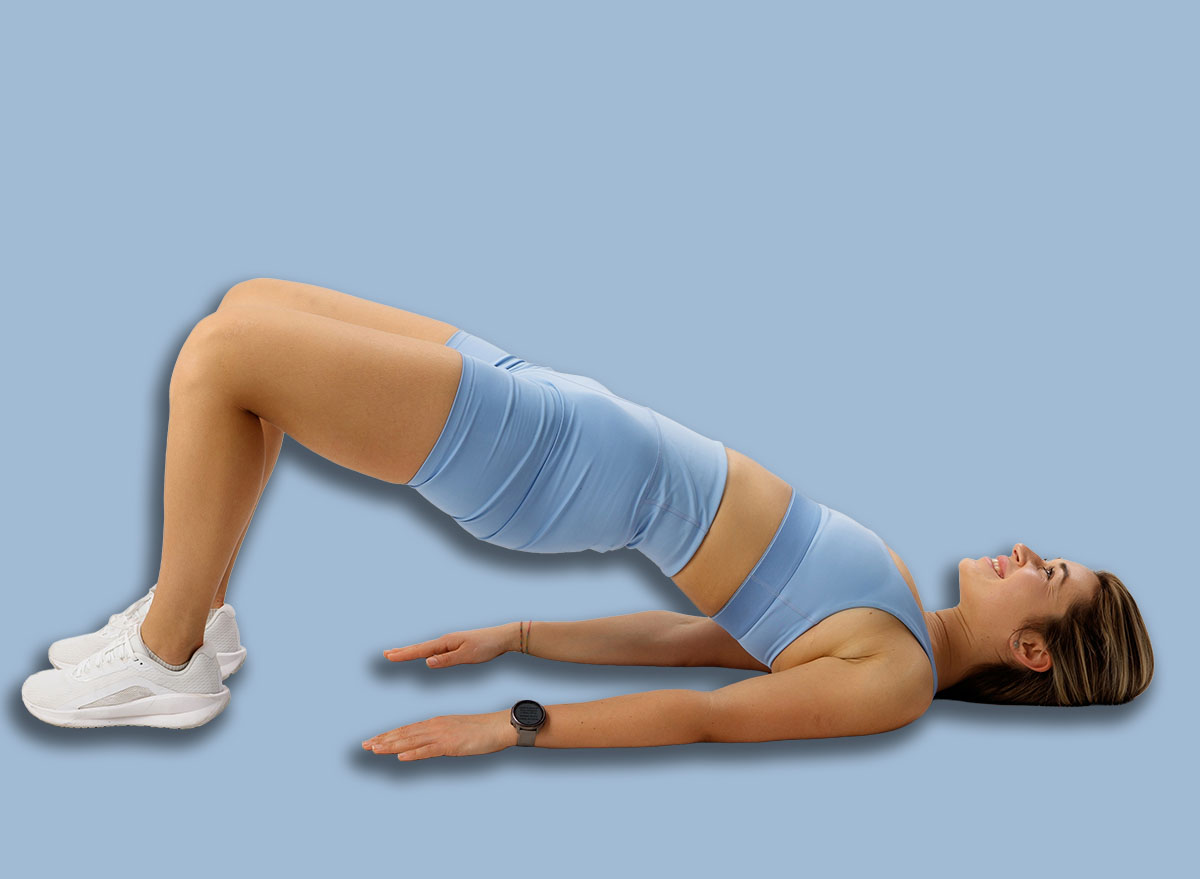
The glute bridge strengthens the thighs while also teaching your hips to share the workload. Many people rely too much on their knees when standing or walking, which quickly tires the thighs. This exercise shifts some of that effort back to the hips, letting your thighs work more efficiently. It also builds confidence because it feels stable and controlled from start to finish.
Muscles Trained: Quadriceps, hamstrings, glutes, and hip stabilizers.
How to Do It:
- Lie on your back with your knees bent and feet flat on the bed.
- Press your feet into the bed and squeeze your glutes.
- Lift your hips until your body forms a straight line.
- Hold briefly at the top.
- Lower your hips with control.
Recommended Sets and Reps: Perform 3 sets of 10 to 15 reps. Rest for 45 seconds between each set.
Best Variations: Longer holds, heels elevated, slower tempo reps.
Form Tip: Push evenly through both feet to keep your thighs working together.
Glute Bridge Marching
This progression adds a balance challenge that lights up your thighs even more. Lifting one leg at a time forces each thigh to work independently while the other stabilizes. That mirrors real-life movement, like walking or stepping up. It also builds coordination and control without increasing joint stress.
Muscles Trained: Quadriceps, hamstrings, glutes, and core stabilizers.
How to Do It:
- Start in the top position of a glute bridge.
- Lift one foot slightly off the bed.
- Lower it back down with control.
- Alternate legs with each rep.
- Keep your hips level throughout.
Recommended Sets and Reps: Knock out 3 sets of 10 total marches. Rest for 60 seconds between each set.
Best Variations: Slower marches, longer holds, alternating tempo.
Form Tip: Imagine balancing a glass of water on your hips.
Sit to Stand
Standing up from the edge of the bed is one of the most practical thigh strength builders you can do. It trains your thighs in the exact way you use them every day. The bed’s height makes it easier on your joints while still challenging your muscles. As this gets stronger, nearly every daily task feels easier.
Muscles Trained: Quadriceps, hamstrings, glutes, and hip stabilizers.
How to Do It:
- Sit on the edge of the bed with your feet planted.
- Lean forward slightly from your hips.
- Press through your feet to stand up.
- Straighten your legs fully at the top.
- Sit back down with control.
Recommended Sets and Reps: Perform 3 sets of 8 to 12 reps. Rest for 60 seconds between each set.
Best Variations: Hands-free reps, slower lowering, pause at the bottom.
Form Tip: Drive through your heels as you stand.
Clam Shells
Clam shells strengthen the outer thighs, which play a massive role in balance and knee alignment. When these muscles weaken, standing and walking can feel less stable. Doing them on the bed keeps the movement comfortable and controlled. They’re simple, but they make your thighs feel stronger and more supportive.
Muscles Trained: Outer thighs, glute medius, hip stabilizers, and supporting muscles.
How to Do It:
- Lie on your side with your knees bent.
- Keep your feet together.
- Open your top knee while keeping your hips stacked.
- Lower it back down slowly.
- Switch sides after completing your reps.
Recommended Sets and Reps: Perform 3 sets of 12 to 15 reps per side. Rest for 30 seconds between each set.
Best Variations: Longer holds, slower tempo, resistance band.
Form Tip: Keep your hips still as you open your knee.
The Best Tips for Rebuilding Thigh Strength After 65

Thigh strength improves fastest when exercises feel safe, repeatable, and easy to stick with. Bed-based movements remove barriers while still delivering meaningful results. These tips help you get the most out of your routine.
- Train daily when possible: Light-strength work done often yields better results than occasional hard sessions.
- Move with control: Slower reps increase muscle engagement and joint awareness.
- Focus on even effort: Press through both legs to avoid shifting strength to one side.
- Breathe naturally: Steady breathing keeps your muscles working without tension.
- Progress gradually: Add reps or time before making movements harder.
Stick with these bed exercises, and your thighs will feel stronger, steadier, and more reliable where it matters most.
References
- Newman, Anne B et al. “Strength, but not muscle mass, is associated with mortality in the health, aging and body composition study cohort.” The journals of gerontology. Series A, Biological sciences and medical sciences vol. 61,1 (2006): 72-7. doi:10.1093/gerona/61.1.72
- Maccarone, Maria Chiara et al. “Effects of the Full-Body in-Bed Gym program on quality of life, pain, and risk of sarcopenia in elderly sedentary individuals: preliminary positive results of a Padua prospective observational study.” European journal of translational myology vol. 33,3 11780. 26 Sep. 2023, doi:10.4081/ejtm.2023.11780