4 Bodyweight Moves That Sculpt Your Body Faster Than the Gym After 50
A sculpted body after 50 comes from muscles that still have shape, tension, and purpose. Firmer arms, stronger hips, a more supported waist, and better posture all come from training muscles to work with control, not just running through random reps. The gym can help, of course, but a good bodyweight routine can hit those same targets without machines, crowded spaces, or a long drive cutting into your motivation.
Bodyweight training works because your muscles have to control your entire frame. A push-up isn’t just a chest move when you slow it down. A single-leg glute bridge isn’t just a glute move when your hips have to stay level. A side plank variation isn’t just “core work” when your shoulder, waist, and hips all have to stay locked in together. Those details matter more after 50, especially when the goal is building muscle tone you can actually see and strength you can use.
I’ve seen people make real progress once they stop treating bodyweight exercises like warm-ups. The right moves, executed with control, can quickly expose weak spots and create a strong training effect without needing a full gym setup. The four exercises below target your waist, glutes, chest, shoulders, back, arms, and core with enough tension to help reshape your body from multiple angles.
Side Plank With Hip Dips
Side plank hip dips train your obliques, shoulders, glutes, and hips while your waist controls the up-and-down motion. The dip adds movement to the standard hold, so the muscles along your sides have to work harder rather than simply staying still. That makes the exercise a strong fit for sculpting the waist because your core has to brace, lift, and control each rep. Better side-body strength also helps with posture, balance, and carrying things on one side without feeling pulled out of position.
Muscles Trained: Obliques, core, shoulders, glutes, outer hips
How to Do It:
- Lie on your side with your forearm under your shoulder.
- Stack your feet or stagger them for more support.
- Lift your hips until your body forms a straight line.
- Lower your hips toward the floor with control.
- Raise your hips back to the starting position.
- Complete all reps, then switch sides.
Recommended Sets and Reps: Perform 3 sets of 8 to 12 reps per side. Rest for 30 seconds between each set.
Best Variations: Bent-knee hip dips, staggered-feet hip dips, slow-tempo hip dips
Form Tip: Keep your chest facing forward and move your hips straight up and down.
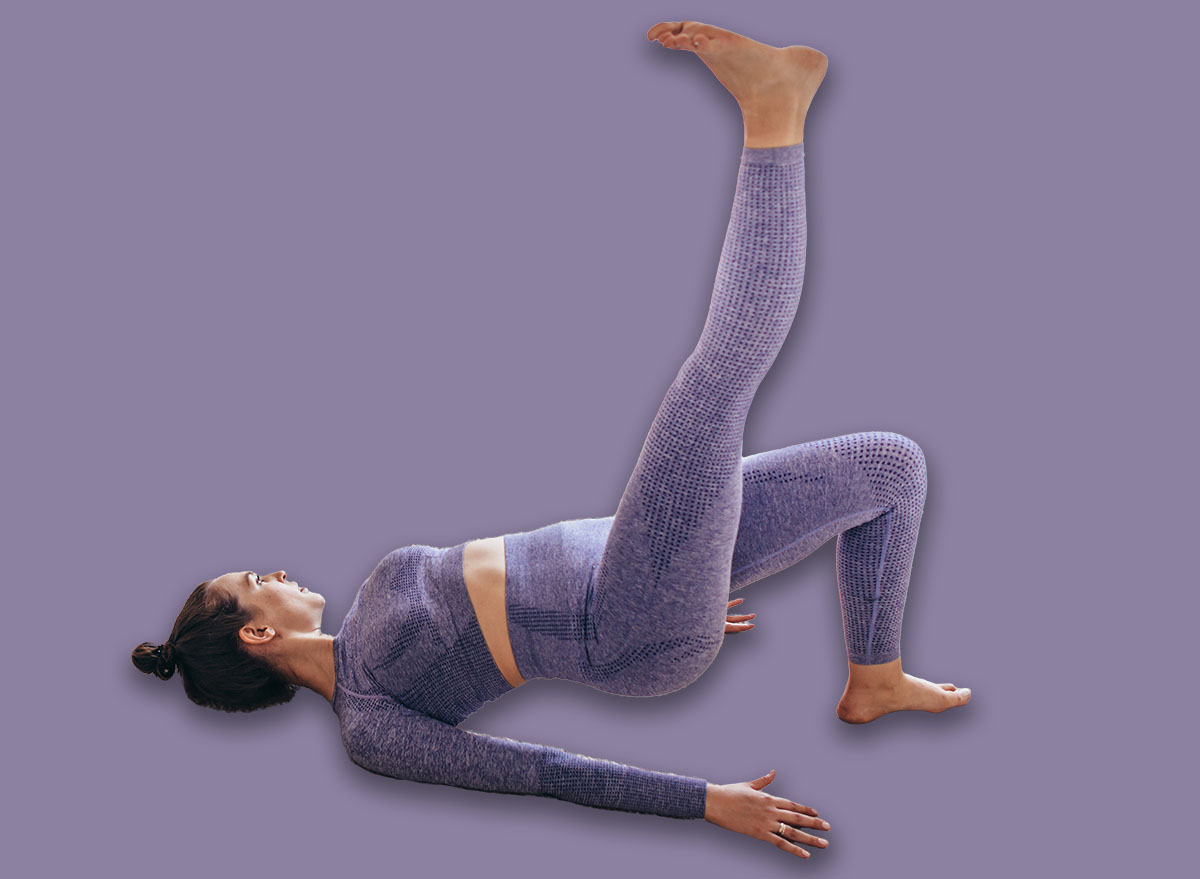
Single-Leg Glute Bridge
Single-leg glute bridges train your glutes and hamstrings while your core keeps your hips from twisting. Working one leg at a time shifts more of the lifting to the glutes, helping build shape and strength in the backside without weights. Your midsection also has to stay active so your pelvis stays level through the rep. Stronger glutes support walking, stairs, standing up, and keeping your lower back from taking over when your hips should be doing the work.
Muscles Trained: Glutes, hamstrings, core
How to Do It:
- Lie on your back with your knees bent and one foot flat on the floor.
- Extend your opposite leg straight or keep it bent over your hip.
- Brace your core and press through your planted heel.
- Lift your hips until your body forms a straight line from your shoulders to your knees.
- Squeeze your glute at the top.
- Lower your hips with control and switch sides after your reps.
Recommended Sets and Reps: Perform 3 sets of 8 to 10 reps per side. Rest for 45 seconds between each set.
Best Variations: Regular glute bridges, paused single-leg bridges, feet-elevated bridges
Form Tip: Keep your hips level and finish each rep with your glute.
Eccentric Push-Up
Eccentric push-ups train your chest, shoulders, triceps, and core with extra focus on the lowering phase. Taking three to five seconds to descend keeps your muscles under tension longer, which makes the movement feel much harder than a regular push-up. That slow control helps build upper-body muscle and gives your core a serious job because your body has to stay aligned the whole way down. Stronger pressing strength carries over to pushing yourself up, bracing with your hands, and maintaining upper-body power after 50.
Muscles Trained: Chest, shoulders, triceps, core
How to Do It:
- Start in a high plank position with your hands under your shoulders.
- Brace your core and squeeze your glutes.
- Lower your chest toward the floor for three to five seconds.
- Keep your elbows angled slightly back as you descend.
- Drop to your knees if needed, then press back to the starting position.
- Reset your plank before starting the next rep.
Recommended Sets and Reps: Perform 3 sets of 5 to 8 reps. Rest for 60 seconds between each set.
Best Variations: Incline eccentric push-ups, knee eccentric push-ups, paused eccentric push-ups
Form Tip: Control the lowering phase and avoid letting your hips sag.
Bodyweight Renegade Rows
Bodyweight renegade rows train your upper back, shoulders, arms, and core from a plank position. As one elbow pulls back, your midsection has to brace to keep your hips from rotating. Your upper back gets the pulling work, while your core and glutes keep your body steady. That combination helps sculpt your back and waist while building control for everyday movements like carrying, reaching, and staying stable when one side of your body works harder than the other.
Muscles Trained: Upper back, shoulders, core, glutes, arms
How to Do It:
- Start in a high plank position with your hands under your shoulders.
- Set your feet slightly wider than hip-width for balance.
- Brace your core and squeeze your glutes.
- Pull one elbow toward your ribs without twisting your hips.
- Place your hand back on the floor with control.
- Alternate sides until you complete all reps.
Recommended Sets and Reps: Perform 3 sets of 6 to 8 reps per side. Rest for 45 seconds between each set.
Best Variations: Incline renegade rows, slower reps, plank shoulder retractions
Form Tip: Keep your hips square to the floor while your arm moves.
How to Get More Shape From Bodyweight Training

Bodyweight training can build shape when reps are done with intent. The movements above work because they create tension throughout your arms, shoulders, back, glutes, and core rather than isolating a single small area. Treat each set like strength work, keep your positions clean, and make the muscles do their job from start to finish.
- Slow down the hardest part of the rep: Lower slowly during push-ups, hip dips, and glute bridges. Extra time under tension makes your muscles work harder without adding equipment.
- Use pauses to create more tension: Hold the top of a glute bridge, the bottom of a hip dip, or the plank position before each row. Pauses keep momentum out of the movement and make each rep more effective.
- Pick the version you can control: Incline push-ups, bent-knee side planks, and regular glute bridges still work when the effort is honest. Clean reps build more muscle than forced reps with messy form.
- Train these moves often enough to matter: Two to four sessions per week give your body enough practice to improve. Short sessions work well here because the exercises don’t require much setup.
- Keep daily movement in the picture: Walking, stairs, and quick movement breaks help support body composition. The sculpted look comes from building muscle and maintaining high overall activity.
References
- Ogawa, Madoka et al. “Effects of free weight and body mass-based resistance training on thigh muscle size, strength and intramuscular fat in healthy young and middle-aged individuals.” Experimental physiology vol. 108,7 (2023): 975-985. doi:10.1113/EP090655
- Luke Del V, Shannon G, Hays D. Bodyweight Training for Muscular Strength & Endurance. J Yoga & Physio. 2022; 10(2): 555783. DOI: 10.19080/JYP.2022.10.555783