6 Standing Workouts to Restore a Stronger Core Better Than Kettlebells After 60
Heavy kettlebell swings can build power, conditioning, and hip strength, but they’re not always the best starting point when the goal is restoring core strength after 60. Swings demand timing, coordination, grip strength, hip snap, and solid bracing all at once. When one piece is off, the lower back usually tries to help more than it should.
Standing core work gives you a different way in. You’re still training your midsection, but you’re doing it through squats, presses, carries, rotations, and anti-rotation drills that feel more controlled. Your core has to brace, resist twisting, hold posture, and connect your upper and lower body while you move. That’s the kind of strength you use when you carry groceries, climb stairs, lift something off the floor, or turn without feeling unstable.
I’ve seen clients make better progress when core training looks less like endless floor work or overcomplicated workouts and more like real movement. After 60, the goal isn’t just feeling your abs burn for a few minutes. It’s building a midsection that supports your hips, protects your back, improves balance, and keeps your body strong through daily life. The six standing moves below train your core while also building strength through your legs, glutes, shoulders, back, and hips.
Goblet Squat
Goblet squats train your legs and glutes while your core works hard to keep your torso upright. Holding the weight at your chest forces your midsection to brace so your ribs stay down and your body doesn’t fold forward. That makes the move a strong core builder without turning it into a traditional ab exercise. The carryover is huge after 60 because squatting strength supports sitting, standing, stairs, and lifting from lower positions.
Muscles Trained: Quadriceps, glutes, hamstrings, core
How to Do It:
- Stand with your feet about shoulder-width apart.
- Hold a dumbbell or kettlebell at your chest.
- Brace your core and keep your chest lifted.
- Lower into a squat by bending your hips and knees.
- Drive through your feet to return to standing.
Recommended Sets and Reps: Perform 3 sets of 8 to 12 reps. Rest for 60 seconds between each set.
Best Variations: Box goblet squats, pause goblet squats, tempo goblet squats
Form Tip: Keep the weight close to your chest and stay tall through your torso.
Pallof Press
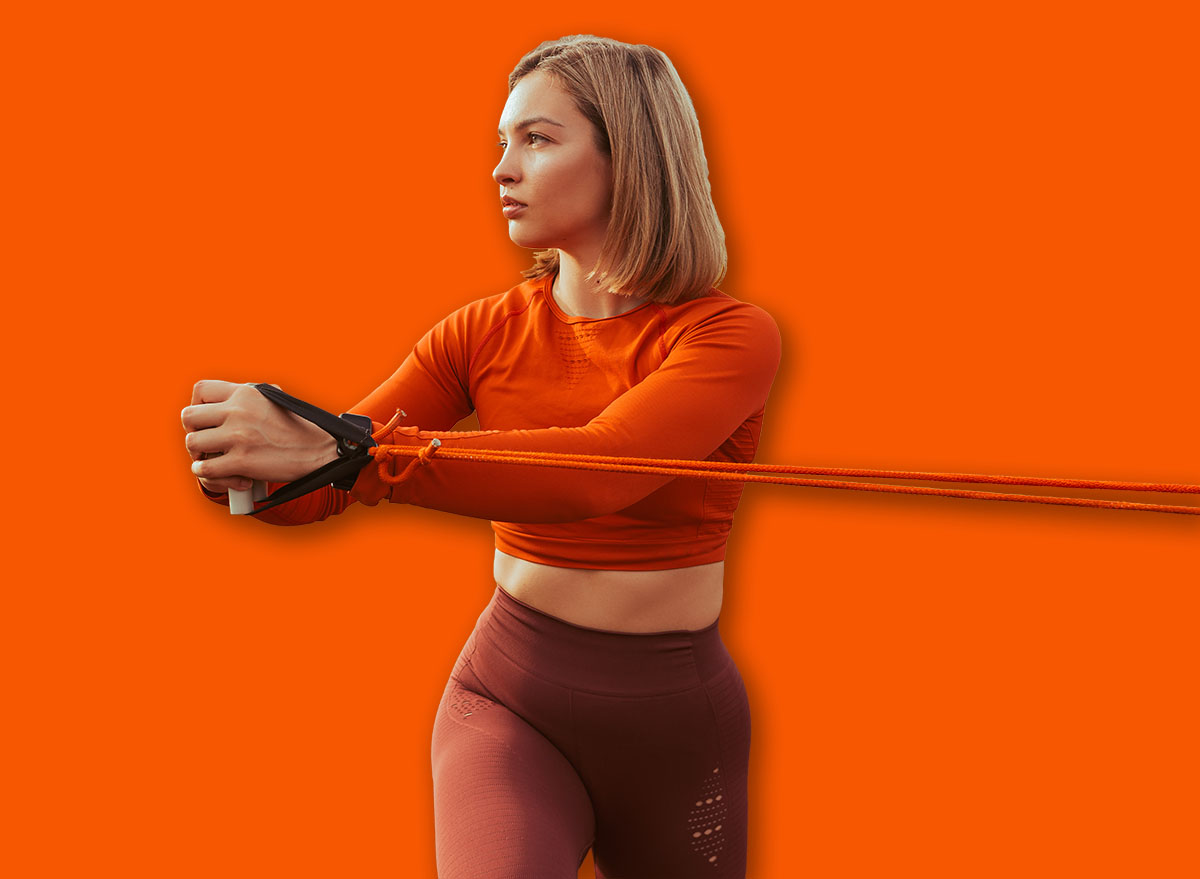
The Pallof press trains your core to resist rotation, which is one of the most useful jobs your midsection has. As you press the band or cable away from your chest, your obliques and deep core have to fight the pull trying to turn you sideways. That helps restore strength through the trunk in a controlled, joint-friendly way. It also carries over to walking, lifting, reaching, and staying steady when your body gets pulled off-center.
Muscles Trained: Core, obliques, shoulders, glutes
How to Do It:
- Anchor a resistance band or cable at chest height.
- Stand sideways to the anchor point with your feet shoulder-width apart.
- Hold the handle or band at your chest with both hands.
- Brace your core and press your hands straight forward.
- Hold briefly without letting your torso rotate.
- Bring your hands back to your chest with control.
Recommended Sets and Reps: Perform 3 sets of 10 to 12 reps per side. Rest for 30 to 45 seconds between each set.
Best Variations: Pallof press hold, half-kneeling Pallof press, overhead Pallof press
Form Tip: Keep your torso square and avoid letting the band twist you.
Suitcase Carry
Suitcase carries train your core to resist leaning while one side of your body holds weight. Your obliques, deep core, grip, shoulder, and hips all have to work together to keep you tall. This is one of the most practical core exercises after 60 because it looks a lot like carrying bags, hauling groceries, or walking with a weight in one hand. Heavy swings move fast, but suitcase carries teach slow, steady bracing you can use every day.
Muscles Trained: Obliques, core, grip, shoulders, glutes
How to Do It:
- Hold a dumbbell or kettlebell in one hand.
- Stand tall with your shoulders level.
- Brace your core before you begin walking.
- Walk forward with controlled steps.
- Keep your torso upright without leaning toward the weight.
- Switch hands and repeat on the other side.
Recommended Sets and Reps: Perform 3 carries of 30 to 45 seconds per side. Rest for 45 seconds between carries.
Best Variations: Farmer carry, offset carry, slower suitcase carry
Form Tip: Walk tall and keep the weight from pulling you sideways.
Dumbbell Woodchopper
Dumbbell woodchoppers train your core through rotation while your hips and shoulders move together. Your obliques help guide the weight across your body, and your midsection has to control the path instead of letting momentum take over. That makes it a strong option for restoring rotational strength without needing the speed of a kettlebell swing. It carries over to turning, reaching across your body, yard work, golf, and any daily task that asks your trunk to rotate under control.
Muscles Trained: Obliques, core, shoulders, glutes
How to Do It:
- Stand with your feet shoulder-width apart and hold one dumbbell with both hands.
- Bring the dumbbell outside one hip.
- Brace your core and rotate the weight across your body.
- Finish with the dumbbell above your opposite shoulder.
- Return to the starting position with control.
- Complete all reps, then switch sides.
Recommended Sets and Reps: Perform 3 sets of 8 to 10 reps per side. Rest for 45 seconds between each set.
Best Variations: High-to-low woodchoppers, band woodchoppers, cable woodchoppers
Form Tip: Turn through your hips and torso together, rather than twisting your lower back.
Single-Arm Dumbbell Press
Single-arm dumbbell presses train your shoulders and triceps while your core works to keep your body from leaning or rotating. Pressing one weight overhead creates an uneven load, so your midsection has to stay locked in from your ribs through your hips. This builds overhead strength and core stability simultaneously. The payoff shows up when you reach overhead, lift objects, carry weight, and keep your posture strong throughout the day.
Muscles Trained: Shoulders, triceps, core, upper back
How to Do It:
- Stand tall with your feet hip-width apart.
- Hold one dumbbell at shoulder height.
- Brace your core and squeeze your glutes.
- Press the dumbbell overhead until your arm is straight.
- Lower the dumbbell back to shoulder height with control.
- Complete all reps, then switch sides.
Recommended Sets and Reps: Perform 3 sets of 8 to 10 reps per side. Rest for 60 seconds between each set.
Best Variations: Neutral-grip press, alternating dumbbell press, half-kneeling press
Form Tip: Keep your ribs down and avoid leaning away from the weight.
Dumbbell March
Dumbbell marches train your core, hips, and balance while adding a loaded challenge. Holding weight while lifting one knee forces your midsection to brace so your torso stays tall and your hips don’t shift all over the place. This builds core strength in a standing position, which makes it especially useful after 60. It carries over to walking, climbing stairs, stepping over objects, and staying steady when one leg leaves the ground.
Muscles Trained: Core, hip flexors, glutes, calves, grip
How to Do It:
- Stand tall with a dumbbell in each hand or one weight held at your chest.
- Brace your core and keep your shoulders relaxed.
- Lift one knee toward your chest with control.
- Lower your foot back to the floor.
- Lift the opposite knee and continue alternating.
- Keep your posture tall through the full set.
Recommended Sets and Reps: Perform 3 sets of 10 to 12 reps per leg. Rest for 45 seconds between each set.
Best Variations: Suitcase march, goblet march, slower tempo march
Form Tip: Stay tall and avoid leaning back as your knee lifts.
How to Build a Stronger Core After 60
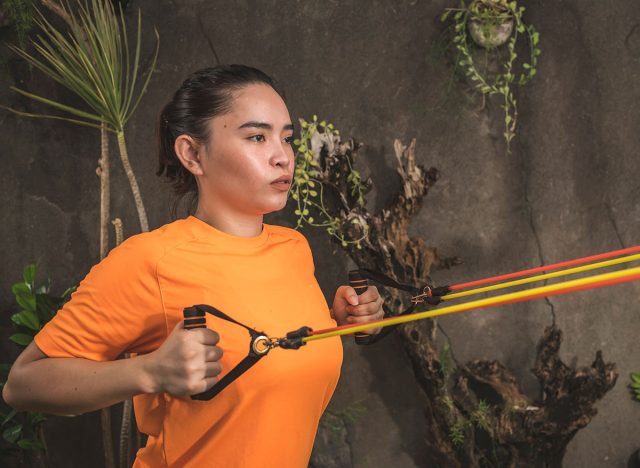
Standing core work pays off when you treat each exercise like strength training, not just a quick ab finisher. The goal is to brace before you move, control your weight, and maintain strong posture from start to finish. These moves train the core through squatting, pressing, carrying, rotating, and marching, giving your midsection a much broader challenge than a single fast swing pattern.
- Brace before every rep: Set your ribs, tighten your midsection, and keep your hips steady before the movement starts. A strong brace helps your core support your spine instead of letting your lower back absorb the work.
- Use weights you can control: Core training loses value when the load pulls you out of position. Choose a dumbbell, kettlebell, band, or cable setting that makes the set challenging without turning the reps sloppy.
- Train more than one core job: Your core needs to resist rotation, rotate with control, prevent leaning, and hold posture under load. Carries, Pallof presses, woodchoppers, and marches cover those needs well.
- Keep the tempo honest: Slow reps teach control. Fast, loose reps usually shift the work away from your core and into momentum.
- Pair core strength with full-body training: Squats, presses, rows, hinges, and carries help build the muscle and strength that support a firmer, more capable midsection.
The goal is to make your core feel useful again, not just tired. When your midsection braces better during carries, presses, squats, and daily movement, you’ll notice the difference in how confidently you move.
References
- Oliva-Lozano, José M, and José M Muyor. “Core Muscle Activity During Physical Fitness Exercises: A Systematic Review.” International journal of environmental research and public health vol. 17,12 4306. 16 Jun. 2020, doi:10.3390/ijerph17124306
- Zhong, Yuanji et al. “Effects of core training on balance performance in older adults: a systematic review and meta-analysis.” Frontiers in public health vol. 13 1661460. 9 Oct. 2025, doi:10.3389/fpubh.2025.1661460