5 Chair Exercises That Build Core Strength Faster Than Ab Workouts After 55

Core strength after 55 often declines not from lack of effort, but from lack of the right kind of training. Many traditional ab workouts rely on floor exercises that isolate movement but don’t always translate into real-world strength. I’ve worked with clients in this age group for years, and the biggest improvements consistently come from exercises that train the core to stabilize while the body stays upright and supported. That’s where chair-based movements stand out.
A chair provides stability without removing the challenge. It allows you to focus on controlled contractions, posture, and breathing, all key components of rebuilding core strength. Instead of rushing through reps, you can slow down and keep the muscles under tension longer. That increased time under tension leads to stronger activation of the deep core muscles that support the spine and hold the midsection in.
Another advantage comes from accessibility. These exercises feel manageable, which makes it easier to stay consistent. Daily repetition builds strength faster than occasional intense sessions, especially when each movement reinforces proper engagement.
The following exercises target the lower abs, obliques, and deep stabilizers using simple but highly effective seated movements. Sit tall, move slowly, and focus on tightening your core during every rep. That’s how you rebuild strength that lasts.
Seated Knee Tucks
Seated knee tucks remain one of the most effective chair-based exercises for targeting the lower abdominal muscles. I use this movement frequently because it forces the core to control both the lifting and extending phases without relying on momentum. Many people underestimate how challenging this becomes when performed with proper form and tempo. That’s exactly why it works so well.
Pulling the knees toward the chest creates a strong contraction through the lower abs, while extending the legs back out forces those same muscles to stay engaged instead of relaxing. That constant tension builds strength quickly and helps retrain the core to function properly during everyday movement. Over time, this leads to improved stability and better control through the midsection.
How to Do It
- Sit near the edge of a chair
- Lean back slightly with a straight back
- Pull both knees toward your chest
- Extend legs forward slowly
- Repeat with control.
Seated Leg Extensions With Core Brace
This exercise builds core strength by forcing the abdominal muscles to stabilize while the legs move independently. I often include this movement because it mimics real-life demands, where the core must stay engaged as the limbs move. That’s a key function many traditional ab workouts miss.
Extending one leg while keeping your torso upright requires the core to prevent leaning or shifting. When performed slowly, the muscles stay under tension longer, which increases effectiveness. Over time, this improves both strength and coordination, making everyday movements feel more controlled.
How to Do It
- Sit tall with feet flat
- Tighten your core
- Extend one leg forward
- Lower slowly
- Alternate legs.
Seated Cross-Body Crunch
This movement brings rotational strength into the equation by targeting the obliques. I rely on this exercise because it strengthens the muscles that help stabilize and control twisting movements, which become increasingly important with age.
Bringing the elbow toward the opposite knee creates a deep contraction across the core. Performing the movement slowly ensures the muscles stay engaged throughout the entire rep. Many clients feel immediate activation here, which helps build awareness and control through the midsection.
How to Do It
- Sit tall with hands behind your head
- Lift one knee across your body
- Bring opposite elbow toward the knee
- Return slowly
- Alternate sides.
Seated March With Hold
The seated march builds core endurance and stability through repeated, controlled movement. I use this exercise often because it trains the core to stay engaged over time rather than just during short bursts. That endurance plays a major role in improving posture and daily movement.
Holding the knee at the top forces the abdominal muscles to stabilize the body without leaning back. That sustained contraction increases time under tension and strengthens the deep stabilizers. Over time, this leads to better control and reduced fatigue through the core.
How to Do It
- Sit tall with feet flat
- Lift one knee toward your chest
- Hold for 2–3 seconds
- Lower slowly
- Alternate legs.
RELATED: If You Can Hold a Wall Sit This Long After 50, Your Leg Strength Is Stronger Than 90% of Peers
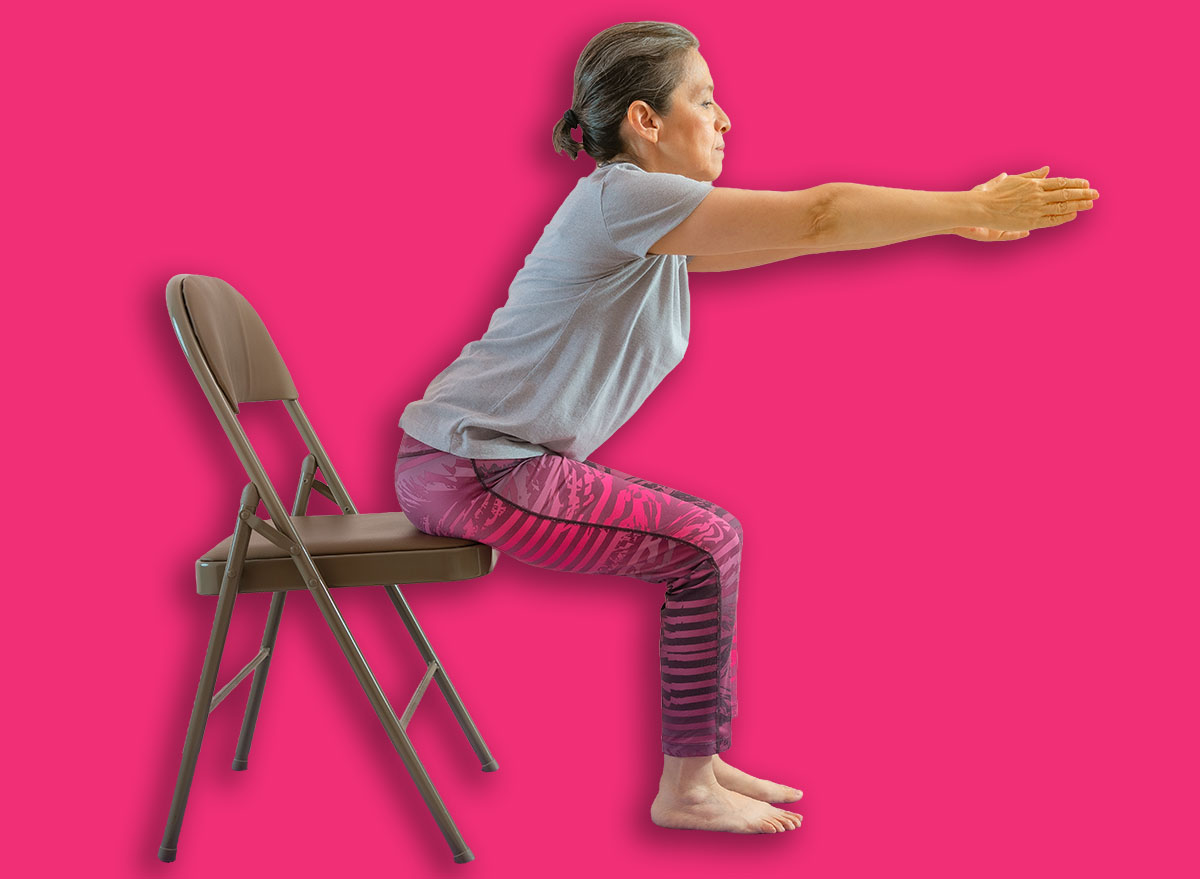
Seated Forward Lean With Core Tightening
This final movement ties everything together by training the core to stabilize during forward motion. I often include it because it reinforces proper engagement in a position that mirrors everyday activity, like reaching or standing up.
Leaning forward slightly while keeping the core tight forces the abdominal muscles to support the spine. Performing this slowly increases tension and builds strength in the deep stabilizing muscles. Over time, this improves posture and helps the core stay engaged naturally throughout the day.
How to Do It
- Sit upright with arms extended forward
- Tighten your core
- Lean forward slightly from the hips
- Return slowly
- Repeat with control.