If You Can Hold These 3 Bed Positions After 65, Your Core Is Top-Tier
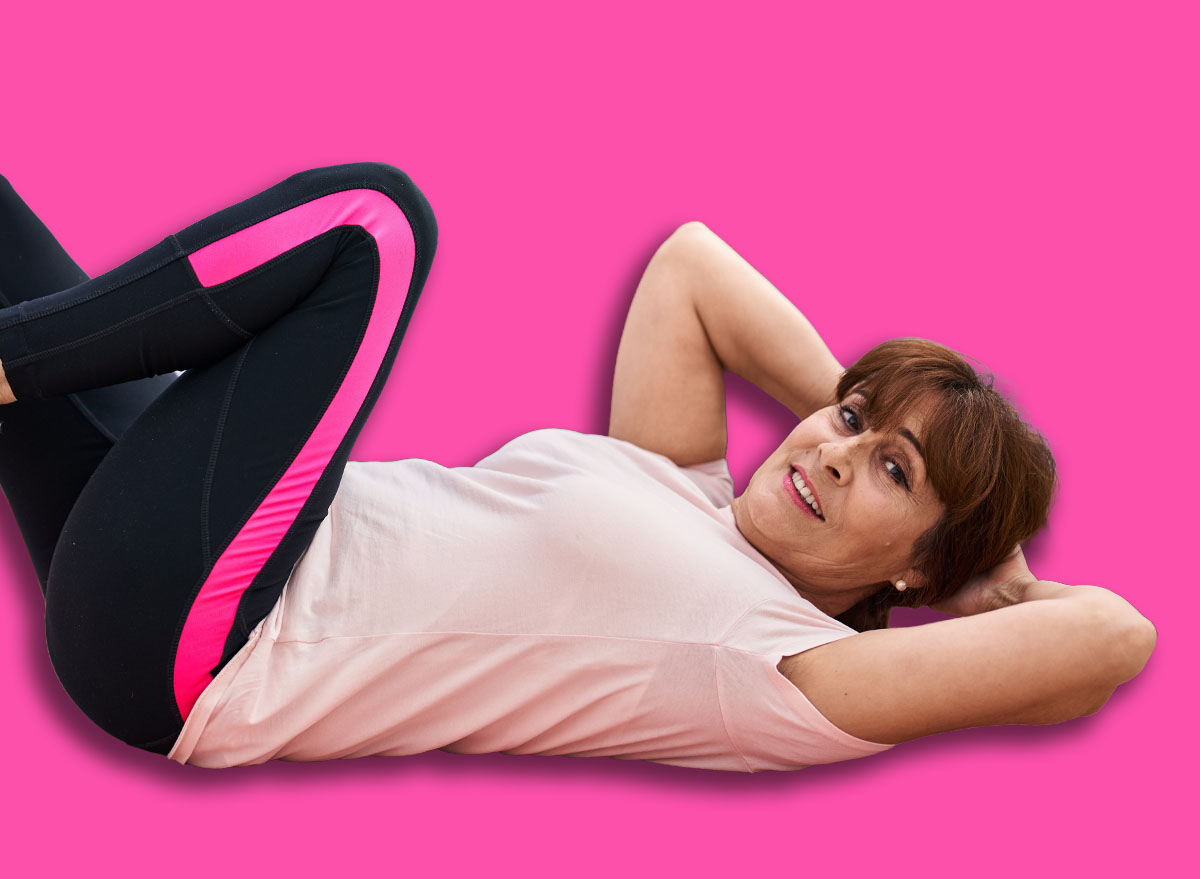

After working in the fitness industry for over 40 years, and running TRAINFITNESS for the last 20, one of the things I see older adults often neglect is their core strength. As the majority of people can’t see their abs as they get older, they stop thinking about core exercises because they don’t make an aesthetic difference. This is a mistake. A strong core is the foundation for safe, confident movement at any age, and these three simple tests you can do lying down will tell you exactly where yours stands.
Why Core Strength Matters More After 65

The majority of people think of their core as the six-pack. As you get older, that idea needs to change. Our cores are everything from the diaphragm down to the pelvic floor, including the deep muscles that run alongside our spines. You can think of it like scaffolding that holds everything else together.
Things change as we get older. Starting from around our mid-40s, we lose muscle mass at about 1% a year. By the time someone has reached 65, that process has been running for two decades. Deep stabilising muscles, the kind that generally don’t get a workout in our daily lives, often lose the most. Muscles like the transverse abdominis, the multifidus, and the pelvic floor. Not muscles that will burn during crunches, but the ones that are in the background constantly working to keep our spines in the right position every time we move.
At the same time, the nervous system becomes slower at recruiting muscle fibres. When you stumble, the body needs to fire those stabilising muscles fast. After 65, that firing speed has often dropped enough that a stumble becomes a fall before the muscles even had a chance to respond.
On top of this, as posture changes with age (which it almost always does), it shifts the load on the spine, forcing muscles that were not intended to carry sustained load into doing so. This leads to tiredness, stiffness, and then pain. If you have a strong core, it keeps the spine stacked properly and that load is distributed as it’s supposed to be.
Signs Your Core Is Getting Soft

I don’t tend to see dramatic weakness in clients over 65, just a gradual erosion of stability that used to be automatic:
- Getting up from a chair without arm support.
- Turning to look behind them.
- Reaching for objects on a high shelf without bracing against a surface first.
Movements like these, which were once done without a thought, start to become uncertain. That’s the body’s way of telling you the foundation is getting a little soft.
The good news is that the core responds well to training at any age. The improvements aren’t as fast as they would be at 35, but they’re real and they matter. Better core stability reduces back pain, improves balance, makes daily movement more confident, and has a direct effect on how independently people live as they get older.
Dead Bug Hold
This tests your ability to maintain a neutral spine while your limbs create a destabilising load. That’s exactly what happens in real life every time you reach forward, carry something, or lift your leg to climb a step. If the deep core isn’t switched on, the lower back arches away from the floor to compensate.
Muscles Trained: Transverse abdominis, deep spinal stabilisers, diaphragm
How to Do It:
- Lie on your back on a firm surface.
- Press your lower back gently into the floor, so there’s no gap between your spine and the surface.
- Raise both arms straight up above your chest, pointing at the ceiling.
- Lift both knees up to a 90-degree angle (knees above hips, shins parallel to the floor).
- Hold this position and breathe normally.
- Keep the lower back in contact with the floor throughout.
- Aim for 30 seconds with the back staying completely flat. That tells you the deep stabilisers are doing their job without needing external bracing.
Avoid These Mistakes:
- Don’t let the lower back lift off the floor. The moment the back lifts, the test is over. Some people do this immediately, others last a few seconds before the arch creeps in.
- Don’t let the arms drift forward or the knees drop towards the chest. That’s the body trying to make the position easier, which invalidates the test.
Bent Knee Fall-Out Hold
This tests the pelvic floor and the deep hip stabilisers alongside the core. The pelvic floor is part of the core system and it’s one of the most neglected parts of it, in men as much as in women. When the pelvis rotates or tilts during the test, the core isn’t holding position, which means there’ll be problems during any rotation-based movement in real life, from getting out of a car to stepping off a kerb.
Muscles Trained: Pelvic floor, deep hip stabilisers, transverse abdominis, obliques
How to Do It:
- Lie on your back with both knees bent, feet flat on the floor hip-width apart.
- Gently press the lower back into the floor.
- Let one knee slowly fall outwards to the side.
- Keep the foot on the floor; let the knee drop as far as it can without the pelvis tilting or lifting.
- Hold that position for 20 to 25 seconds per side with the pelvis completely still. That’s the benchmark.
- Repeat on the other side.
Avoid These Mistakes:
- Don’t let the hip on the moving side lift off the floor or rotate. That tells you the core and hip stabilisers have let go and the movement has transferred into the lower back and hip flexors instead.
- Watch for both hips staying level and the lower back maintaining contact with the floor throughout.
Supine Marching Hold
This is the most functional of the three. It mimics walking, climbing stairs, and stepping over obstacles, all movements where one leg is in the air and the core has to stop the pelvis from dropping. Weakness here is often the hidden reason people shuffle their feet rather than lifting them properly when they walk.
Muscles Trained: Quadratus lumborum, glute medius, transverse abdominis, deep spinal stabilisers
How to Do It:
- Lie on your back with both knees bent, feet flat on the floor.
- Press the lower back into the floor.
- Slowly lift one foot a few inches off the floor, keeping the knee bent at 90 degrees.
- Hold that position without letting the pelvis shift, tilt, or rotate.
- Keep the lower back flat throughout.
- Aim to hold each leg for 20 to 30 seconds without any movement in the pelvis or spine. Smooth, controlled, no wobbling or compensating with the upper body.
- Repeat on the other side.
Avoid These Mistakes:
- Don’t let the opposite hip drop. It happens because the quadratus lumborum and the glute medius aren’t doing their job, so the pelvis tilts instead of staying level.
- Don’t brace through the shoulders or press your arms hard into the floor to compensate. That’s a sign the core isn’t holding the position on its own.
How to Interpret Your Results

If you can hold all three positions cleanly and hit those time targets, your core is in a strong position for your age. You have the foundation for safe, confident movement and a good base to build on with more challenging progressions.
If you can hold the positions but can’t quite hit the time targets, or notice the form slipping slightly before time is up, that’s a moderate result. There’s no cause for alarm, but it’s a clear signal that your core stability needs consistent attention. You’re in the most common category. A lot of people over 65 sit here, and the gap between where you are and where you want to be is very closeable.
If you can’t hold the positions at all, or if you feel significant strain in your lower back, neck, or hips during any of them, that’s your body telling you the foundation work is overdue. It doesn’t mean something is wrong with you. It means the stabilising muscles haven’t been asked to do this kind of work in a while, possibly a long while, and they need rebuilding from the ground up.
One thing worth paying attention to: asymmetry. If one side is noticeably harder than the other on the marching or fall-out tests, that imbalance is worth addressing. Asymmetries in core stability often show up as hip or lower back issues over time because the weaker side ends up overloaded during daily movement.
Where to Start if You Failed

The first priority is finding a neutral spine. Before adding any movement at all, just practise lying on your back with knees bent and locating the position where your lower back is neither pressed flat into the floor nor arching away from it. That natural, slightly curved position is where all core work should happen. A lot of people have never paid attention to where their spine is in space. Starting here builds the body awareness the tests require.
From there, diaphragmatic breathing is a genuinely good starting point and one that gets overlooked. The diaphragm is the top of the core canister. When it works properly during breathing, it automatically increases intra-abdominal pressure and helps the deep stabilisers switch on. Practise breathing in through the nose and letting the belly rise, not the chest. Exhale slowly and feel the abdominals gently draw in. Do this lying down to start with. Five to ten minutes a day makes a real difference over two to three weeks.
Heel slides are a good first active exercise. From the bent-knee position on your back, simply slide one heel along the floor until the leg is straight, then slide it back. The spine should not move at all during this. It’s gentle, it’s low load, and it teaches the core to stay stable while one leg moves, which is what the marching test requires.
Pelvic tilts build the connection between the core muscles and movement. Gently rock the pelvis so the lower back presses into the floor, then let it return to neutral. Not a big movement. Just enough to feel the abdominals working and to start building the habit of spinal awareness during movement.
Once these feel comfortable, introduce the bent knee fall-out without the hold. Let the knee drop slowly, feel whether the pelvis wants to follow it, and bring it back. Control the movement rather than trying to hold a static position. Over time, add a hold at the bottom.
A Note on Safety
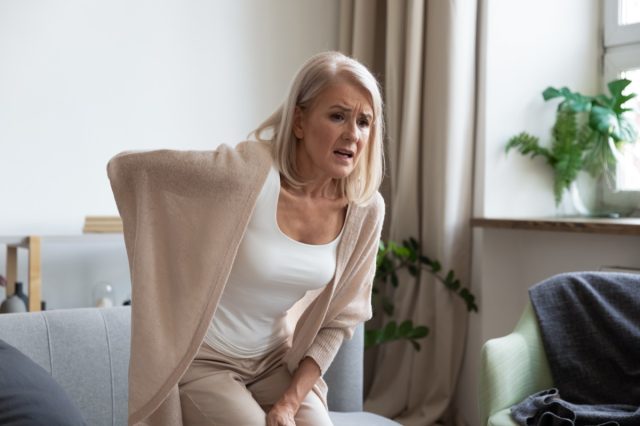
People with osteoporosis, recent abdominal surgery, or an active disc injury should speak to their GP or physiotherapist before attempting any of these tests or exercises. These populations often need modifications that account for their specific situation, and the guidance of a professional is worth more than any general programme. The exercises themselves are low-risk for most people, but some conditions change the picture enough that it’s not a call to make unilaterally.
- Source: https://now.tufts.edu/2022/05/11/muscle-mass-and-strength-decline-older-women-you-can-slow-down-process
- Source: https://pubmed.ncbi.nlm.nih.gov/8504850/
- Source: https://pubmed.ncbi.nlm.nih.gov/27667760/
- Source: https://link.springer.com/article/10.1007/s10522-015-9627-3
- Source: https://pubmed.ncbi.nlm.nih.gov/40472708/