4 Daily Exercises That Restore Muscle Faster Than Gym Machines After 55
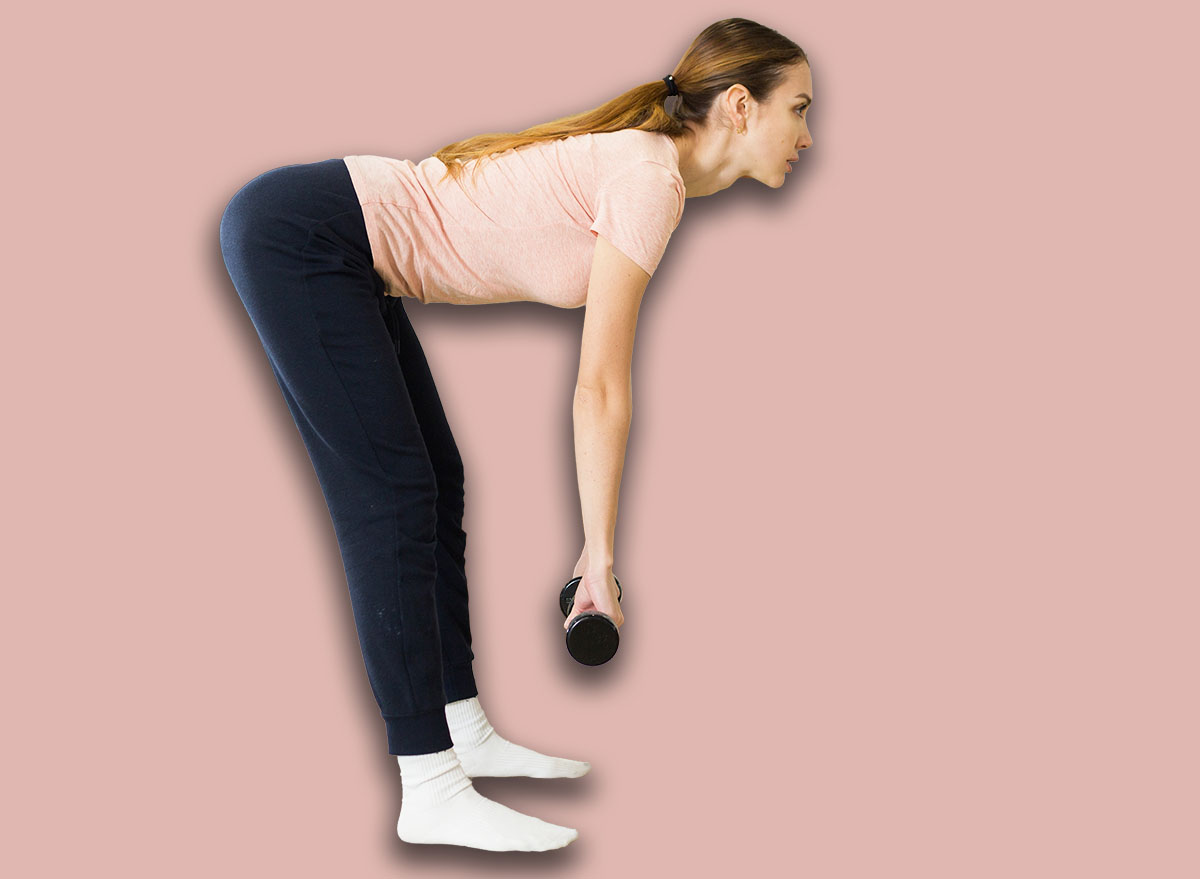

One of the most common frustrations that occurs with age is the natural loss of muscle and strength, known as sarcopenia. An estimated 5% to 13% of those between the ages of 60 to 70 are impacted by this condition. In order to combat sarcopenia—and restore lost muscle—it’s important to engage in regular strength training. And this doesn’t necessarily mean heading to the gym to use machines! We spoke with an expert who shares four daily exercises that get the job done.
Why These Daily Exercises Work

When you hit your 50s, maximizing your workout routine is essential. According to Dr. Colin Robertson, Chief Product Office Zinzino, Sport & Nutrition Scientist, PhD in Exercise Physiology, exercises that recruit multiple joints are beneficial to weave into your day.
“Short, frequent bouts of loaded movement can raise weekly training volume with less fatigue per session, improving adherence and recovery. Daily, multi-joint patterns (squat/hinge/push/pull/carry) also reinforce motor unit recruitment and coordination, which tends to drift with age and inactivity, making the same muscle mass ‘harder to access.’ You’re not just rebuilding fibres; you’re rebuilding the ability to use them consistently,” Dr. Robertson explains.
The Limitations of Gym Machines
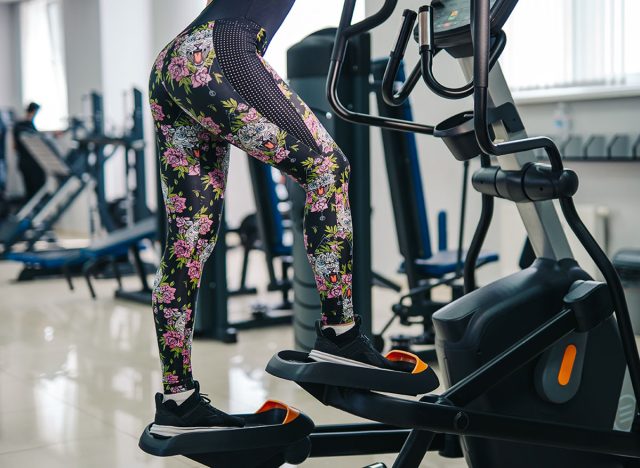
When it comes to rebuilding muscle after midlife, gym machines present certain limitations—one of which is decreased demand of the stabilizers.
“Many machines offload trunk/hip/scapular control, so strength gains may transfer less to real-life tasks (stairs, lifting, balance),” Dr. Robertson says.
In addition, machine-based exercises can under-train your gait, rotational control, and grip, which Dr. Robertson calls “key weak links for midlife function and injury resilience.”
Another downside of gym machines? They’re typically only used two to three times a week in longer workouts. Many individuals in midlife benefit from more frequent, shorter doses that keep flare-ups and muscle soreness at bay while revving up stimulus.
“Machines can be excellent for isolating and loading a target muscle, but they often provide less demand for coordination, bracing, and force transfer, which are exactly what many people lose after midlife,” Dr. Robertson adds.
4 Daily Moves to Restore Muscle After 55
The exercises below are scalable and easy to perform without hindering your recovery.
Dr. Robertson instructs, “Pick two exercises per day, alternate A/B days, total time 10 to 20 minutes. The goal is consistent, recoverable exposure, more quality reps per week, not heroic workouts.” Aim to achieve a rate of perceived exertion (RPE) of seven to eight with two to three reps in reserve on working sets.
Sit-to-Stand Squats
- Begin seated at the front of a sturdy chair with your feet placed on the floor under your knees.
- Lean forward slightly.
- Try to stand up without using your knees, hands, or additional support.
- Use control to slowly sit back down.
- Perform 3 to 5 sets of 6 to 12 reps.
- To make the exercise more challenging, hold a kettlebell or dumbbell and slow your lowering (3 seconds).
Romanian Deadlift
- Stand tall with your feet hip-width apart, holding a dumbbell in each hand. (If you’re not comfortable working with dumbbells, use just your body weight.)
- Bend your knees slightly and hold the weights in front of your thighs.
- Press your hips back as you lower the dumbbells down your leg. Maintain a straight back as you do so.
- Squeeze your glutes to return to the start position.
- Perform 3 to 4 sets of 8 to 12 reps.
Pushups
- Start in a high plank with your hands under your shoulders and your body straight from head to heels.
- Activate your core.
- Bend your elbows to lower your chest toward the floor. Maintain a long, straight body as you lower.
- Press back up, straightening your arms.
- Perform 3 to 5 sets of 6 to 15 reps.
- To make this exercise more challenging, add a load, such as a weighted backpack or add a slow eccentric.
Farmer’s Carry
- Hold a heavy dumbbell or kettlebell—50% of your body weight—in each hand at your sides.
- Start walking forward, keeping your torso still.
- Perform 4 to 8 carries, walking 20 to 40 meters (or 30 to 60 seconds).