If You Can Complete These 3 Standing Exercises After 60, You’re Fitter Than Most

Fitness after 60 isn’t measured by how much weight you can lift or how many miles you can run. Instead, it shows up in the movements you perform every day without thinking twice. Standing from a chair, balancing on one leg, reaching overhead, and walking confidently all depend on strength, stability, and coordination working together. As a trainer, I’ve found that a few simple standing exercises reveal far more about someone’s overall fitness than most gym workouts.
Many adults judge themselves against unrealistic standards or compare their abilities to people decades younger. I prefer using functional movements because they measure the qualities that matter most for healthy aging. These exercises challenge your legs, core, balance, and cardiovascular fitness simultaneously while closely resembling everyday activities. If you perform them with good control, you’re likely in better shape than you realize.
I’ve used these assessments with hundreds of adults over 60, and they consistently separate those who simply exercise from those who move exceptionally well. Don’t worry about perfection or speed. Focus on maintaining good form from beginning to end. Your results will tell you a great deal about your current level of functional fitness.
RELATED: 5 Standing Exercises That Restore Hip Strength This Week, No Gym Needed After 60
Exercise 1: Sit-to-Stand Test
The sit-to-stand remains one of my favorite indicators of lower-body strength because it mirrors one of the most common movements you’ll perform every day. Strong quadriceps, glutes, hamstrings, and core muscles all contribute to completing this exercise with control. Clients who perform it easily usually walk farther, climb stairs more comfortably, and maintain greater independence as they age. The challenge isn’t simply standing up. It’s doing so repeatedly without using momentum or your hands.
How to Perform It
- Sit near the front of a sturdy chair.
- Cross your arms over your chest.
- Stand completely.
- Sit back down under control.
- Repeat continuously for 30 seconds.
- Count your completed repetitions.
Benchmark: Completing 12 to 17 controlled repetitions without using your hands indicates excellent lower-body strength for most adults over 60.
Exercise 2: Single-Leg Balance Hold
Balance often becomes the first physical quality to decline with age, making this one of the most valuable assessments I use. Standing on one leg requires the ankles, hips, core, and nervous system to communicate continuously while making tiny adjustments. Clients who hold this position comfortably usually demonstrate excellent coordination and lower-body stability. Strong balance also reduces fall risk while improving confidence during everyday movement.
How to Perform It
- Stand next to a chair for safety.
- Shift your weight onto one leg.
- Lift the opposite foot slightly.
- Keep your eyes focused ahead.
- Avoid grabbing the chair unless necessary.
- Time your longest hold.
Benchmark: Holding the position for 30 seconds or longer on each leg reflects top-tier stability for most adults over 60.
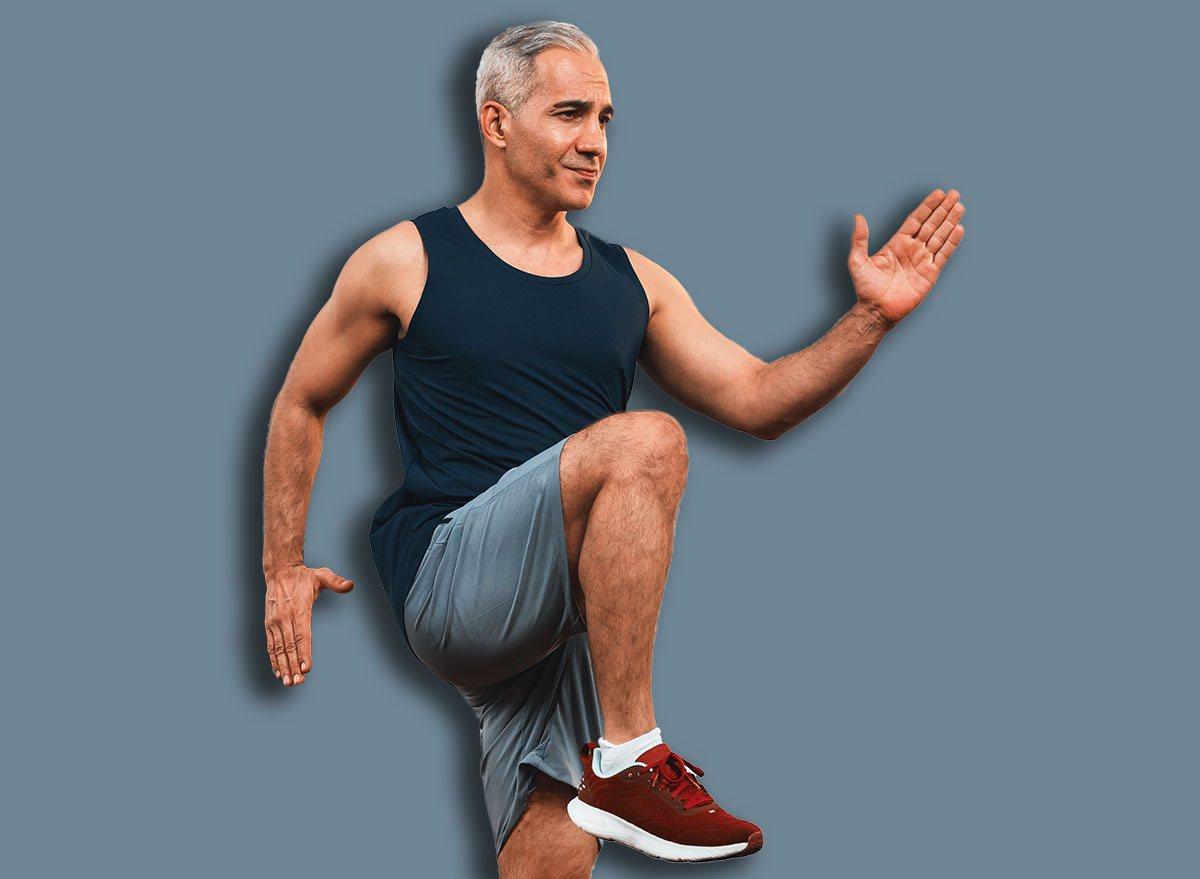
Exercise 3: Standing March Endurance
Walking depends on far more than simply putting one foot in front of the other. Strong hip flexors, stable core muscles, good balance, and cardiovascular endurance all contribute to maintaining a smooth, confident stride. The standing march combines each of these qualities into one practical assessment. I often use it because it closely reflects the stamina needed for shopping, traveling, hiking, and enjoying an active lifestyle.
How to Perform It
- Stand tall.
- Lift one knee to hip height.
- Lower with control.
- Alternate legs continuously.
- Maintain an upright posture.
- Continue for one minute.
Benchmark: Completing the full 60 seconds without losing posture, shortening your stride, or needing extra support places you above average for functional endurance after 60.