4 Standing Exercises That Restore Posture Faster Than Yoga After 60
Yoga can be a great way to improve mobility, breathing, and body awareness after 60. Posture, though, often improves fastest when you strengthen the muscles that help hold you upright. Your upper back, shoulders, core, glutes, and hips all play a role in how tall you stand and how supported your spine feels during the day.
A strong posture routine should feel practical. You want exercises that open the chest, strengthen the upper back, build core control, and teach your shoulders to sit in a better position. Standing exercises work especially well because posture is something you use while you’re on your feet, walking, carrying, reaching, and moving through daily tasks.
When I coach posture work, I like to start with simple exercises that give people an immediate sense of improved posture. A good row can help the shoulders feel more supported. Pull-aparts wake up the upper back. Carries train tall posture under load. Wall angels help reinforce shoulder mobility and control. Together, these moves build strength where posture needs it most.
Standing Band Rows
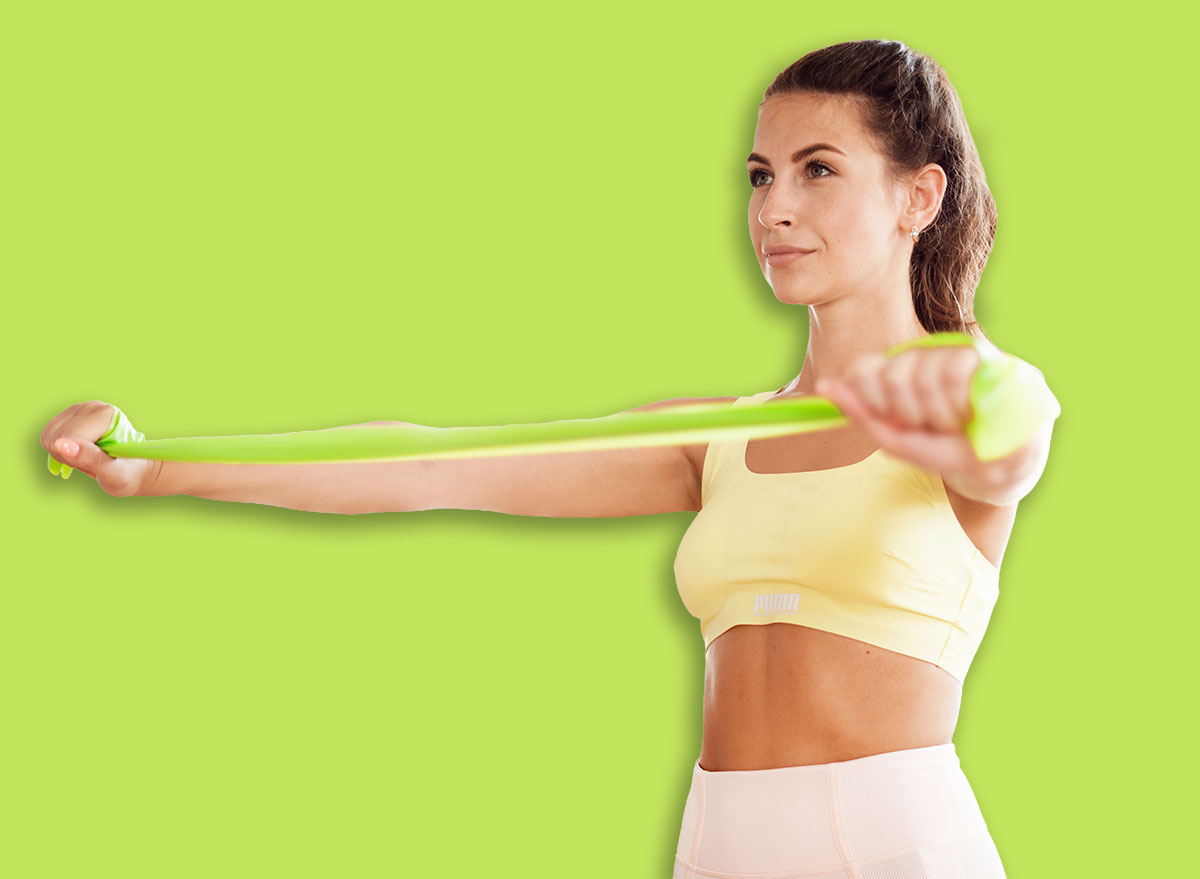
Standing band rows train your upper back, lats, rear shoulders, biceps, and core. These muscles help pull your shoulders into a stronger position and support a taller upper body. The band provides steady tension, making it easy to focus on squeezing your shoulder blades and keeping your chest lifted. Stronger rows carry over to better posture during walking, sitting, carrying, and everyday reaching.
Muscles Trained: Upper back, lats, rear delts, biceps, core.
How to Do It:
- Anchor a resistance band at chest height.
- Stand tall and hold one end of the band in each hand.
- Step back until the band has light tension.
- Brace your core and keep your chest lifted.
- Pull your elbows back toward your ribs.
- Return your hands forward with control.
Recommended Sets and Reps: Perform 3 sets of 10 to 15 reps. Rest for 45 seconds between each set.
Best Variations: Single-arm band rows, paused band rows, seated band rows.
Form Tip: Pull through your elbows and keep your shoulders relaxed.
Band Pull-Aparts
Band pull-aparts train your rear shoulders, rhomboids, and upper back, which all help your shoulders sit taller and stronger. The movement is simple, but it adds a lot of postural value when you slow it down and hold the final position. Pulling the band apart strengthens the muscles that support an open chest and upright torso. This gives your upper body a stronger frame than stretching alone.
Muscles Trained: Rear delts, upper back, rhomboids, core.
How to Do It:
- Stand tall and hold a resistance band at chest height.
- Place your hands slightly wider than shoulder width.
- Brace your core and keep a soft bend in your elbows.
- Pull the band apart until your hands move toward your sides.
- Squeeze your shoulder blades together.
- Return to the starting position with control.
Recommended Sets and Reps: Perform 3 sets of 12 to 15 reps. Rest for 30 to 45 seconds between each set.
Best Variations: Underhand pull-aparts, diagonal pull-aparts, paused pull-aparts.
Form Tip: Keep your ribs down and pull with your upper back.
Farmer Carry
Farmer carries train your upper back, grip, shoulders, core, glutes, and legs while reinforcing tall posture under load. Holding weights at your sides gives your body a clear reason to stay upright, brace, and keep the shoulders stacked over the hips. Carrying builds posture strength in a way that feels practical because you’re training the same position you need when walking, carrying groceries, or moving heavier objects.
Muscles Trained: Upper back, shoulders, grip, core, glutes, legs.
How to Do It:
- Hold a dumbbell or kettlebell in each hand.
- Stand tall with your shoulders down and back.
- Brace your core before you start walking.
- Walk forward with smooth, controlled steps.
- Keep your chest lifted and your posture strong.
- Set the weights down with control when the carry ends.
Recommended Sets and Reps: Perform 3 carries of 30 to 45 seconds. Rest for 60 seconds between each carry.
Best Variations: Lighter farmer carries, heavier farmer carries, suitcase carries.
Form Tip: Walk tall and keep your ribs stacked over your hips.
Wall Angels
Wall angels train your shoulders, upper back, and mid-back while helping you practice a stronger standing position. The wall gives you feedback so you can feel where your head, ribs, shoulders, and hips are in space. Moving your arms slowly helps improve shoulder control while your upper back works to keep your posture open. This exercise pairs well with rows and carries because it adds mobility and control to the strength work.
Muscles Trained: Upper back, rear delts, shoulders, mid-back, core.
How to Do It:
- Stand with your back against a wall.
- Place your feet a few inches away from the wall.
- Brace your core and keep your ribs down.
- Place your arms against the wall in a goalpost position.
- Slide your arms upward with control.
- Lower your arms back down while keeping steady contact with the wall.
Recommended Sets and Reps: Perform 3 sets of 8 to 10 reps. Rest for 30 to 45 seconds between each set.
Best Variations: Smaller-range wall angels, seated wall angels, and wall slides.
Form Tip: Keep the movement smooth and stay tall through your head, ribs, and hips.
How to Rebuild Better Posture After 60

Posture improves when your body gets regular practice holding strong positions. Stretching can help you feel more open, and strength work can help you maintain that position in real life. These standing exercises train the upper back, shoulders, core, grip, and hips so your posture feels supported from the ground up.
- Strengthen your upper back: Rows and pull-aparts help your shoulders sit in a stronger position. A stronger upper back gives your posture more support.
- Train posture under load: Farmer carries teach your body to stay tall while holding weight. This carries over well to groceries, luggage, yard work, and daily movement.
- Use the wall for feedback: Wall angels help you feel alignment through your head, shoulders, ribs, and hips. That feedback makes better posture easier to practice.
- Keep your core involved: Good posture comes from more than your shoulders. Brace lightly during every exercise so your ribs and pelvis stay stacked.
- Practice often: A few short sessions per week can help your posture feel more natural. Smooth reps and steady consistency make the biggest difference.
Better posture after 60 comes from strength, awareness, and repetition. Yoga can support mobility, while these standing exercises build the muscles that help you stay tall, open, and strong throughout the day.
References
- Kim D, Cho M, Park Y, Yang Y. Effect of an exercise program for posture correction on musculoskeletal pain. J Phys Ther Sci. 2015 Jun;27(6):1791-4. doi: 10.1589/jpts.27.1791. Epub 2015 Jun 30. PMID: 26180322; PMCID: PMC4499985.
- Montuori P, Cennamo LM, Sorrentino M, Pennino F, Ferrante B, Nardo A, Mazzei G, Grasso S, Salomone M, Trama U, Triassi M, Nardone A. Assessment on Practicing Correct Body Posture and Determinant Analyses in a Large Population of a Metropolitan Area. Behav Sci (Basel). 2023 Feb 8;13(2):144. doi: 10.3390/bs13020144. PMID: 36829373; PMCID: PMC9952460.