If You Can Hold a Bridge This Long After 60, Your Glute Strength Is Top-Tier
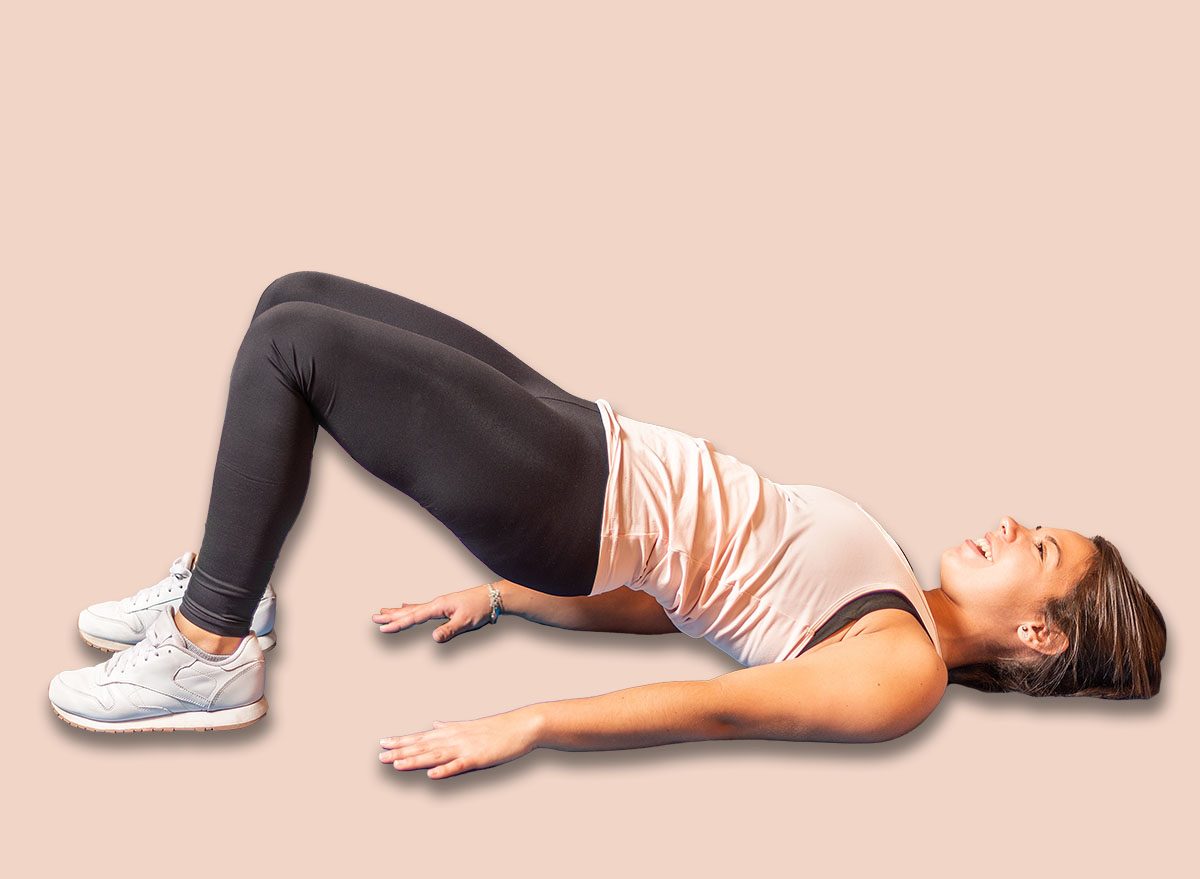
The glute bridge is one of the most fundamental exercises I use with clients, and it earns that spot for a reason. It teaches you how to drive through your hips, engage your glutes, and keep your pelvis steady without needing a complicated setup. That’s a big deal after 60, because strong glutes support how you walk, climb stairs, stand from a chair, and move through the day with more control.
From a coaching standpoint, I like bridges because they provide quick feedback. I can see whether someone is truly using their glutes or shifting the work into the lower back or hamstrings. I’ll often use bridge holds in warm-ups before squats, deadlifts, lunges, or even walking-based sessions because they help the hips wake up and create a better position. When the glutes fire well, the rest of the lower body usually moves better.
Holding a bridge takes the movement a step further. Instead of lifting and lowering, you have to maintain tension in the glutes while keeping your hips level and your core supporting the position. That tests more than strength for one rep. It shows how long your glutes can stay engaged and keep your hips organized as time builds. Below, we’ll break down why the bridge matters, how to perform it correctly, what your hold time means, and how to build stronger glutes after 60.
Why the Bridge Builds Glute Strength After 60
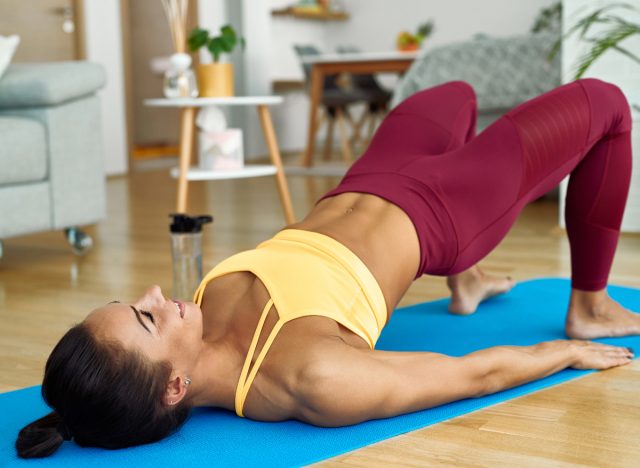
The bridge puts your glutes in charge of hip extension, which is one of the most important actions for lower-body strength. Every time you stand up, walk uphill, climb stairs, or push off the ground, your hips need to extend with control. Strong glutes make those movements smoother and help your lower body produce force without relying too heavily on the lower back.
The bridge also teaches pelvic control. Your glutes help keep your pelvis level, while your core keeps your ribs and hips connected. That combination matters for posture, balance, and resilience. When your hips stay strong and stable, your body can distribute force more evenly through your legs rather than letting your knees or back take on extra stress.
The hold adds the endurance piece. Your glutes have to keep working the entire time, which builds staying power in a position that carries into daily movement. Longer holds also increase time under tension, giving the muscles more opportunity to adapt. That’s why a bridge hold can be such a useful test after 60. It shows whether your glutes can stay active, steady, and connected as fatigue builds.
How to Perform a Proper Bridge Hold
A strong bridge starts with the right setup. Your feet, ribs, hips, and pelvis all need to line up before you lift. The goal is to feel the glutes doing the majority of the work while your core keeps your lower back from taking over. Once you’re in position, hold steady and keep the same hip height from start to finish.
How to Do It:
- Lie on your back with your knees bent and your feet flat on the floor about hip-width apart.
- Place your arms at your sides with your palms facing down.
- Brace your core by tightening your midsection before lifting your hips.
- Press through your heels and lift your hips until your shoulders, hips, and knees form a straight line.
- Squeeze your glutes while keeping your ribs down and your pelvis level.
- Hold the position while breathing steadily and maintaining the same hip height.
A quick chat on the movement standard. The hold counts when your hips stay lifted, and your body forms a straight line from shoulders to knees. Once your form breaks, the clock stops!
Best Variations: Single-Leg Bridge, Marching Bridge, Elevated Feet Bridge, Banded Bridge Hold, Hip Thrust Hold.
Bridge Hold Test After 60: What Your Time Means
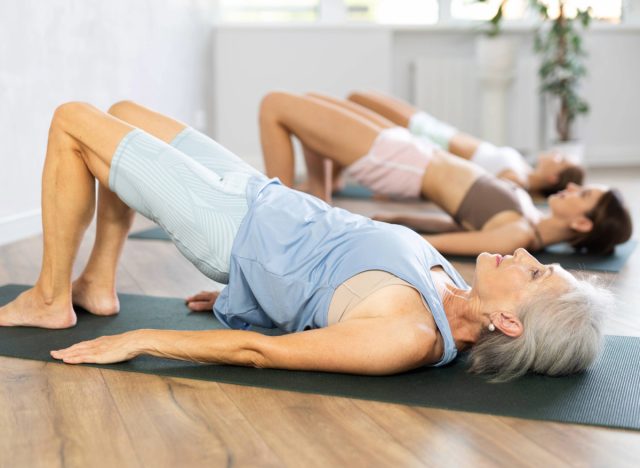
Your hold time gives you a clear look at how well your glutes maintain tension. Keep your hips level, your ribs down, and your breathing steady. The number matters most when the position stays clean from start to finish.
- Under 30 seconds: You’re building the foundation. Focus on finding your glutes, keeping your pelvis level, and holding a clean position for shorter sets.
- 30 to 60 seconds: This is a solid base. Your glutes can support the position with good control, and you’re building the endurance needed for daily movement.
- 60 to 90 seconds: You’re in strong territory. Your hips stay lifted, your glutes maintain tension, and your body holds its position as the effort builds.
- 90+ seconds: This is top-tier. Holding a clean bridge this long after 60 shows excellent glute strength, hip control, and muscular endurance.
How to Build Stronger Glutes After 60
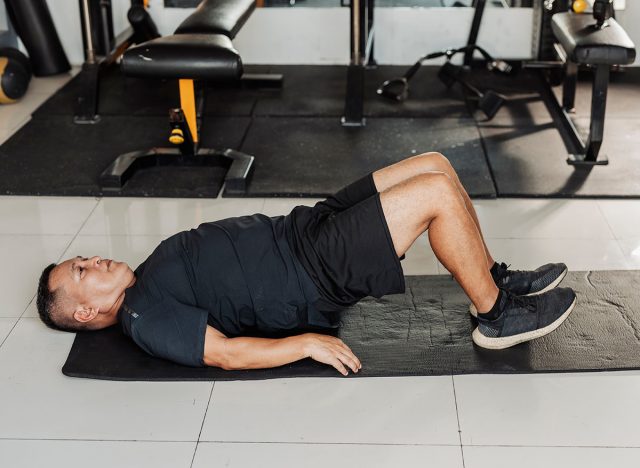
Building a stronger bridge starts with learning how to create and sustain tension. The goal is steady hips, active glutes, and a consistent position. This strength carries well into daily movement because the glutes help power each step, support the pelvis, and keep the lower body moving with control. A few focused sessions each week can strengthen the bridge and help your hold time improve. Keep the work clean, progress gradually, and let the quality of each hold drive the improvement.
- Practice bridge holds regularly: Start with two to three sets a few times per week. Keep each hold controlled and stop before your position changes.
- Set your position before lifting: Brace your core, plant your feet, and create tension through your hips before your pelvis leaves the floor.
- Drive through your heels: This helps shift the work into your glutes and hamstrings while keeping your feet grounded.
- Keep your ribs down: A strong rib position helps your pelvis stay steady and keeps the hold focused on the glutes.
- Use shorter holds with better control: Sets of 20 to 40 seconds with strong form build the base for longer holds.
- Add single-leg work over time: Single-leg bridges and marching bridges challenge each hip individually and help address side-to-side differences.
- Train your glutes from different angles: Step-ups, split squats, hip thrusts, and lateral band walks all support stronger hips.
- Retest every few weeks: Use the same setup and movement standard to track real progress.
A bridge hold gives you a simple way to check how well your glutes can stay engaged and support your hips. If you can hold a clean bridge past 90 seconds after 60, your glute strength sits in a top-tier range. That strength carries into how you walk, climb, stand, and move through daily life with more control.
References
- Goller M, Quittmann OJ, Alt T. How to activate the glutes best? Peak muscle activity of acceleration-specific pre-activation and traditional strength training exercises. Eur J Appl Physiol. 2024 Jun;124(6):1757-1769. doi: 10.1007/s00421-023-05400-3. Epub 2024 Jan 27. PMID: 38280014; PMCID: PMC11130056.
- Jeong DE, Lee SK, Kim K. Comparison of the activity of the gluteus medius according to the angles of inclination of a treadmill with vertical load. J Phys Ther Sci. 2014 Feb;26(2):251-3. doi: 10.1589/jpts.26.251. Epub 2014 Feb 28. PMID: 24648642; PMCID: PMC3944299.
- Porrón-Irigaray A, Rodríguez-López ES, Acevedo-Gómez MB, Ojedo-Martín C, Benito-de-Pedro M. Coactivation of the Pelvic Floor and Gluteus Medius Muscles While Walking and Running in Female Runners. Sensors (Basel). 2024 Feb 20;24(5):1356. doi: 10.3390/s24051356. PMID: 38474893; PMCID: PMC10934361.