5 Daily Exercises That Restore Hip Mobility Faster Than Floor Stretches After 55


Your hips quietly handle a huge portion of the work your body does every day. Walking, standing up from a chair, climbing stairs, and even getting in and out of the car all rely on healthy hip mobility. When the hips move well, everything else tends to follow. Steps feel smoother, balance improves, and the lower back usually feels happier, too.
After years of coaching athletes and everyday clients, I’ve seen how quickly the hips respond when you give them proper movement prescriptions. Many people assume the answer is to lie on the floor and do long stretches. Stretching has its place, yet the hips often improve faster when they move through strength-based positions that encourage the joints to work through their full range of motion. Plus, many people would rather move than spend ten minutes staring at the ceiling while holding a stretch.
These five daily movements help the hips open up while strengthening the muscles that support them. They combine mobility, stability, and coordination so your hips learn to move freely while staying strong. Perform them consistently, and you’ll build smoother movement, stronger legs, and hips that feel a whole lot better throughout the day.
Bodyweight Deep Squat
The deep squat encourages the hips to move through a full range of motion while strengthening the surrounding muscles. Sitting in the bottom position allows the hips, knees, and ankles to work together naturally. This movement gently stretches the hips while building strength in the quads and glutes. Over time, practicing deep squats helps the joints feel more comfortable in deeper positions. Many people notice their hips start to feel looser and more stable within just a few weeks.
Muscles Trained: Quads, glutes, hamstrings, and core.
How to Do It:
- Stand with your feet slightly wider than shoulder width.
- Brace your core and push your hips back.
- Lower your body into a deep squat position.
- Keep your chest tall and your heels grounded.
- Stand back up by driving through your heels.
Recommended Sets and Reps: Perform 3 sets of 10 to 12 reps. Rest for 45 seconds between each set.
Best Variations: Goblet deep squat, pause squat, assisted squat hold.
Form Tip: Sit your hips down between your heels rather than leaning forward.
Standing Hip Circles
Standing hip circles encourage the hips to move smoothly in multiple directions. Many daily movements only challenge the hips forward and backward. Circular motion allows the joint to explore a wider range of movement. This helps improve joint awareness and coordination. Over time, the hips become more comfortable moving through these larger patterns.
Muscles Trained: Hip flexors, glutes, and stabilizing muscles around the hip joint.
How to Do It:
- Stand tall while holding onto a wall or sturdy surface.
- Lift one knee to hip height.
- Slowly draw a large circle with your knee.
- Continue rotating the hip through a full circular motion.
- Reverse the direction after completing several circles.
Recommended Sets and Reps: Perform 3 sets of 6 to 8 circles per direction per leg. Rest for 30 seconds between each set.
Best Variations: Controlled hip rotations, banded hip circles, slow tempo circles.
Form Tip: Move slowly and keep your torso steady as the hip moves.
Alternating Lateral Lunges
Alternating lateral lunges strengthen the hips while improving side-to-side mobility. This movement challenges the inner thighs and glutes while encouraging the hips to move in a wider pattern. Many people feel immediate benefits in the groin and hip region after performing a few sets. The controlled shift in body weight also improves balance and coordination. Consistent practice builds stronger hips that move more comfortably in multiple directions.
Muscles Trained: Glutes, quads, inner thighs, and hips.
How to Do It:
- Stand with your feet hip-width apart.
- Step your right foot out to the side.
- Bend your knee while pushing your hips back.
- Keep your opposite leg straight and your chest tall.
- Push through your foot to return to the starting position and switch sides.
Recommended Sets and Reps: Perform 3 sets of 10 reps per side. Rest for 45 seconds between each set.
Best Variations: Weighted lateral lunge, slider lateral lunge, pause lateral lunge.
Form Tip: Sit your hips back to engage the glutes as you step sideways.
Reverse Lunge with Reach
Reverse lunges encourage the hips to extend and flex through a controlled movement. Adding an overhead reach increases the mobility challenge while engaging the entire body. The movement stretches the hip flexors of the back leg while strengthening the front leg. This combination encourages smoother hip motion during walking and climbing. Over time, the exercise helps restore both strength and flexibility in the hips.
Muscles Trained: Glutes, quads, hip flexors, and core.
How to Do It:
- Stand tall with your feet hip-width apart.
- Step one leg backward into a reverse lunge.
- Raise both arms overhead as you lower your back knee.
- Keep your chest tall and your core engaged.
- Push through your front foot to return to standing.
Recommended Sets and Reps: Perform 3 sets of 8 to 10 reps per leg. Rest for 45 seconds between each set.
Best Variations: Dumbbell reverse lunge with reach, bodyweight overhead lunge, alternating reverse lunge.
Form Tip: Reach upward through your fingertips to open the hips and torso.
Curtsy Lunge
Curtsy lunges strengthen the hips while challenging them in a diagonal movement pattern. The crossing step activates the glutes and outer hips while encouraging stability. This movement helps train the muscles that support the pelvis during walking and single-leg activities. Many people find that it quickly improves balance and hip control. Over time, the exercise builds stronger hips that feel more stable and coordinated.
Muscles Trained: Glutes, quads, hips, and inner thighs.
How to Do It:
- Stand with your feet hip-width apart.
- Step one leg diagonally behind your body.
- Bend both knees to lower into a lunge.
- Keep your chest tall and your hips facing forward.
- Push through your front foot to return to standing.
Recommended Sets and Reps: Perform 3 sets of 8 to 10 reps per leg. Rest for 45 seconds between each set.
Best Variations: Dumbbell curtsy lunge, alternating curtsy lunge, pause curtsy lunge.
Form Tip: Keep your hips square as you step behind your body.
Best Daily Tips for Improving Hip Mobility After 55
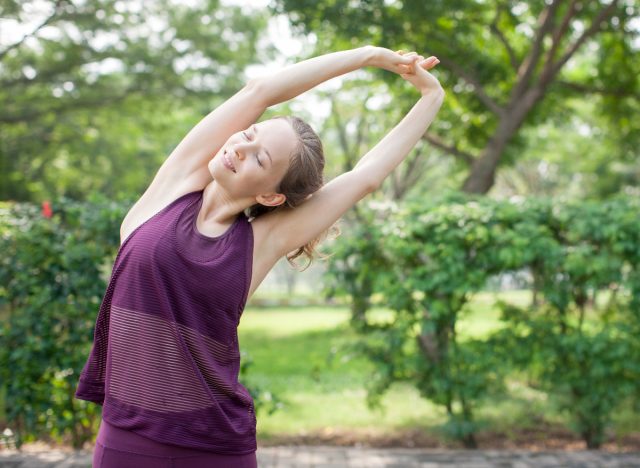
Healthy hips make everyday movement easier and more comfortable. When the hips move well, the knees and lower back often feel better, too. Rather than stretching your life away, improving hip mobility with well-chosen movements performed regularly can make a noticeable difference in how the body feels and moves.
- Move your hips in multiple directions: Exercises that include forward, sideways, and rotational movements help your hips stay adaptable.
- Prioritize controlled movement: Slow and steady repetitions allow the joints to move through their full range safely.
- Strengthen the surrounding muscles: Strong glutes and thighs support healthy hip mechanics.
- Stay consistent with daily movement: Short daily sessions help maintain hip mobility and strength.
- Listen to your body: Move within comfortable ranges and gradually increase depth as mobility improves.
Stick with these exercises and your hips will begin to feel stronger, looser, and more capable with every week of training.
References:
- Leem, Inhwan et al. “Impact of Hip Exercises on Postural Stability and Function in Patients with Chronic Lower Back Pain.” Diagnostics (Basel, Switzerland) vol. 15,10 1229. 13 May. 2025, doi:10.3390/diagnostics15101229
- Ehresman, Brent A et al. “Improved Hip Flexibility and Gluteal Function Following a Daily Lunge-and-Reach Stretching Intervention.” International journal of sports physical therapy vol. 20,6 814-823. 2 Jun. 2025, doi:10.26603/001c.137692