If You Can Do This Many Pushups After 50, Your Upper-Body Strength Is Top-Tier
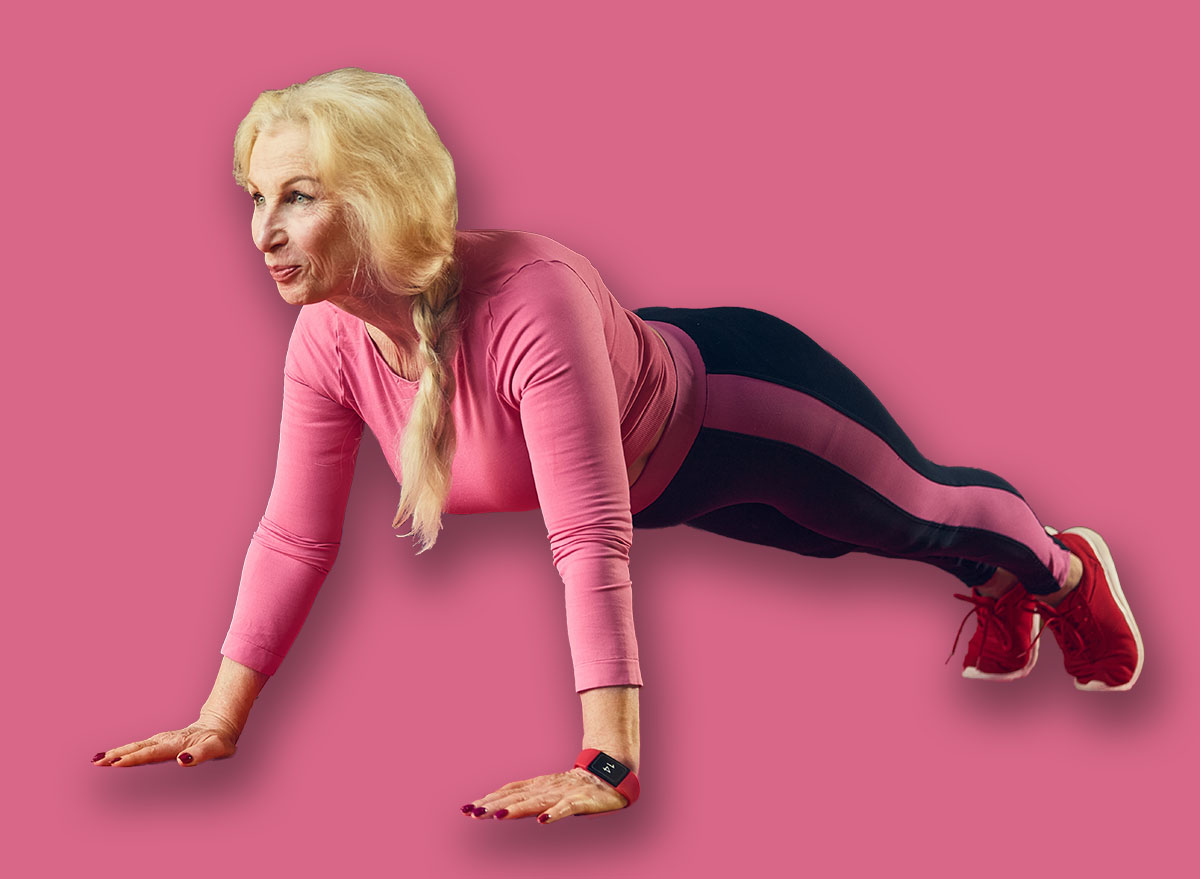

Pushups remain one of the most honest strength tests you can perform at any age. After 50, they reveal how well your upper body, core, and shoulder stability still work together. When someone can knock out strong, controlled reps, it tells me their pressing strength and muscular endurance are in a very good place. Few bodyweight moves give you this much feedback this quickly.
Inside my coaching programs, the pushup often serves as a benchmark movement because it reflects real-world strength you actually use. It challenges your chest, shoulders, triceps, and core without requiring fancy equipment or a long setup. I’ve watched plenty of clients rediscover impressive upper-body capacity simply by consistently practicing and progressing this one movement. And for those who aren’t quite up to par, a little modification never hurt a push-up.
Below, you’ll learn how to perform a technically clean pushup, how your rep count compares to common age-based standards, and what to focus on if you want to climb into the top tier. If you’re ready to see where your upper body strength stands, this is the test to try.
Performing a Top-Tier Pushup
Before chasing higher rep numbers, lock in your technique. Clean pushups build real strength and protect your shoulders, while rushed reps often lead to compensation and stalled progress. I always tell clients that every inch of the rep should look the same from start to finish. Own the position, control the lowering phase, and press with intent.
How to Perform a Perfect Pushup
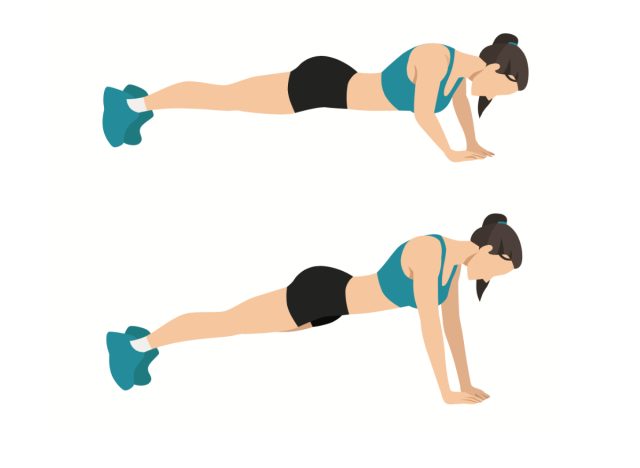
- Place your hands slightly wider than shoulder width with your fingers spread for stability.
- Extend your legs behind you and form a straight line from your head to your heels.
- Brace your core and squeeze your glutes to prevent your hips from sagging.
- Lower your chest toward the floor with control while keeping your elbows at about a 30- to 45-degree angle.
- Stop when your chest hovers just above the floor without losing alignment.
- Press firmly through your palms to return to the starting position.
Pushup Strength Rankings After 50
Your pushup total gives a quick snapshot of upper-body endurance and relative strength. These ranges reflect full-range push-ups performed with strict form and no mid-set rest.
Pushup Score Rankings for Adults Age 50 and Older
- Top Tier: 35 or more consecutive pushups
- Above Average: 25 to 34 pushups
- Average: 15 to 24 pushups
- Below Average: 8 to 14 pushups
- Needs Improvement: Fewer than 8 pushups
Landing in the top tier range places you well ahead of most people in your age group. If your number sits lower right now, you still have plenty of room to build with focused training.
Best Tips to Improve Pushup Strength After 50

Improving your pushup numbers comes down to consistent practice and smart strength work. Many adults over 50 still have significant untapped upper body potential when they train with structure. I regularly see clients add meaningful reps once they focus on quality, volume, and recovery. Progress builds faster when you train just shy of fatigue and repeat the movement often. Stay patient and stack small wins week after week.
- Practice pushups two to three times per week: Frequent exposure improves both strength and endurance.
- Use incline pushups to build volume: Hands elevated on a bench or box allow more quality reps while strength develops.
- Strengthen your pressing muscles: Add dumbbell presses, chest presses, and overhead work to support stronger pushups.
- Build core tension: Planks, dead bugs, and Pallof presses improve the stability required for push-ups.
- Slow the lowering phase: A two-to-three-second descent increases time under tension and builds strength faster.
- Stop one to two reps before failure: Training near fatigue supports better recovery and more consistent progress.
- Retest every four to six weeks: Regular testing keeps you motivated and shows clear improvement.
Stick with these strategies, and your pushup total can climb into the top-tier range faster than most people expect.
References
- Yang, Justin et al. “Association Between Push-up Exercise Capacity and Future Cardiovascular Events Among Active Adult Men.” JAMA network open vol. 2,2 e188341. 1 Feb. 2019, doi:10.1001/jamanetworkopen.2018.8341
- Alizadeh, Shahab et al. “Push-Ups vs. Bench Press Differences in Repetitions and Muscle Activation between Sexes.” Journal of sports science & medicine vol. 19,2 289-297. 1 May. 2020