4 Morning Exercises That Restore Leg Strength Faster After 55
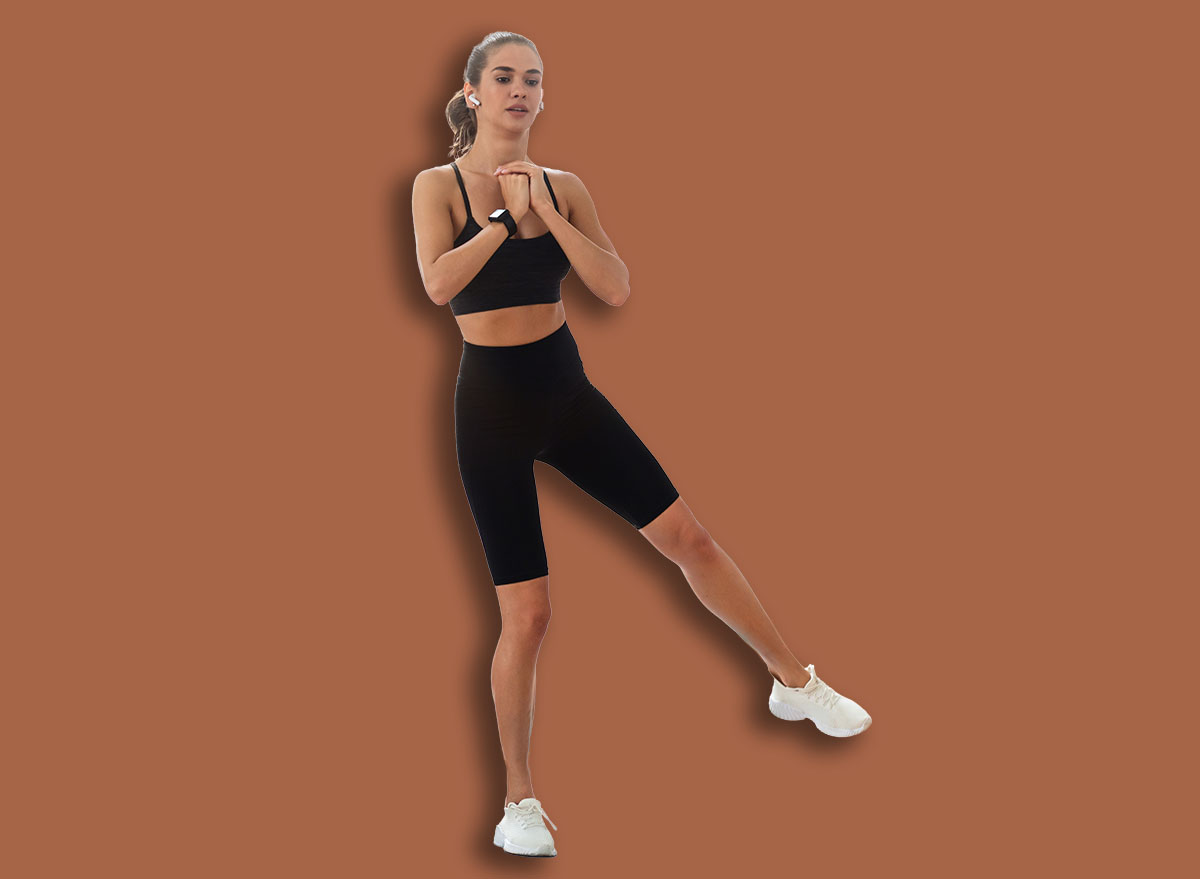

If you’re a fitness enthusiast, you’re probably quite familiar with how beneficial squats can be for building leg strength. Your lower body is a region that requires attention as you age. Doing so will enhance joint strength and lower your risk of falling. Strong legs help you walk, stand up, and climb stairs more easily, too. To help you out, we spoke with experts to learn four morning exercises that help restore leg strength even faster than squats after 55.
Why Morning Exercise Is Key for Focusing on Lower-Body Strength

“When my older patients get into a habit of doing a simple leg routine early in the day, I see the following reasons,” explains Dr. Mikel Daniels, board-certified podiatrist with WeTreatFeet Podiatry.
First and foremost, morning exercise sets a solid tone for the entire day.
“If you start your day with a little focused strength, you are far more likely to stand more, walk more, and use those muscles throughout the day,” Dr. Daniels adds.
Second, performing a productive morning sweat session helps alleviate stiffness.
“Overnight, joints get stiff, circulation slows, and many people over 55 tell me their first 10 minutes out of bed feel like they’re walking in concrete (I am almost there and trust me it is true),” Dr. Daniels notes. “Gentle leg work in the morning pumps blood through the muscles, lubricates the joints, and reduces that stiffness window.”
In addition, working out in the morning has the power to boost your mood. Resistance exercise in general is associated with improved energy, cognitive function, and mood. If you do it early on in the day, those benefits carry through.
“Short sessions improve consistency because they happen before fatigue and distractions,” adds Karen Ann Canham, CEO and founder of Karen Ann Wellness. “Starting the day with strength also … makes everyday movement feel easier all day.”
Sit-to-Stand
“Sit-to-stand drills [activate] the same muscle group as squats, namely the quadriceps, glutes, and some hamstring [muscles]. However, this has more real life carryover for things like getting out of a car, off the toilet, or out of a deep couch,” Dr. Daniels explains. “Why it often beats traditional squats at this age: This movement is easier to control the depth and overall form. It provides a safe, yet solid exercise that doesn’t cause any pain in the knees or back.”
- Begin in a seated position at the front of a sturdy chair, feet hip-width apart under your knees.
- Lean forward slightly.
- Press through your heels to stand up without using your knees, hands, or additional support.
- Pause for 1 to 2 seconds.
- Use control to slowly sit back down, 2 to 3 seconds.
- Perform 2 sets of 8 to 12 slow, controlled reps.
Step-Ups From a Low Step
“Step-ups work the quads, glutes, and hip stabilizers in a way that looks almost exactly like climbing stairs or a curb,” Dr. Daniels points out. “These load one leg more than the other, so you get a stronger training effect without needing a lot of total weight. It helps work on balance and motion control in a forward direction. This is how you move through the world most of the day. For patients who hate exercise, or are nervous about squats, they tend to be easier to tolerate.”
- Begin by standing tall, facing a low step. Hold an optional lightweight dumbbell in each hand.
- Place your left foot firmly onto the surface, keeping your core engaged and chest tall.
- Press through your left heel to lift your body until your left leg is straight and you’re standing on the surface.
- Use control to lower back to the start position.
- Repeat on the other side.
- Perform 1 to 2 sets of 6 to 10 reps per leg.
Standing Calf Raises
“Strong calves help with balance and lower the risk of falls. When the calves and the rest of the ankle complex work correctly, walking, climbing stairs, and even standing in line feel easier and less tiring,” Dr. Daniels explains. “Traditional squats barely touch the calves compared to focused calf raises, so if someone only does squats, they are skipping a key part of the lower leg.”
- Begin by standing tall with your feet hip-width apart, facing a counter with your hands lightly resting on the surface.
- Engage your core.
- Rise onto your toes slowly.
- Pause at the top, holding the lift for 1 to 2 seconds.
- Lower back down with control.
- Perform 2 sets of 10 to 15 reps.
RELATED: If You Can Master These 4 Moves After 50, You’re Stronger Than Most
Standing Side Leg Raises
“Squats focus mostly on front to back movement, while side leg raises work your lateral stability, which protects you when you step sideways, get bumped, or slip,” Dr. Daniels says. “Strong hip abductors are tied to better balance and fewer falls in older adults, and traditional squats on their own do not fully cover that need. In my own practice, I see a lot of patients with knee and foot pain where weak hips turn out to be the hidden driver, and once we build up those side hip muscles, the leg lines up better over the foot and a lot of that extra strain fades away.”
- Begin by standing tall with your feet hip-width apart and hands on your hips or holding onto a sturdy chair or wall for support.
- Activate your core and shift your weight onto your left leg.
- Keep your right leg straight and toes pointed forward as you lift it out to the side as high as you’re comfortably able to.
- Hold at the top for a moment before lowering.
- Repeat on the other side.
- Perform 1 to 2 sets of 8 to 12 reps on each leg.