If You Can Do This Many Squats After 50, Your Lower Body Strength Is Elite
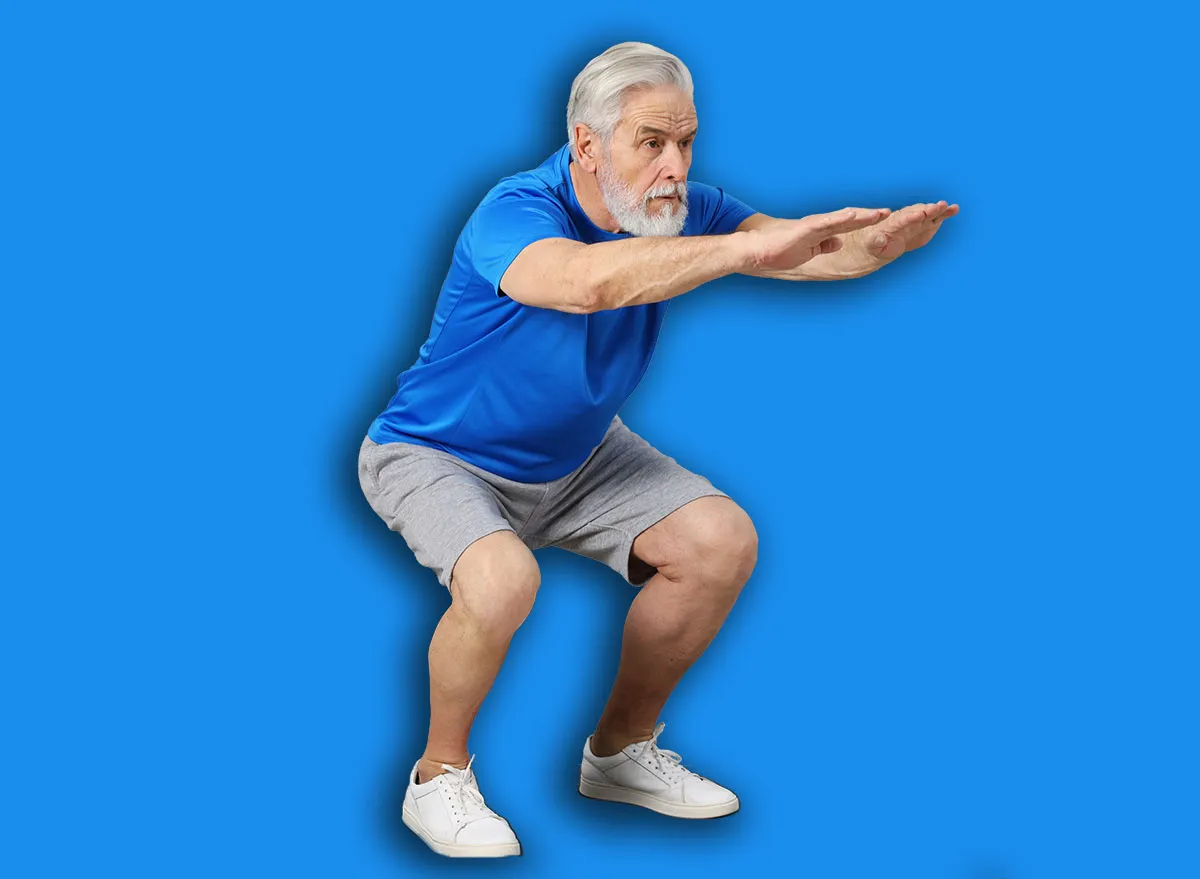

Most people over 50 want legs that feel strong enough to hike, lift, chase grandkids, and move through long days without knee aches or fatigue. Squats deliver precisely that. They train the muscles that keep you stable, powerful, and capable through every part of life. When your lower body stays strong, everything from your balance to your metabolism improves.
Bodyweight squats give you a clear snapshot of how well your legs handle real-world tasks. Your hips and knees move through a wide range of motion, your core fires to keep you steady, and your muscles work in tandem to generate force. This simple test shows you exactly where your lower body stands today.
The beauty of a squat test is how little you need. You only need your body, a bit of effort, and a willingness to see what your legs can do. The number you hit reveals how much power, muscle control, and endurance your lower body carries.
Today’s test gives you a concrete benchmark. It shows you what counts as below average, what qualifies as solid strength, and what level puts you in the elite category. If you can hit the top tier, your lower body sits in rare company for people over 50.
The Squat Test for People Over 50
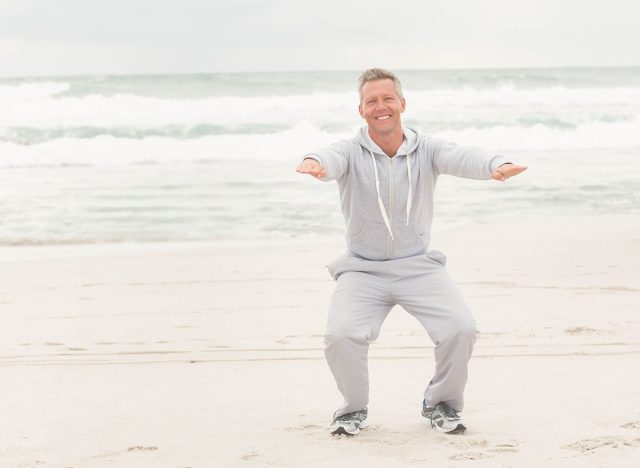
The squat test provides a clear indication of how strong and coordinated your lower body is, without any equipment. Your legs work through a full range of motion, your hips guide the movement, and your core locks in to stabilize you. This combination mirrors the demands of daily life. The test measures how well your body handles force, how efficiently your movement patterns are, and how much endurance your muscles possess.
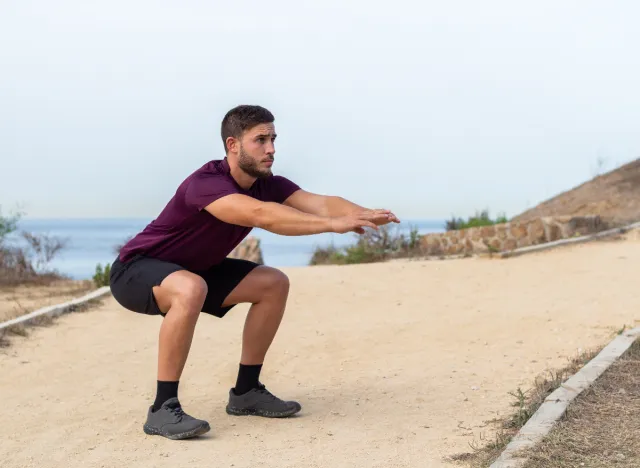
To get the most out of the test, hit consistent depth on every rep. Your thighs should be at least parallel to each other. Your knees should track over your toes. Your heels should stay planted. These checkpoints prove that your legs can produce strength and absorb load throughout the full range. The more reps you complete with solid technique, the more capable your lower body is.
How to Perform a Perfect Squat
- Set your stance by placing your feet shoulder-width apart and turning your toes slightly outward.
- Brace your core to maintain torso stability throughout the movement.
- Push your hips back to begin the descent and load your glutes.
- Bend your knees and lower your body until your thighs are at least parallel.
- Keep your chest tall to maintain an upright torso and a supported back.
- Drive through your heels to stand tall with control.
- Squeeze your glutes at the top and reset your position before the next rep.
How to Perform the Test: Complete as many bodyweight squats as possible without rest. Maintain clean form and stop the test when your depth starts to shorten or your torso leans excessively.
Ranking Scores for Lower Body Strength After 50
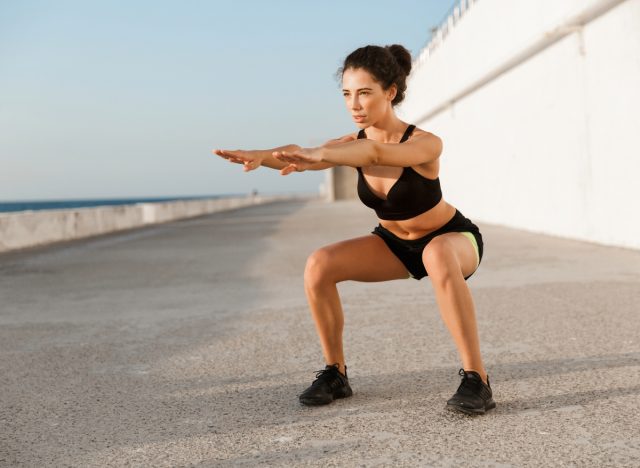
These categories show you exactly where your squat strength lands. They also tell you how your performance compares to what most adults over 50 can do. Your score gives you a deeper understanding of your muscular endurance, hip control, knee stability, and overall strength.
Below Average: Fewer than 20 reps
A score under 20 indicates that your lower body requires additional strength, improved control, and enhanced endurance. This range often appears when people sit for long hours, skip lower-body training, or move with a limited range of motion. Improving from here happens quickly with consistent practice.
Average: 20 to 34 reps
This range reflects solid baseline strength. Your legs can support you through everyday tasks without trouble, and your balance remains dependable. You still have room to improve your durability, your ability to handle long days on your feet, and your explosiveness.
Above Average: 35 to 49 reps
A score in this range indicates that your legs exhibit impressive strength and endurance for your age. Your hips move smoothly, your joints remain stable, and your muscles maintain control even as fatigue sets in. This level supports faster walking speeds, stronger lifts, and better athletic performance.
Elite: 50+ reps
Hitting 50 or more clean squats places you at the top of the strength curve for adults over 50. Your lower body demonstrates outstanding endurance, force production, joint stability, and movement quality. Strong legs at this level support powerful athleticism, smoother hiking and stair climbing, faster recovery, and greater independence.
Why Squat Capacity Matters After 50
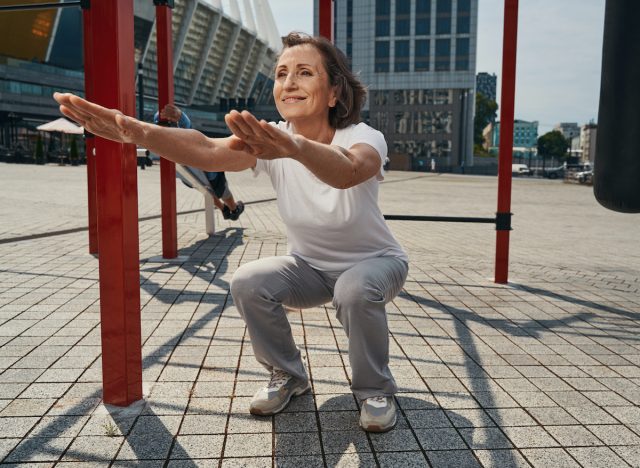
Your ability to perform high-quality squats reflects the strength of all major lower-body muscle groups. Squat capacity ties directly to real-world performance. You use these muscles when you get out of a chair, climb stairs, carry groceries, and move through long days without fatigue. Strong legs also protect your knees and hips by improving joint mechanics and shock absorption.
Higher squat scores indicate that your body can produce powerful contractions while maintaining balance and coordination. This carries over into better bone density because loaded leg muscles pull on the bones, stimulating new growth. The ability to keep driving through rep after rep also signals healthy muscle fibers, strong connective tissue, and an active metabolism. Squat strength serves as one of the best indicators of long-term mobility and quality of life.
How to Improve Your Squat Score
Strong squat numbers come from consistent training. Your legs respond quickly when you challenge them with the right mix of practice, strength work, mobility, and control. Each strategy below helps your hips, knees, and core work together, allowing you to produce more force, maintain better technique, and increase your total rep count every time you test yourself.
- Practice Bodyweight Squats 2 to 3 Times Per Week: Regular practice improves your movement efficiency. Your body learns to sit into your hips, recruit your quadriceps and gluteal muscles, and maintain a tall torso. This practice builds endurance and coordination, which increases your total rep count.
- Add Loaded Squats to Build Strength: Hold a dumbbell in a goblet position or use two dumbbells at your sides. Loaded squats strengthen your quadriceps, gluteus maximus, and core. Stronger muscles generate more force, which gives you the ability to hit higher rep totals when you return to bodyweight.
- Strengthen Your Glutes and Quads With Accessory Movements: Add step-ups, split squats, lunges, and hip thrusts. These exercises target the muscles that keep your knees stable and your hips powerful. Stronger glutes and quads enhance depth, control, and drive from the bottom of the squat.
- Improve Your Hip and Ankle Mobility: Stiff hips reduce your squat depth, and limited ankle mobility forces compensations that drain your strength. Spend time on ankle mobility drills, deep squat holds, and hip flexor stretches. Better mobility helps you maintain clean form for more reps.
- Use Controlled Reps Instead of Rushing Through the Movement: Smooth, controlled reps teach your legs to work harder and stay engaged. Every controlled squat builds more strength than a fast, shallow rep. When you train with quality first, high rep numbers follow.