5 Standing Exercises That Rebuild Arm Muscle Faster Than Weights After 55
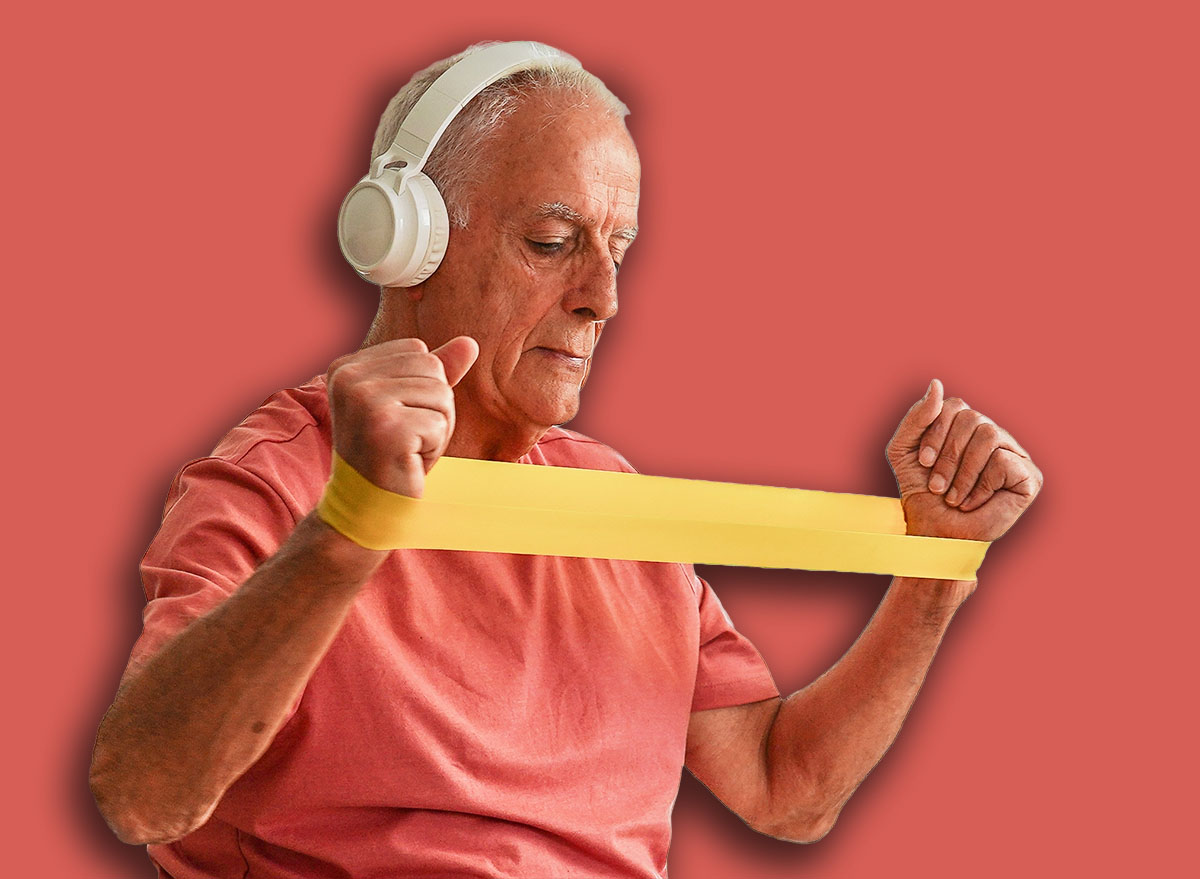
Building arm muscle after 55 can actually feel refreshingly simple. You don’t need a pile of dumbbells, marathon gym sessions, or a setup that looks like a home improvement project gone wrong. What works best is steady tension, smart angles, and movements that leave your joints feeling worked, not wrecked. Standing exercises hit that sweet spot while keeping you upright, engaged, and moving.
As we age, muscles respond to frequent, repeatable loading rather than to occasional max-effort days. Standing arm work lets you train more often because it places less stress on your body. You also recruit more stabilizing muscles, which improves strength transfer to daily tasks like carrying groceries, opening heavy doors, or lifting gear overhead.
Bands and bodyweight also create constant tension through the full range of motion. That matters for muscle growth, especially when joints prefer smoother resistance over hard stops. You can control tempo, adjust angles, and fine-tune effort without needing heavier loads.
The exercises below focus on rebuilding arm muscle while keeping your shoulders healthy and your posture tall. Each move targets the biceps, triceps, and supporting muscles in a way that feels productive instead of punishing. Let’s break them down.
Wall Push-Ups
Wall push-ups give your triceps meaningful work without forcing your shoulders into uncomfortable positions. Standing tall against the wall keeps your core active and encourages better shoulder alignment than floor push-ups for many adults. You can easily control intensity by adjusting your foot position, making this movement scalable and joint-friendly. Over time, this steady loading helps rebuild pressing strength while improving arm definition.
Muscles Trained: Triceps, chest, shoulders, and core.
How to Do It:
- Stand facing a wall and place your hands on the wall at chest height.
- Take a step back with your feet and keep your body in a straight line.
- Bend your elbows and lower your chest toward the wall.
- Press through your palms and straighten your arms to return to the start.
- Exhale as you push, keeping your core braced.
Recommended Sets and Reps: Perform 3 sets of 10 to 15 reps. Rest for 45 to 60 seconds between each set.
Best Variations: Single arm wall push-ups, incline push-ups on a bench, slow tempo wall push-ups.
Form Tip: Keep your elbows angled slightly back instead of flaring wide.
Standing Band Curl
Band curls keep tension on your biceps from start to finish, which helps stimulate growth without stressing the elbows. Standing tall forces your core and upper back to support the movement, improving overall arm mechanics. The resistance adapts naturally as you curl, which feels smoother than free weights for aging joints. This move also reinforces proper posture while rebuilding arm size.
Muscles Trained: Biceps, forearms, and upper back.
How to Do It:
- Stand on the center of a resistance band with feet hip-width apart.
- Hold the band handles with palms facing forward.
- Brace your core and curl your hands toward your shoulders.
- Squeeze your biceps at the top of the movement.
- Lower your hands under control back to the start.
Recommended Sets and Reps: Knock out 3 to 4 sets of 12 to 15 reps. Rest for 45 to 60 seconds between each set.
Best Variations: Alternating band curls, hammer grip band curls, tempo-focused band curls.
Form Tip: Keep your elbows pinned to your sides throughout the curl.
Standing Band Tricep Extension
Strong triceps give your arms a fuller look and support pressing strength. Band extensions allow you to train elbow extension without heavy loading on the joint itself. Standing tall also challenges shoulder stability and posture, which often weakens with age. This movement builds arm muscle while reinforcing control and balance.
Muscles Trained: Triceps, shoulders, and core.
How to Do It:
- Anchor a resistance band overhead or hold it behind your head.
- Stand tall with elbows bent and pointed forward.
- Extend your arms until your elbows lock out comfortably.
- Squeeze your triceps at the top.
- Return slowly to the starting position.
Recommended Sets and Reps: Perform 3 sets of 12 to 15 reps. Rest for 45 to 60 seconds between each set.
Best Variations: Single arm band extensions, kickback style extensions, slow eccentric extensions.
Form Tip: Avoid flaring your elbows out as you extend.
Band Pull-Aparts
Pull-aparts strengthen the muscles that support healthy shoulders while indirectly improving arm strength. Strong upper back muscles allow your biceps and triceps to work more efficiently. This exercise also helps counter rounded posture, which can limit arm engagement over time. It’s a simple move with a big payoff for long-term arm performance.
Muscles Trained: Rear delts, upper back, biceps, and forearms.
How to Do It:
- Hold a resistance band with arms extended in front of your chest.
- Set your shoulders down and back.
- Pull the band apart by driving your hands outward.
- Pause briefly when the band touches your chest.
- Return to the start with control.
Recommended Sets and Reps: Perform 3 sets of 15 to 20 reps. Rest for 30 to 45 seconds between each set.
Best Variations: Overhead pull-aparts, diagonal pull-aparts, slow tempo pull-aparts.
Form Tip: Focus on squeezing your shoulder blades together, not your hands.
Standing Band Row
Rows train the pulling muscles that give your arms thickness and strength. Standing band rows improve posture while engaging the biceps over a long range of motion. The constant band tension helps maintain muscle activation without joint strain. This exercise builds balanced arm strength that carries over to daily life.
Muscles Trained: Biceps, upper back, shoulders, and core.
How to Do It:
- Anchor a resistance band at chest height.
- Stand tall and hold the band handles with arms extended.
- Pull your elbows back while squeezing your shoulder blades.
- Bring the handles toward your ribs.
- Return slowly to the start position.
Recommended Sets and Reps: Knock out 3 to 4 sets of 10 to 15 reps. Rest for 45 to 60 seconds between each set.
Best Variations: Single arm rows, high rows, slow tempo rows.
Form Tip: Lead the pull with your elbows, not your hands.
The Best Tips for Rebuilding Arm Muscle After 55

Rebuilding arm muscle works best when your training feels sustainable and kind to your joints. Standing exercises make it easier to train consistently because they don’t leave you feeling beat up afterward. Strength builds through steady effort over time, rather than pushing every set to exhaustion. When you pair these movements with positive daily habits, progress starts to feel natural and repeatable.
- Train arms two to three times per week: Frequent stimulation supports muscle growth without overwhelming recovery.
- Control every rep: Slower tempos increase time under tension and improve joint stability.
- Prioritize posture: Strong alignment helps your arms express more strength during each movement.
- Fuel recovery: Adequate protein and hydration support muscle repair between sessions.
- Adjust resistance gradually: Increase band tension only when form stays solid and pain-free.
Stick with these standing exercises and habits, and your arms can get stronger, fuller, and more resilient well past 55.
References
- Wolf, Milo, et al. “Partial Vs Full Range of Motion Resistance Training: A Systematic Review and Meta-Analysis“. International Journal of Strength and Conditioning, vol. 3, no. 1, Mar. 2023, https://doi.org/10.47206/ijsc.v3i1.182.
- Schoenfeld, Brad J. “The mechanisms of muscle hypertrophy and their application to resistance training.” Journal of strength and conditioning research vol. 24,10 (2010): 2857-72. doi:10.1519/JSC.0b013e3181e840f3