4 Standing Exercises That Lift Sagging Glutes Faster Than Machines After 45

Lifting sagging glutes after 45 requires smarter training than relying on gym machines that lock your body into stiff, one-direction movements. Your glutes respond best when your hips move freely, your core stabilizes, and your legs drive power through natural standing patterns, the kind that strengthen the muscles that support your pelvis and lift your backside. When you stay upright, your glutes fire harder with every shift in weight, creating more activation than most seated or guided exercises ever generate. These standing movements challenge the full glute complex, waking up fibers responsible for lift, roundness, firmness, and long-term strength.
Standing glute work also strengthens the stabilizers that machines neglect, especially the muscles around your hips, lower back, and outer thighs. These areas lose strength quickly after 45 if they aren’t trained intentionally, which is why many people notice a flatter, softer backside even when they stay active. By training on your feet, you force your body to improve balance, pelvic alignment, and functional strength, all of which play a major role in lifting and shaping your glutes. Every rep teaches your hips to stabilize under movement, which carries into walking, stairs, and daily life.
Once you start activating your glutes with precision, your lower body feels stronger within days. Your posture improves, your hips feel supported, and your glutes begin responding with more shape and firmness. These four standing moves deliver that transformation without machines, weights, or complicated equipment: just your body, good positioning, and consistent effort. Do them daily and you’ll feel your backside lifting, tightening, and regaining strength that supports you through every part of your day.
Standing Back Leg Lifts
This movement lifts the upper glutes by teaching your hips to extend fully, a pattern that becomes weaker and underused after 45. As you stand tall and drive one leg straight back, your glutes activate without letting your lower back take over, creating a clean, targeted squeeze that builds lift and firmness. The standing position forces your core to stabilize while your supporting leg strengthens, giving your entire lower body better alignment. Slow, controlled reps create deeper tension and encourage your glutes to do the work instead of your hamstrings, which is crucial for shaping and lifting the backside.
How to Do It
- Stand tall with hands on hips or a wall for balance.
- Keep your torso upright as you extend one leg straight back.
- Squeeze your glutes at the top without arching your back.
- Lower slowly and repeat.
- Switch sides after 12–15 reps.
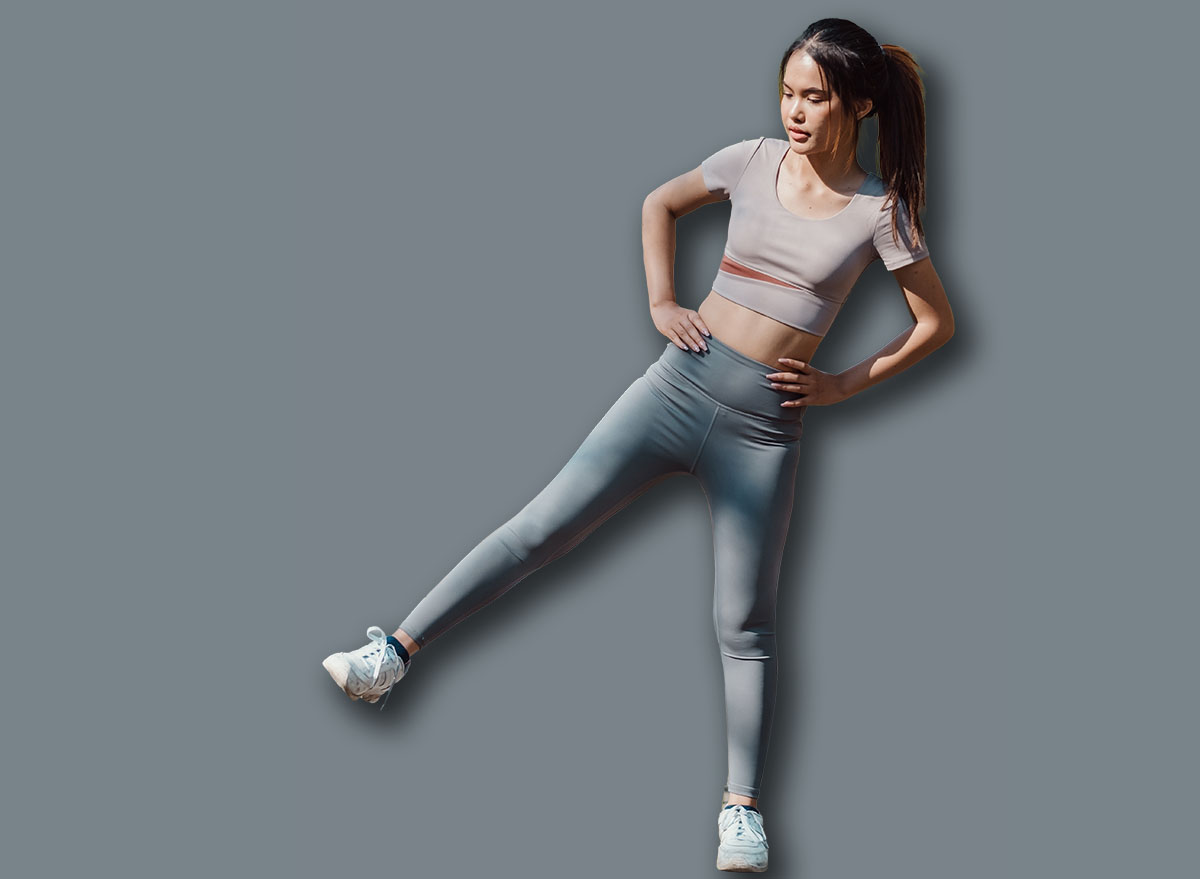
Standing Side Leg Raises
Lifting sagging glutes takes more than just working the backside, you need strong outer glutes to give your hips structure, shape, and lift. This move targets the gluteus medius, one of the most overlooked muscles yet the most important for firming the sides of your glutes and improving overall roundness. Standing side raises strengthen your hips, improve pelvic alignment, and support your lower back, which helps your glutes lift instead of droop. With slow, controlled reps, you build stability and fullness that machines rarely provide because they remove the need for balance and real muscle engagement.
How to Do It
- Stand tall with toes facing forward.
- Lift one leg out to the side without leaning.
- Pause briefly at the top to fire the outer glutes.
- Lower with control.
- Complete 12–15 reps per side.
RELATED: 6 Daily Exercises To Melt Lower Belly Fat After 50
Standing Chair Squat with Hip Squeeze
This variation builds the lower and central glutes while training your hips to fire at the right time, which restores shape and upward lift. The slight touch to the chair ensures your squat stays controlled and drives power through your glutes instead of your knees or quads. When you stand and squeeze your hips forward, your glutes fully contract, building the kind of firmness that machines fail to activate due to limited range of motion. The combination of squat depth, balance, and glute tension produces stronger, rounder glutes that stay lifted throughout the day.
How to Do It
- Stand in front of a chair with feet shoulder-width apart.
- Sit back into a squat until your hips tap the chair lightly.
- Stand tall and squeeze your glutes hard at the top.
- Keep your knees aligned with your toes.
- Perform 12–15 controlled reps.
Standing Reverse Lunge with Glute Drive
Reverse lunges activate your glutes through a deep hip stretch and powerful press through the front leg, making them one of the most effective lifting movements after 45. Each rep trains your glutes to stabilize your pelvis while creating strong, upward tension in the backside. The standing position forces your core and hips to work together, improving posture and balance as your glutes grow firmer and more supportive. Slow lunges build functional strength that carries into walking, stairs, and everyday movement, helping your glutes maintain lift over time.
How to Do It
- Stand tall with feet hip-width apart.
- Step one leg back into a reverse lunge.
- Push through your front heel to stand and squeeze the glutes.
- Keep your torso upright and core tight.
- Perform 8–12 reps per side.