6 Standing Exercises That Shrink Belly Overhang Faster Than Cardio After 50
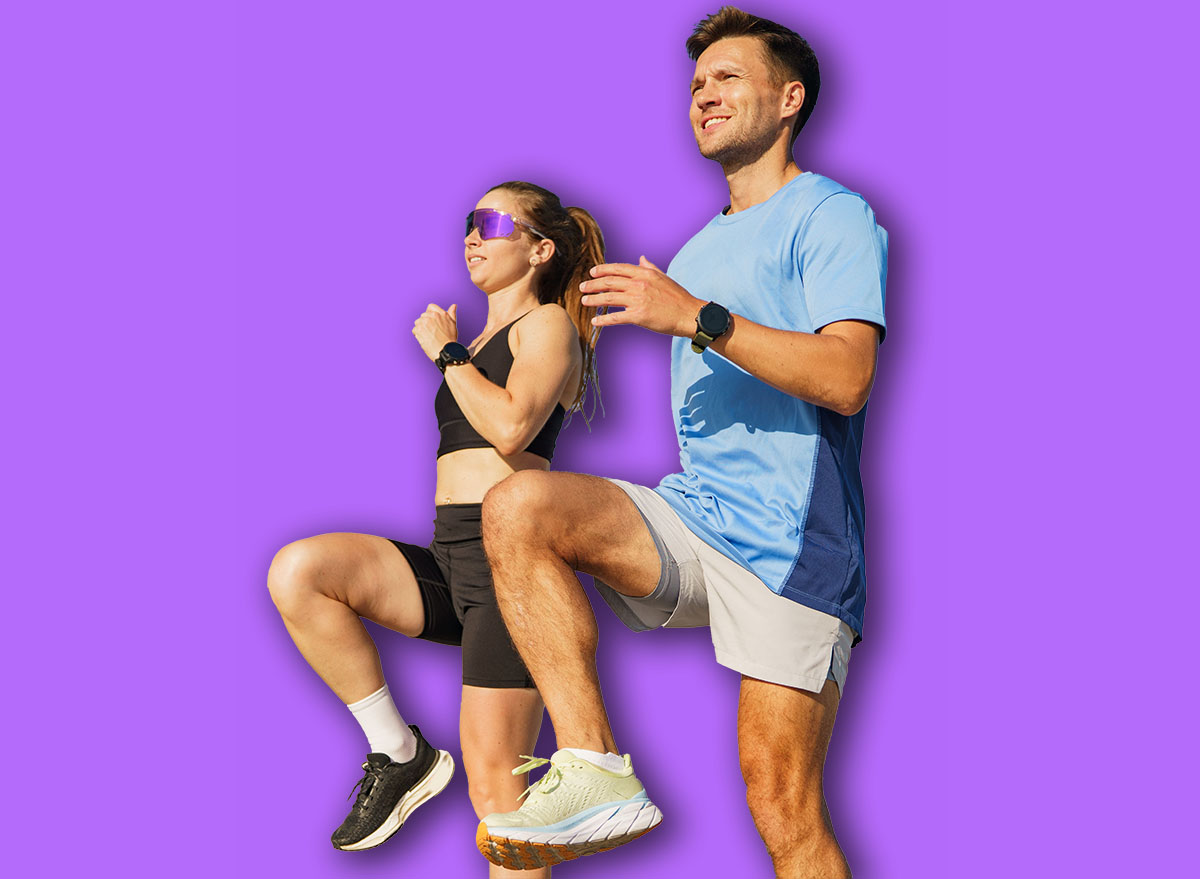
That stubborn belly fat that seems to settle lower and hang over your waistband becomes an all-too-familiar reality after 50. Whether you’ve noticed your midsection changing shape or your favorite pants fitting differently despite the scale staying the same, you’re not alone. As a trainer for over 35 years who has been teaching personal training courses for the last 20, I see this challenge every day. Here are my top standing exercises that target belly overhang more effectively than traditional cardio—and you can do them anywhere.
Why Stomach Fat Changes After 50
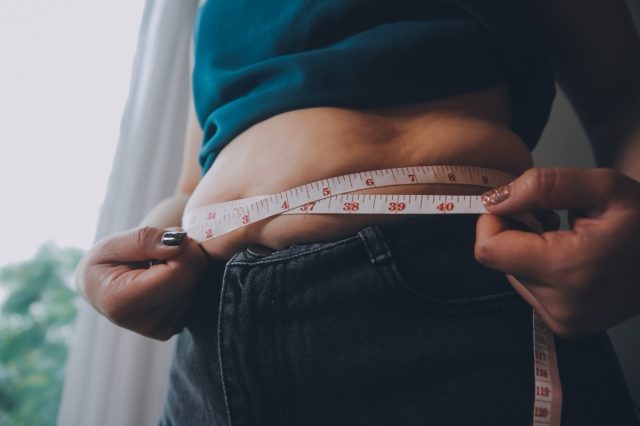
The belly overhang issue affects almost every client over 50 I’ve worked with. It’s not just about how it looks—though that’s usually what brings people in—it’s about how it makes them feel and what it signals about their health.
One thing I hear really often is that a client thinks their tummy has changed shape. It’s not just bigger than it was before, it’s different too. The fat sits lower, hangs over the waistband and feels softer than it used to. Female clients tell me that their stomachs didn’t go back after they had kids and now, decades later it’s even worse. Male clients notice their bellies pushing over their belts even though their weight hasn’t changed a lot since they were in their 30s.
What’s happening is a combination of things at the same time. Our muscle tissue naturally drops after 50 if we aren’t actively working to maintain it. Visceral fat (the kind that surrounds our organs and is most dangerous) increases at the same time. Our metabolisms slow down by around 2-3% a decade, meaning our bodies don’t burn as many calories doing the same things. Hormonal changes compound these issues—women going through menopause start to see fat redistribute around their middle, and men’s declining testosterone means less muscle and also more fat storage around the same area.
This isn’t a vanity issue (although looking better and confidence is always a valid reason to get fitter), carrying extra belly fat after 50 increases the risk of heart disease, type 2 diabetes and some cancers. It also affects balance and makes you more likely to fall. Movement is limited and it makes everyday activities harder.
I also see a psychological component that people don’t talk about enough. Clients tell me they avoid certain clothes, feel self-conscious at family gatherings, or have stopped doing activities they used to enjoy because of how their stomach looks. That loss of confidence affects quality of life in ways that go far beyond the physical.
Why Standing Exercises Work Best for You

Standing exercises work better for people over 50 for several specific reasons that matter more as we age.
First, they burn more calories. When you’re standing and moving, you’re activating more muscle groups at once compared to floor exercises. Your legs, core, and upper body all work together to keep you stable and execute the movement. This creates a higher calorie burn during the workout and keeps your metabolism higher afterwards.
Second, they’re functional. Standing exercises mimic movements you do in real life—reaching overhead, bending down, rotating your torso. This means the strength you build transfers directly to daily activities. You’re not just getting stronger in the gym, you’re making your actual life easier.
Third, they’re safer for joints. Many people over 50 have some degree of joint discomfort, especially in the knees, hips, or lower back. Getting down on the floor and back up repeatedly can be painful or even risky. Standing exercises eliminate that concern while still delivering results.
Fourth, they improve balance. Every standing exercise challenges your stability to some degree. This is incredibly valuable because balance naturally deteriorates after 50, and improving it reduces fall risk while building the confidence to move more throughout your day.
Fifth, they engage your core constantly. Even when you’re not directly targeting your stomach, standing exercises force your core muscles to work to keep you upright and stable. This creates a more effective midsection workout than traditional crunches or sit-ups, which only work your abs in isolation.
The practical benefit matters too. Standing exercises are easier to start and stop, which means you’re more likely to actually do them. There’s less barrier to entry when you don’t need to get down on a mat or worry about whether you’ll be able to get back up comfortably.
6 Standing Exercises That Shrink Belly Overhang After 50
Standing Wood Chops
This movement targets belly overhang by working your obliques (the muscles on the sides of your waist) and your rectus abdominis (the front stomach muscles) through rotation. The twisting motion specifically attacks the fat that hangs over your waistband by tightening the muscles underneath and burning calories through the large range of motion.
How to do it:
- Stand with your feet shoulder-width apart
- Hold a light weight (or even just clasp your hands together if you’re starting out) with both hands up by your right shoulder
- Rotate your torso and bring the weight down diagonally across your body toward your left hip, like you’re chopping wood
- Keep your arms relatively straight and let the rotation come from your core, not your arms
- Return to the starting position with control
- Do 12-15 reps on one side, then switch to the other side
Common mistakes to avoid:
The biggest mistake I see is people using their arms to move the weight instead of rotating from their core. Your arms should just be holding the weight—all the power comes from twisting your torso. Another common error is bending forward at the waist instead of rotating. Keep your chest up and think about turning your shoulders, not folding over. People over 50 also tend to use too much weight initially, which compromises form and can strain the lower back. Start light and focus on the rotation.
Standing Knee Drives
Knee drives target the lower belly specifically—the area where most people over 50 struggle with overhang. This exercise forces your lower abdominals to work hard to lift your knee up while keeping your upper body stable. The standing position also means you’re burning more calories than you would doing similar movements on the floor.
How to do it:
- Stand with your feet hip-width apart
- Bring your hands behind your head with your elbows pointing out to the sides
- Engage your core and lift your right knee up toward your chest while bringing your elbows down to meet it—you’re crunching your upper body down while driving your knee up
- Lower your foot back down with control
- Do 15-20 reps on one side, then switch legs
Common mistakes to avoid:
The most common mistake is leaning back as you lift your knee, which completely removes the core engagement. Keep your torso upright or even slightly forward. Another issue is rushing through the movement. Each rep should be controlled—lift the knee deliberately, squeeze at the top for a second, then lower it back down. People over 50 often lose their balance on this one, so it’s fine to do it near a wall or chair you can touch if needed. Just don’t lean on it—use it only for balance support.
Standing Side Bends with Reach
This exercise works your obliques and the muscles that run along the sides of your torso. These muscles are critical for reducing belly overhang because they act like a corset, pulling everything in tighter when they’re strong. The reaching component adds an extra challenge that burns more calories.
How to do it:
- Stand with your feet shoulder-width apart
- Put your right hand behind your head and extend your left arm straight down by your side
- Bend directly to your left side, sliding your left hand down your leg as far as comfortable
- Then reach your left arm up and over your head as you bend to the right, feeling a stretch along your left side
- Return to center—that’s one rep
- Do 12-15 reps, then switch sides
Common mistakes to avoid:
The biggest mistake is bending forward or backward instead of directly to the side. Your body should move in a purely lateral direction—imagine you’re between two panes of glass. Another error is using momentum to swing from side to side. Each bend should be controlled and deliberate. People over 50 with tight shoulders sometimes struggle with the overhead reach—if that’s you, just reach as far as comfortable without forcing it. Your range of motion will improve over time.
Standing March with Twist
This combines cardio with core work, which is the most efficient way to burn belly fat. The marching gets your heart rate up while the twisting motion works your entire midsection, particularly targeting the obliques and the muscles around your waistline.
How to do it:
- Stand with your feet hip-width apart
- March in place, bringing your knees up to hip height (or as high as comfortable)
- As your right knee comes up, twist your torso to the right, bringing your left elbow toward your right knee
- As your left knee comes up, twist left and bring your right elbow toward your left knee
- Keep a steady pace—not too fast, but not so slow that your heart rate doesn’t elevate
- Do this for 30-60 seconds per set
Common mistakes to avoid:
The most common mistake is not lifting the knees high enough. To get the core benefit, your thigh should be at least parallel to the ground. Another issue is twisting from the hips instead of the waist—the rotation should come from your torso, not from swinging your hips around. People over 50 sometimes hold their breath during this exercise because it gets their heart rate up. Remember to breathe steadily throughout. If you’re getting too out of breath, slow down your pace but keep moving.
Standing Torso Circles
This movement works your entire core through a full range of motion. The circular pattern engages every angle of your abdominal muscles, which is more effective for tightening the midsection than exercises that only work one plane of movement. It also improves mobility in your spine and hips.
How to do it:
- Stand with your feet shoulder-width apart and place your hands on your hips
- Keep your hips facing forward and relatively still
- Make a large circle with your upper body, leading with your chest—lean forward, then to the right, then back, then to the left, and back to forward
- Make the circle as big as comfortable
- Do 8-10 circles in one direction, then reverse and do 8-10 in the other direction
Common mistakes to avoid:
The biggest mistake is moving too quickly. Each circle should take about 3-4 seconds to complete—this isn’t about speed, it’s about control and range of motion. Another common error is moving the hips instead of isolating the movement to the torso. Your lower body should stay relatively stable while your upper body does all the work. People over 50 with lower back issues sometimes make the circles too small or avoid leaning back because it feels uncomfortable. Start with smaller circles and gradually increase the range as your back gets stronger and more mobile.
Standing Leg Lifts with Crunch
This exercise directly targets the lower belly where most overhang happens. It forces your lower abdominals to work against the weight of your leg while your upper abs work to bring your torso down. The standing position makes it more challenging than lying leg lifts because you have to maintain balance throughout.
How to do it:
- Stand with your feet together
- Bring your hands behind your head with your elbows wide
- Lift your right leg straight out in front of you as high as comfortable (aim for hip height or higher) while crunching your upper body forward slightly
- Your elbows come down toward your raised knee
- Hold for a second, squeezing your abs, then lower your leg back down
- Do 12-15 reps on one side, then switch legs
Common mistakes to avoid:
The most common mistake is kicking the leg up with momentum instead of lifting it with control. The movement should be smooth and deliberate. Another error is leaning back to lift the leg higher—this defeats the purpose. Keep your torso upright or leaning slightly forward. People over 50 often struggle with the balance component of this exercise. It’s perfectly fine to do these near a wall or sturdy chair for support, especially when you’re starting out. Just touch it lightly for balance rather than leaning on it.
How to Structure Your Weekly Routine
Do these exercises three times per week with at least one rest day between sessions. Your muscles need time to recover and rebuild, which is when the actual strengthening happens. Training every day won’t get faster results—it will just leave you tired and potentially injured.
Here’s how to structure each session:
- Start with 2-3 minutes of light movement to warm up—march in place, do some arm circles, maybe some gentle torso twists. Nothing intense, just enough to get your blood moving and your joints loosened up.
- Then do the six exercises in order. Perform each exercise for the recommended reps or time, rest for 30-45 seconds, then move to the next exercise.
- Once you’ve done all six, rest for 1-2 minutes, then repeat the entire circuit two more times for a total of three rounds.
- The whole workout should take about 25-30 minutes.
As you get stronger after a couple of weeks, you can increase the challenge by adding light hand weights to the wood chops and side bends (start with 2-3 pounds), doing more reps, or reducing your rest time between exercises. But don’t rush this progression—it’s better to do the exercises with perfect form than to add difficulty too quickly and compromise technique.
On the days you’re not doing these exercises, focus on staying generally active. Walk, do some light stretching, maybe some gentle yoga. Movement every day is important, but these specific belly-targeting exercises should only be done three times per week.
What Results You Can Expect in 30 Days

After the first week, you’ll feel different before you look different. Your stomach will feel tighter, especially in the morning. You’ll notice you’re standing up straighter without thinking about it. Your energy levels will be noticeably higher.
By the end of the second week, your clothes will start fitting differently. You might not see dramatic changes in the mirror yet, but your waistband won’t feel as tight. You’ll be able to feel muscle definition in your midsection when you engage your core, even if there’s still fat covering it.
After about three weeks, you’ll start seeing changes in the mirror. Your overhang will be noticeably reduced. You might lose an inch or two from your waist measurement. Your stomach will look flatter, especially from the side. Other people might start commenting that you look different, though they might not be able to pinpoint exactly what’s changed.
By day 30, if you’ve been consistent with the exercises three times per week and haven’t completely sabotaged yourself with your eating, you should expect to lose 1-2 inches from your waist. The belly overhang will be visibly smaller. Your clothes will fit better—some might even be loose. You’ll move more easily and have better balance. Your posture will be noticeably improved.
The realistic range for weight loss is 4-8 pounds over 30 days, with most of that coming from your midsection. This assumes you’re not making major diet changes—just doing the exercises consistently. If you also clean up your eating even slightly, the results will be better.
Here’s what you won’t see in 30 days: a completely flat stomach, visible abs, or a total transformation. Those take longer. But you will see enough change to know this is working, which is what matters. The goal is progress, not perfection.
The things you can’t see are arguably more important. Blood pressure changes, improvements in regulating your blood sugar, better sleep, more stable moods. These improvements to your health will happen alongside the physical changes and will be more beneficial to you in the long run.
One last thing—consistency is everything. Someone who does these exercises three times per week for 30 days will get dramatically better results than someone who does them six times per week for two weeks and then stops. This isn’t about intensity, it’s about showing up regularly and putting in the work.