The #1 Worst Thing You Can Do if You Have Sore Muscles, Say Experts


It’s one of the cruel twists of exercising that what’s good for you can also be totally painful. Yes, we’re talking about dreaded muscle soreness. As anyone who has crushed a great workout in the gym knows all too well, you’re bound to feel it in your muscles later, and usually in the form of delayed onset muscle soreness, or DOMS.
“DOMS causes micro-tears in the muscle fibers being exercised, and such tears can be more common when a muscle has not been challenged in a while,” explains Arash Lavian, M.D., a physical medicine and rehabilitation and pain management specialist at Cedars-Sinai Kerlan-Jobe Institute, in Santa Monica, CA. “The micro-damage from the strenuous activity causes stimulation of pain receptors within the muscle tissue and cause a sensation of pain.”
The most common ways to experience DOMS-related muscle soreness, which usually occurs between 12-24 hours after working out and peaks within 72 hours, are doing new activities and working new muscle groups that you haven’t challenged so much recently, performing “eccentric” exercises (these are exercises with lowering movements, specifically, such as the first half of a squat), and rigorous exercises such as HIIT.
But let’s get one thing out of the way first: If your soreness began with acute pain that was sharp—and may have followed a specific exercise—chances are you don’t have DOMS. You’re actually injured. (Remember that DOMS is defined as delayed soreness.) If this is the case with you, we’d advise you to see out professional help. “Knowing how to tell the difference is essential,” says Lavian. “So, pay close attention to your body and be sure to alert your health care provider about any pain that hasn’t resolved or is worsening over time.”
But if you’re experiencing the aches and pains of DOMS, there are a series of dos and don’ts you need to adhere to. And while it’s important that you rest your muscles, one of the biggest no-nos for recovering is simply to do nothing at all. That’s right: While it’s bad to jump immediately into another hardcore HIIT workout when you’re still really sore from the previous day’s HIIT workout, that doesn’t mean you have a hall pass to lie on the couch in front of Netflix. You still need to perform light exercises, such as walking, to aid in your recovery.
“DOMS is treated by what we physicians call a tincture of time—one must allow the body to heal itself and recover over time,” says Lavian. “But it is recommended that you do gentle exercises and activities to ease symptoms, and avoid high-intensity movements or strenuous lifting.”
He also notes that some studies support massages or foam rolling within days of intense exercising to lessen soreness associated with DOMS. “Topical analgesics may also help ease symptoms associated with DOMS,” says Lavian. “These medication types include NSAID ointments applied to the skin or natural anti-inflammatory creams such as Arnica.”
If you’re super hardcore about your training, you can try to recover like LeBron James—but it’s not guaranteed to work. “Elite athletes often use cold baths, commonly referred to as cryotherapy, immediately after intense games, practices, or training sessions to stave off DOMS development,” says Lavian. “However, there is no definitive proof to support as to whether cryotherapy truly helps accomplish this goal. Ideally, the best way to prevent severe DOMS is to gradually increase the intensity of whatever exercise you’re performing or exercise you’re engaging in over time, instead of quick, sudden, or intense changes in those exercises or activities.”
For more great tips for recovering from sore muscles, read on, because here are some ideas directly from other experts. And for more great exercise advice, don’t miss The One Major Side Effect of Walking Every Day, According to Science.
Be Sure to Get Good Sleep

“Sleep is so important,” says Isaac Robertson, a trainer and cofounder of TotalShape. “Especially when you are recovering from muscle soreness. This is because sleep affects how much nutrients your body can absorb. During muscles soreness, you need nutrients more than ever to recover quickly, and if you are eating a nutrient-rich diet but not getting enough sleep, you are not getting as much out of it as you need to for quick muscle recovery.” Do you want to sleep better? Make sure to Avoid This Exercise Mistake at All Costs.
Do Light, High-Volume Lifts
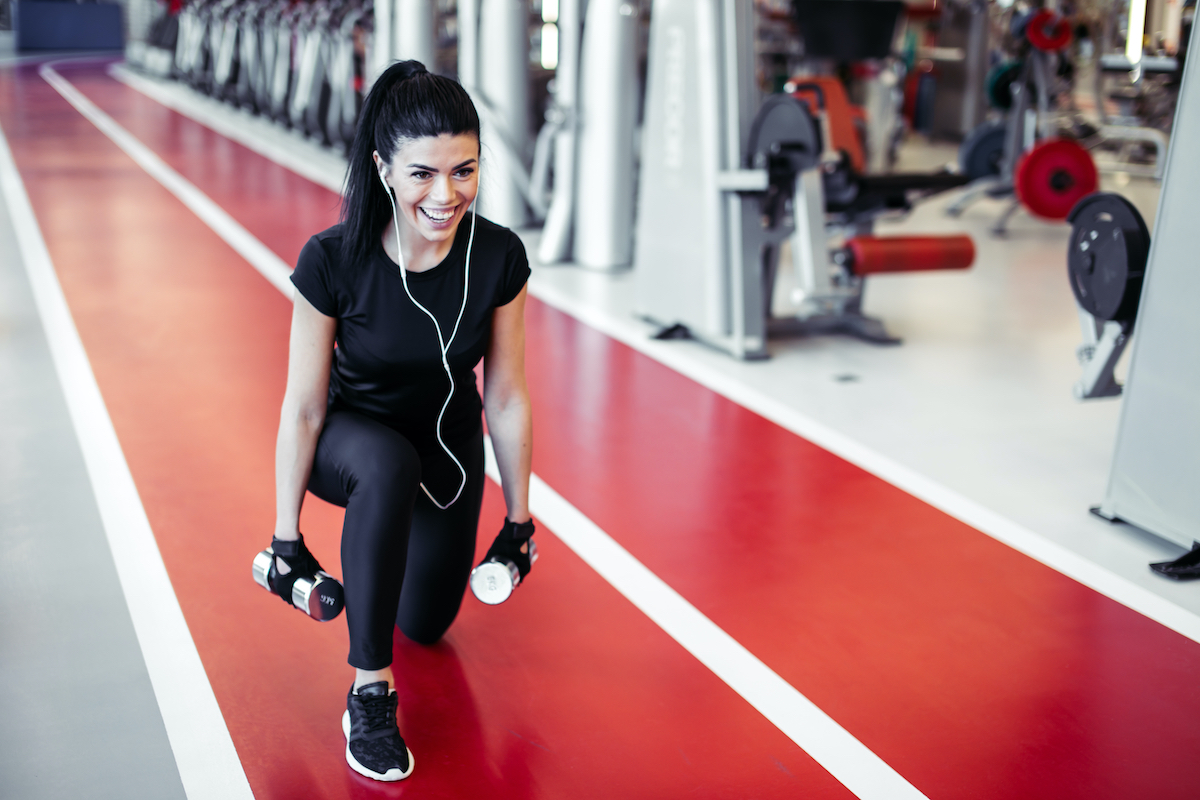
According to Robert Herbst, a personal trainer, weight loss expert, and 19-time world champion powerlifter, you shouldn’t train hard if you’re sore, but you should still train. “Light, high-volume movements may help by flushing the muscle with blood and breaking up adhesions,” he says. “However, other soreness which occurs immediately following exercise where the muscle may be tender to the touch may be a sign of greater trauma to the muscle. This may be best treated by ice for the first 24 hours and rest. If the area is still sore after 24 hours, one can try heat and massage, but if the soreness persists, they should consult a doctor.”
Do Some Light Cardio

This isn’t just for your muscles but also for your joints, says Mae Alexis NASM CPT, CNC, GFS. “Joints take even longer to repair than muscles due to the decreased blood flow to the area,” she says. “Light cardio and gentle movements such as yoga, walking, swimming, and biking are okay. These are what I call ‘active rest activities.’ They’re beneficial because they have many of the same mental and physical effects as more intense exercises, but they allow your body the rest and recovery it needs.”
Get Enough Protein
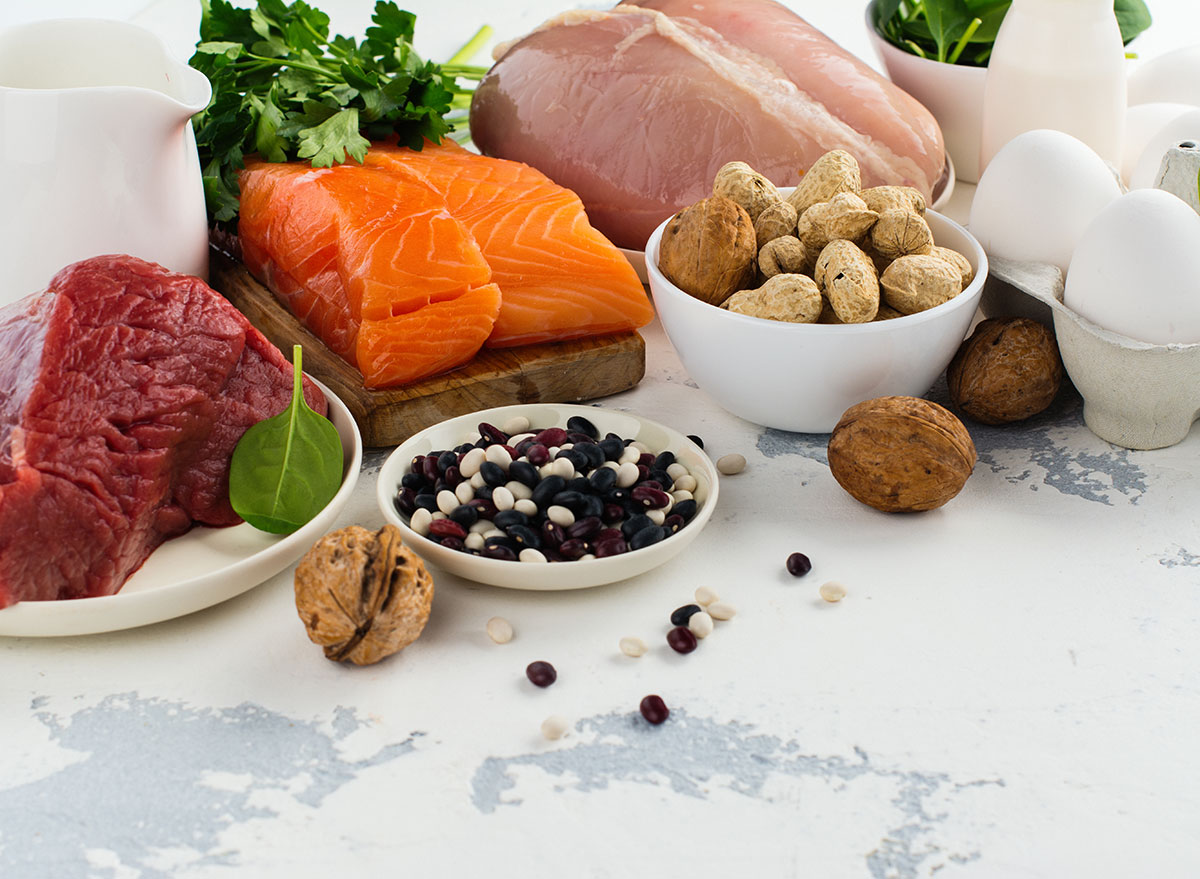
“People often do not eat enough protein when they are sore and not working out, which is a huge mistake,” says Robertson. “When you are doing a workout, you are breaking down your muscles, and it’s only after the training, when you are resting and eating, that your body recovers and builds muscles.” And for more great exercise advice, make sure you know why Science Says This Abs Exercise Is the Single Best You Can Do.