If You Can Hold a Wall Sit This Long After 50, Your Lower-Body Power Is Elite
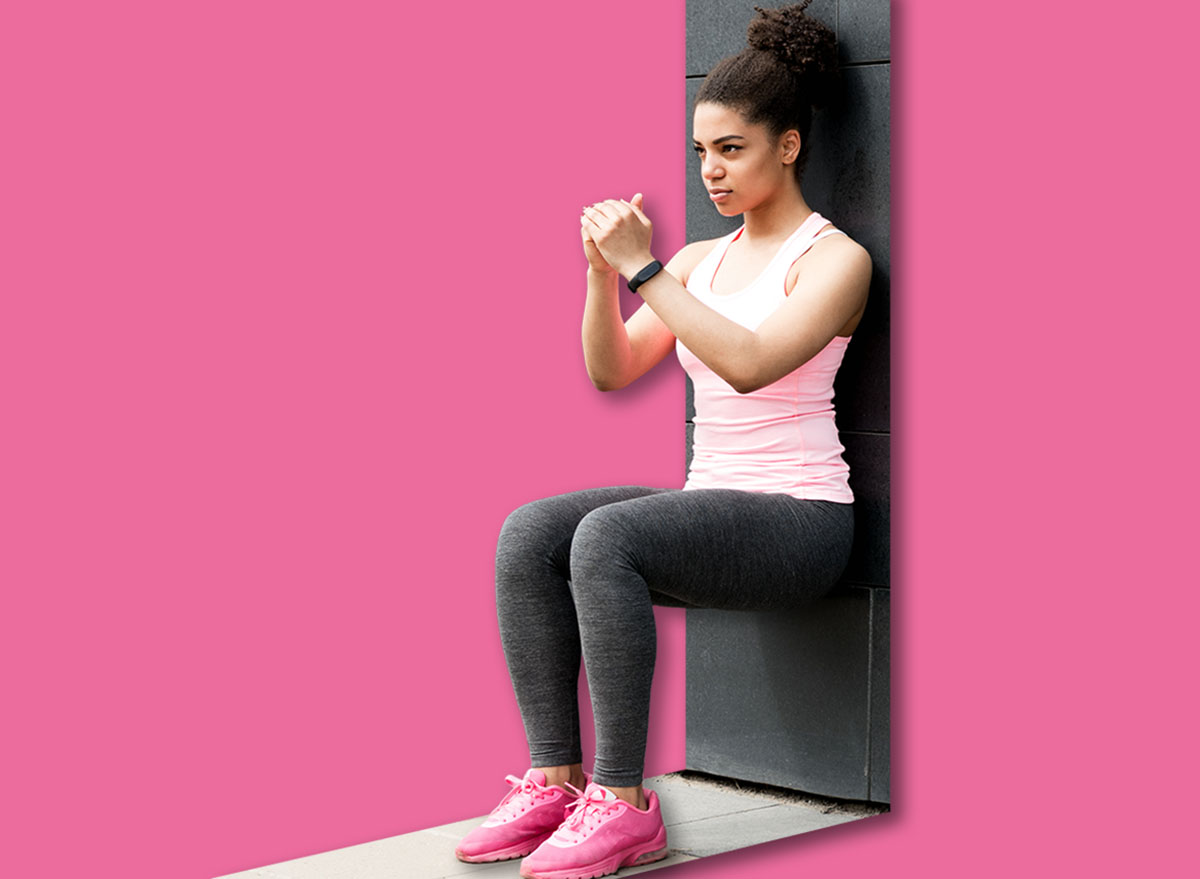

If you’re a gym enthusiast, you’ve likely heard the term “elite status” before. This expression is typically used to describe fitness-minded individuals and athletes who rank among the top bunch against their peers when it comes to strength, endurance, and conditioning. So, what exactly does this look like when it comes to your own lower-body strength?
We spoke with Ashley Katzenback PT, DPT, a Doctor of Physical Therapy and owner of Cape Concierge Physical Therapy, with offices in Sandwich and the Pinehills, who says that if you can hold a wall sit this long after 50, your lower-body power is elite. Dr. Katzenback has more than 20 years of experience and is an expert in the musculoskeletal field. She’s a Certified Myofascial Trigger Point Therapist with comprehensive training in chronic pain management, injury prevention, osteoporosis, and ergonomics. In addition, she’s incredibly passionate about the Art and Science of Longevity.
Now, let’s see where you rank!
The Wall Sit Is Linked to Longevity
Let’s be honest: We all want to lead long, healthy lives—and engaging in regular exercise is a stellar way to increase your chances.
According to Dr. Katzenback, there’s a solid connection between one’s timed wall sit performance and longevity, similar to how grip strength serves as a reliable longevity marker. In fact, research shows that practicing isometric exercises—like wall sits and planks—can boost your longevity, specifically by reducing resting blood pressure.
How Long To Hold It
If you’re wondering how long you should be able to hold a wall sit after 50, Dr. Katzenback offers some useful insight.
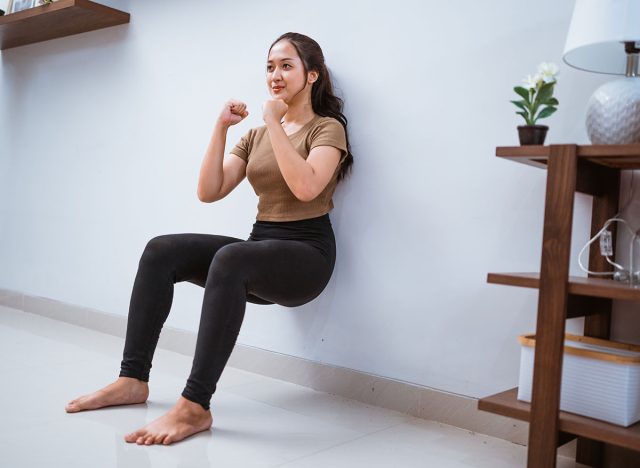
“The ability to control a loaded knee in midrange flexion correlates directly to negotiating stairs, getting up from a chair, and recovering quickly from a loss in balance. The wall sit tests isometric quad strength, and if you are over the age of 50 and you can hold a wall sit for greater than a minute, you are ELITE,” she tells us. “Lower-body endurance, strength, and power all require different types of muscle fibers. After 50, endurance capacity in muscle tends to decline alongside fast-twitch fiber loss.”
Here’s How To Do a Wall Sit
The wall sit may look like a simple bodyweight move, but it delivers amazing gains for your lower-body strength and power. It helps build endurance in the quads, deep core, and glutes. If your legs tire too quickly, your body loses its ability to remain stable and balanced, which is what makes practicing and acing this exercise essential.
Here’s exactly how to do it:
- Stand tall with your back pressed against a wall.
- Slide down until your knees are bent at a 90-degree angle as if you’re sitting in a chair.
- Hold for the prescribed amount of time.