4 Kitchen-Counter Exercises That Restore Leg Strength Faster Than Gym Machines After 60
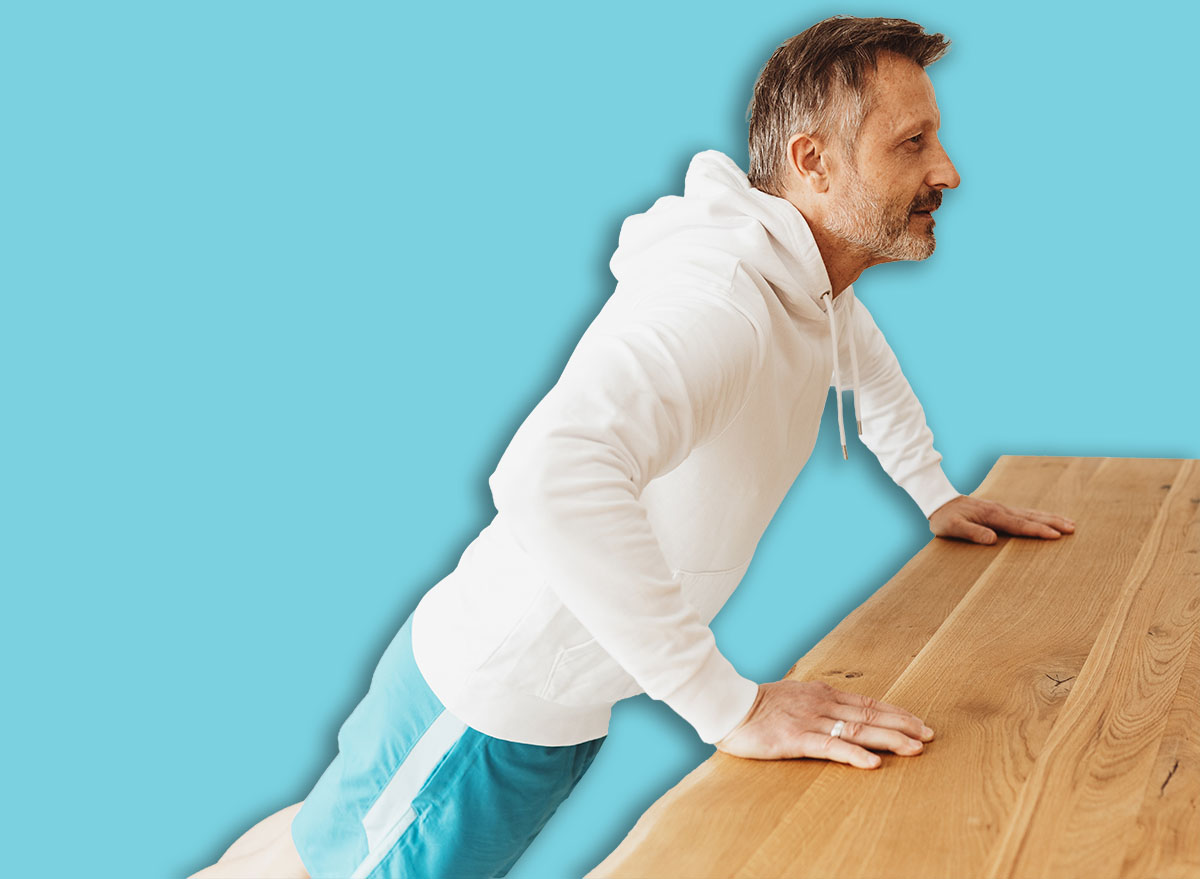

The kitchen counter is one of the best pieces of “equipment” already sitting in your house. It’s sturdy, easy to reach, and tall enough to support your balance without forcing you into awkward positions. That makes it a useful place to train when your legs need strength work, but your confidence or stability could use a little backup.
A machine can load the legs, but it also locks the movement into a fixed path. Counter exercises give you more control over how your body moves. You can adjust your range, use your hands lightly, and practice strength in positions that feel closer to standing up, stepping back, rising onto your toes, and shifting your weight.
With clients over 60, I like counter-supported work because it lets the legs do the job while the hands stay available. That changes the feel of the session right away. People can move with more intent, find better alignment, and build strength without feeling like balance is stealing all their attention.
This four-move routine gives your legs focused work in a simple home setup. Keep your grip light, move through a range you control, and let the counter help you build stronger reps over time.
Counter-Supported Squat
Counter-supported squats train your thighs, glutes, hamstrings, and core through one of the most useful leg-strength patterns. The counter provides support as you lower and stand, helping you focus on depth, control, and foot pressure. This is a strong first move because it builds confidence in the same general pattern you use every time you sit down and stand up.
Muscles Trained: Quadriceps, glutes, hamstrings, core.
How to Do It:
- Stand facing the counter with your feet about shoulder-width apart.
- Place both hands lightly on the counter.
- Brace your core and keep your chest tall.
- Push your hips back and bend your knees.
- Lower into a squat you can control.
- Press through your whole feet to stand tall.
Recommended Sets and Reps: Perform 3 sets of 10 to 12 reps. Rest for 45 to 60 seconds between sets.
Best Variations: Higher-range squats, pause squats, slow-tempo squats.
Form Tip: Use the counter for balance, not to pull yourself up.
Counter-Supported Reverse Lunge
Counter-supported reverse lunges build single-leg strength while giving you a steady handhold. The front leg does most of the work as you lower and stand, while the counter helps you stay upright and controlled. This exercise is especially helpful for rebuilding the strength and confidence needed for stairs, curbs, and uneven ground.
Muscles Trained: Quadriceps, glutes, hamstrings, calves, core.
How to Do It:
- Stand facing the counter with both hands resting lightly on it.
- Set your feet hip-width apart.
- Step your right foot back into a reverse lunge.
- Lower your back knee toward the floor with control.
- Press through your front foot to return to standing.
- Complete all reps, then switch sides.
Recommended Sets and Reps: Perform 3 sets of 8 to 10 reps per side. Rest for 45 to 60 seconds between sets.
Best Variations: Short-range reverse lunges, split squats, slow-tempo reverse lunges.
Form Tip: Keep your front heel grounded and let the front leg create the lift.
Counter-Supported Hip Hinge
The counter-supported hip hinge strengthens your glutes and hamstrings while teaching your hips to move with control. This pattern helps round out leg training because the backside of your legs needs just as much attention as the front. The counter gives you a stable reference point, so you can practice pushing your hips back without losing posture.
Muscles Trained: Glutes, hamstrings, lower back, core.
How to Do It:
- Stand facing the counter with your feet hip-width apart.
- Place your hands lightly on the counter.
- Soften your knees and brace your core.
- Push your hips back as your torso tips forward slightly.
- Stop when you feel tension through your hamstrings.
- Drive your hips forward to stand tall.
Recommended Sets and Reps: Perform 3 sets of 10 to 12 reps. Rest for 45 seconds between sets.
Best Variations: Short-range hip hinges, staggered-stance hip hinges, slow-tempo hip hinges.
Form Tip: Keep your spine long and let your hips move back first.
Counter-Supported Calf Raise
Counter-supported calf raises target the lower legs by training the push-off you use during walking and stair climbing. Strong calves help your steps feel more powerful and give your ankles more support as you move. The counter lets you focus on a controlled rise, a brief pause, and a smooth lower.
Muscles Trained: Calves, ankles, lower legs.
How to Do It:
- Stand facing the counter with your feet hip-width apart.
- Rest both hands lightly on the counter.
- Press through the balls of your feet to lift your heels.
- Pause briefly at the top.
- Lower your heels with control.
- Repeat for the full set.
Recommended Sets and Reps: Perform 3 sets of 12 to 15 reps. Rest for 30 to 45 seconds between sets.
Best Variations: Pause calf raises, single-leg-assisted calf raises, slow-tempo calf raises.
Form Tip: Rise straight up and avoid rolling your ankles outward.
How to Use Kitchen-Counter Exercises After 60

Use this routine two to four times per week. Complete one set of each exercise in order, rest for 60 to 90 seconds, then repeat for two to three total rounds.
- Keep your hands light: Let the counter support your balance while your legs create the effort.
- Start with a comfortable range: Strong reps matter more than going as low or as far as possible on day one.
- Progress gradually: Add a few reps, slow down the lowering phase, or use less hand support once the movement feels steady.
- Train both sides evenly: Single-leg work helps each leg rebuild strength through clean reps.
- Use the strength outside the workout: A short walk after the routine gives your legs a chance to practice the control you just trained.
A kitchen counter gives you an easy place to start rebuilding leg strength at home. Use it for support, keep the movement clean, and let steady practice make your legs feel stronger through the rest of the day.
References
- Wang, Peng et al. “Association between muscle strength and low back pain among middle-aged and older adults: a cross-sectional study.” BMC public health vol. 25,1 1869. 21 May. 2025, doi:10.1186/s12889-025-23050-2
- Roberts, Christian K et al. “Effects of Home-Based Exercise Training Systems, Combined with Diet, on Cardiometabolic Health.” International journal of exercise science vol. 12,2 871-885. 1 May. 2019, doi:10.70252/WEFP3647