The 12-Minute Morning Routine That Builds More Strength Than an Hour at the Gym After 50

After 50, strength no longer depends on how much time you spend exercising. It depends on how consistently you challenge the muscles that keep you moving well every day. As a trainer, I’ve seen people spend an hour lifting weights a few times each week with little progress, while others transformed their strength by following a focused routine they completed before breakfast. The difference almost always comes down to quality, not quantity.
Many people think building strength requires endless sets, heavy equipment, and long rest periods. In reality, your muscles respond remarkably well to compound movements that recruit multiple muscle groups at once. A short workout that targets your legs, hips, core, chest, shoulders, and back often delivers more functional benefits than isolated machine exercises performed for much longer. That’s why I encourage clients to make every minute count instead of simply adding more minutes.
I’ve coached adults over 50 for years, and the strongest clients rarely overcomplicate their workouts. They master foundational movements, perform them with excellent technique, and stay consistent week after week. This 12-minute morning routine strengthens your entire body while improving balance, posture, and mobility at the same time. All you need is a sturdy chair, a little space to move, and a willingness to invest just a few minutes in your health.
Minutes 1-2: Sit-to-Stand
I always like starting with the largest muscles in the body because they wake up your entire system quickly. Sit-to-stands strengthen the quadriceps, glutes, hamstrings, and core while reinforcing one of the most important movement patterns you’ll perform throughout the day. Every repetition prepares your legs for walking, climbing stairs, and getting out of chairs with confidence. Clients often notice that this simple movement leaves them feeling energized almost immediately because it recruits so many muscles at once.
How to Do It
- Sit near the front of a sturdy chair.
- Place your feet shoulder-width apart.
- Lean forward slightly.
- Stand by pressing through your heels.
- Lower yourself slowly.
- Continue for 2 minutes, resting briefly only if needed.
Minutes 3-4: Wall Push-Ups
Once the lower body feels awake, it’s time to strengthen the upper body without placing unnecessary stress on the joints. Wall push-ups activate the chest, shoulders, triceps, and core while improving shoulder stability and posture. I recommend focusing on slow, controlled repetitions rather than rushing through the movement. Clients often discover they feel stronger during everyday pushing tasks after making this exercise part of their morning routine.
How to Do It
- Stand facing a wall.
- Place your hands slightly wider than shoulder-width apart.
- Step your feet back.
- Lower your chest toward the wall.
- Push back to the starting position.
- Continue for 2 minutes at a steady pace.
Minutes 5-6: Standing Knee Drives
This portion of the routine combines strength with balance and coordination. Standing knee drives activate the core, hip flexors, glutes, and supporting leg while gently raising your heart rate. I like using this movement because it closely resembles powerful walking, making the benefits immediately practical. Clients often tell me they feel lighter on their feet and more energized after completing these two minutes.
How to Do It
- Stand tall.
- Lift one knee toward your chest.
- Tighten your core.
- Lower with control.
- Alternate sides continuously.
- Continue for 2 minutes.
Minutes 7-8: Resistance Band Rows
Strong pulling muscles help maintain healthy posture while protecting the shoulders from unnecessary strain. Resistance band rows strengthen the upper back, rear shoulders, and biceps while encouraging better shoulder blade movement. I frequently include them because many adults spend far more time pushing than pulling during daily life. Building upper-back strength often helps clients stand taller and move more comfortably throughout the day.
How to Do It
- Secure a resistance band in front of you.
- Hold one handle in each hand.
- Pull your elbows backward.
- Squeeze your shoulder blades together.
- Return slowly.
- Continue for 2 minutes.
Minutes 9-10: Glute Bridges
Strong hips support the lower back while generating power for nearly every lower-body movement. Glute bridges activate the glutes, hamstrings, and core without placing unnecessary pressure on the knees or spine. I often tell clients that stronger hips make almost everything feel easier, from standing up to climbing stairs. This exercise reinforces that foundation while giving the legs a different challenge than the opening movement.
How to Do It
- Lie on your back with knees bent.
- Keep your feet flat on the floor.
- Tighten your core.
- Lift your hips.
- Lower with control.
- Continue for 2 minutes.
Minutes 11-12: Farmer’s Carry
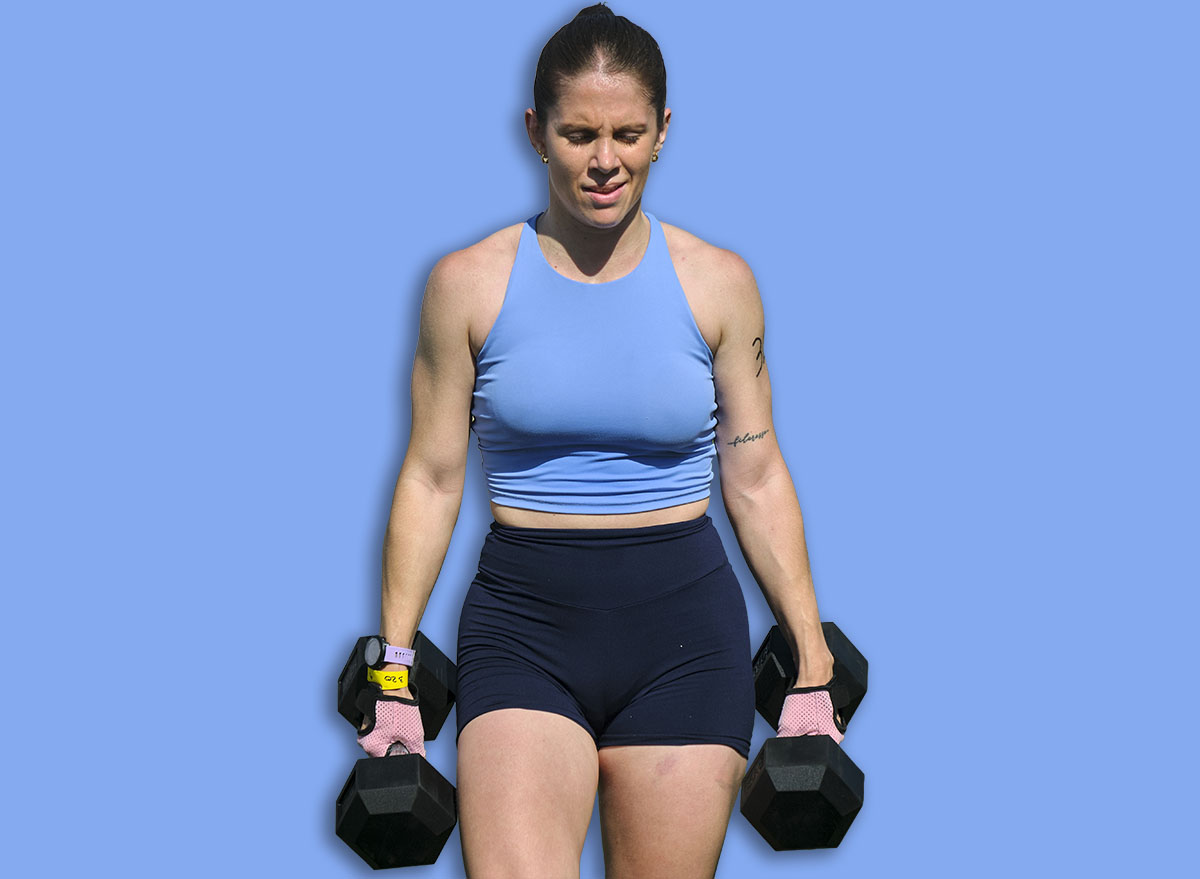
I always like finishing with a movement that brings the entire body together. Farmer’s carries strengthen the grip, shoulders, core, legs, and postural muscles while reinforcing proper alignment during walking. Holding weight while moving challenges your body in much the same way real life does, making it one of the most functional exercises available. Clients frequently tell me they feel stronger carrying groceries, luggage, and other everyday items after consistently performing this exercise. It’s the perfect finish to a routine designed to build strength that actually matters.
How to Do It
- Hold a dumbbell or kettlebell in each hand.
- Stand tall with your shoulders back.
- Tighten your core.
- Walk at a controlled pace.
- Turn carefully as needed.
- Continue for the final 2 minutes.