6 Daily Leg Exercises That Restore Balance Faster Than Lunges After 60

If you’re 60 or older, improving and preserving balance should be a priority when it comes to your workouts. After all, in this stage of life, many functions—including aspects of your balance—begin to naturally decline. Balance heavily relies on a combination of vision, inner ear, and sensory abilities, which help your body react and stay steady.
“Your vision, inner ear, and the nerve receptors in your joints become less sensitive over time, so your brain has to work harder to figure out where your body is in space,” explains Denise Chakoian, Rhode Island Certified Fitness Trainer and Owner of Core Cycle and Fitness LaGree, who has 16+ years of experience under her belt training individuals of every age and level of fitness. “Staying active helps slow these changes significantly, but it doesn’t completely stop the natural aging process affecting those systems. That’s why someone who walks, lifts weights, or cycles consistently may still notice they’re less steady standing on one leg or navigating uneven ground than they were 20 years ago.”
Staying stable on your own two feet can help you maintain independence so you’re able to live life to its fullest potential. So, we spoke with Chakoian who shares six daily leg exercises that can help restore balance faster than lunges. These movements strengthen the muscles that are most essential in keeping you steady during daily activities like walking, getting up from a chair, and climbing stairs.
“Together, they challenge balance, coordination, and lower-body strength without requiring complicated equipment or advanced fitness levels. They also train the ankles, hips, glutes, and core to work together, which is exactly how balance functions in real life,” Chakoian explains. “These exercises mimic everyday movements, making the improvements more practical and easier to carry over into daily routines. When done consistently, they can help reduce fall risk while building confidence and independence with movement.”
Sit-to-Stand
- Begin seated at the front of a sturdy chair with your feet placed on the floor under your knees.
- Lean forward slightly.
- Try to stand up without using your knees, hands, or additional support.
- Use control to slowly sit back down.
RELATED: 4 Standing Moves That Keep You Strong Over 60, Say Trainers
Single-Leg Stand
- Stand tall on a flat surface with your feet hip-width apart and arms at your sides.
- Shift your body weight onto your left foot.
- Lift your right foot off the ground.
- Activate your core while keeping your shoulders stacked over your ribs and your hips level.
- The time begins once your leg comes off the floor and stops when your foot touches the ground.
- Hold the single-leg balance with your eyes closed for 1 minute.
- Repeat on the other side.
Heel-to-Toe Walk
- Stand tall.
- Begin walking straight, placing one foot right in front of the other, heel to toe.
Calf Raises
- Begin by standing tall with your feet hip-width apart, facing a sturdy chair with your hands lightly resting on the backrest for support.
- Engage your core.
- Rise onto your toes slowly.
- Hold for 2 to 3 seconds at the top.
- Lower back down with control.
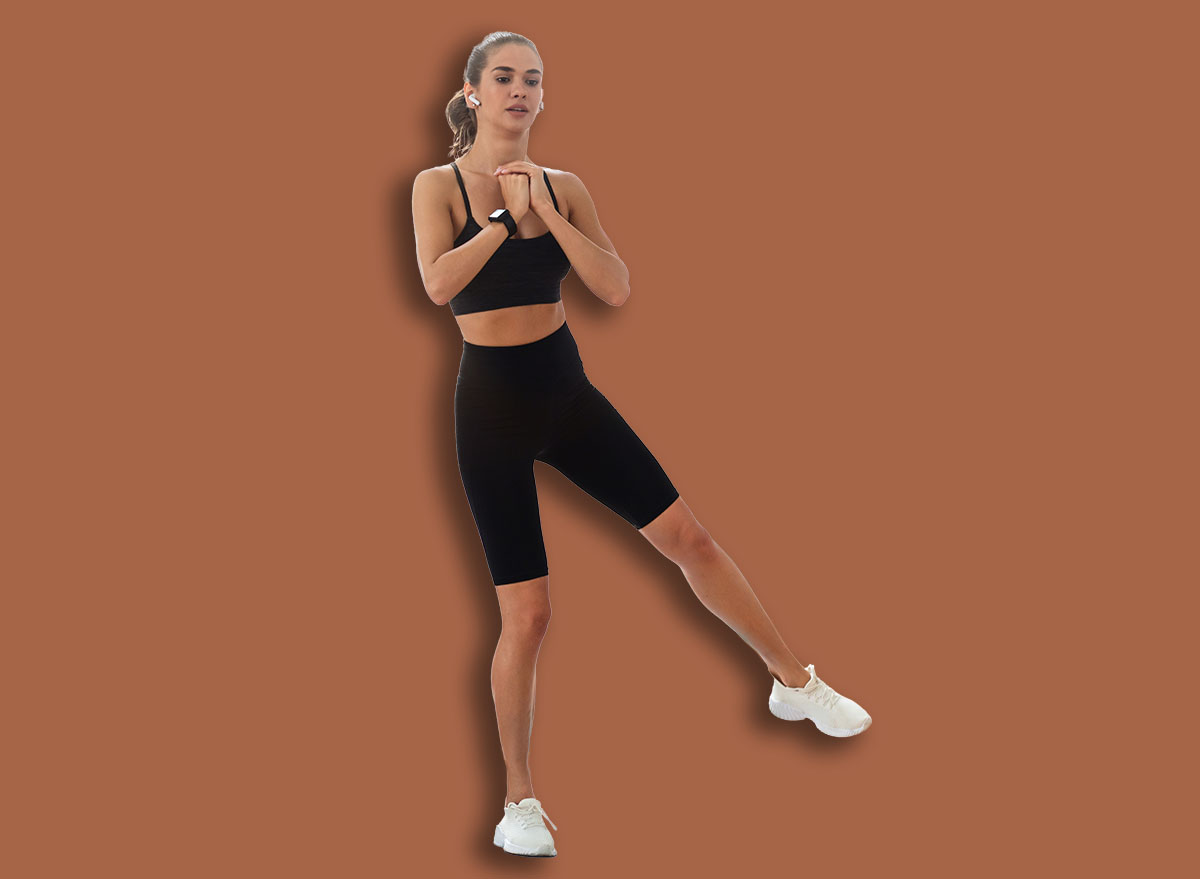
Standing Side Leg Raises
- Begin by standing tall with your feet hip-width apart and hands on your hips or holding onto a sturdy chair or wall for support.
- Activate your core and shift your weight onto your left leg.
- Keep your right leg straight and toes pointed forward as you lift it out to the side as high as you’re comfortably able to.
- Hold at the top for a moment before lowering.
- Repeat on the other side.
Step-Ups
- Begin by standing tall, facing a sturdy workout bench, plyometric box, or step that’s about knee level.
- Place your left foot firmly onto the surface, keeping your core engaged and chest tall.
- Press through your left heel to lift your body until your left leg is straight and you’re standing on the surface.
- Use control to lower back to the start position.
- Repeat on the other side.