4 Chair Exercises That Trim Belly Overhang Faster Than Crunches After 60
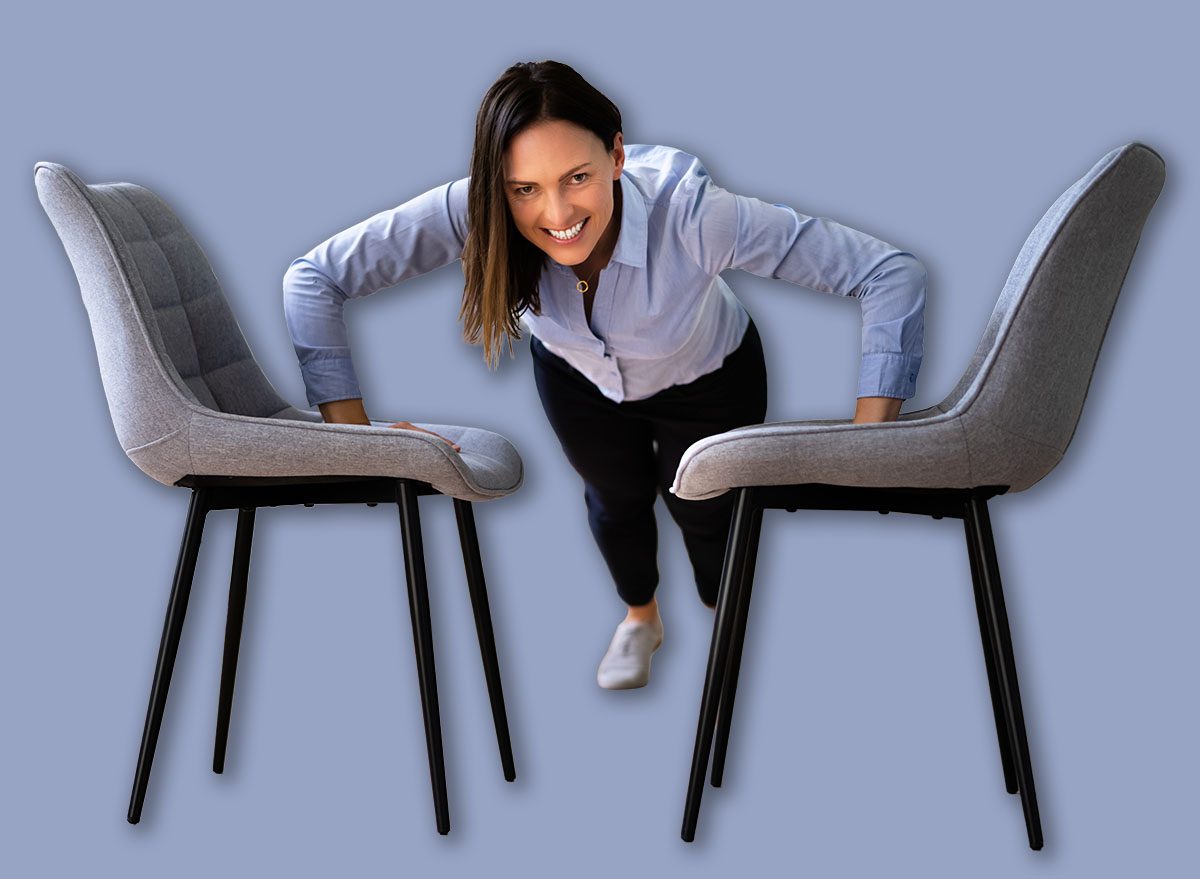

Trimming belly overhang works best when workouts engage more of the body. Crunches can give the abs direct work, but a chair circuit can raise the intensity of the whole session by bringing in larger muscle groups and keeping the pace active. More working muscle means more total effort, and that helps increase calorie burn during the workout.
The chair makes that effort easier to access after 60. It gives you a stable target for standing movements, a support point for balance, and an elevated surface for upper-body and core work. That support lets you move with more confidence while still making the exercises challenging enough to matter.
When I use chair exercises with clients, the goal is to create a session that feels doable and productive. A sit-to-stand with a knee drive, a supported lunge, an incline push-up, or an elevated mountain climber can turn a short routine into a more active workout. The abs stay involved, but the bigger muscles do enough work to make the session feel more complete.
This four-move circuit is built to keep you moving without rushing. Keep the chair secure, use controlled reps, and rest just long enough to maintain good form from round to round.
Chair Sit-to-Stand With Knee Drive
(This video shows how to perform a sit-to-stand perfectly.) Simply add in the knee drive to perform the full exercise)
The chair sit-to-stand with knee drive turns a basic lower-body move into a stronger full-body exercise. Standing up targets the thighs and glutes, while the knee drive engages your core and adds more movement to each rep. Keep the pace smooth so your balance stays under control.
Muscles Trained: Quadriceps, glutes, hamstrings, hip flexors, core.
How to Do It:
- Sit near the front edge of a sturdy chair.
- Place your feet flat on the floor about hip-width apart.
- Brace your core and lean your chest slightly forward.
- Press through your feet to stand tall.
- Drive one knee toward your chest.
- Lower the foot, sit back down with control, and alternate sides.
Recommended Sets and Reps: Perform 3 sets of 8 to 10 reps per side. Rest for 45 to 60 seconds between sets.
Best Variations: Standard sit-to-stands, sit-to-stands with pause, slow-tempo sit-to-stands.
Form Tip: Stand fully before lifting the knee to keep the rep controlled.
Incline Chair Push-Up
Incline chair push-ups train your chest, shoulders, triceps, and core. The elevated angle makes the push-up easier to manage while still giving your upper body meaningful work. Keep your body long and tight so your midsection supports the movement.
Muscles Trained: Chest, shoulders, triceps, core, glutes.
How to Do It:
- Place a sturdy chair against a wall.
- Put your hands on the chair seat or back.
- Step your feet back until your body forms a straight line.
- Brace your core and lightly squeeze your glutes.
- Lower your chest toward the chair with control.
- Press through your hands to return to the starting position.
Recommended Sets and Reps: Perform 3 sets of 8 to 12 reps. Rest for 45 to 60 seconds between sets.
Best Variations: Wall push-ups, counter push-ups, slow-tempo incline push-ups.
Form Tip: Keep your elbows angled slightly back and avoid letting your hips sag.
Chair-Supported Reverse Lunge
Chair-supported reverse lunges add more lower-body effort to the workout while keeping balance stable. The front leg handles most of the work as you lower and stand, helping increase the circuit’s demand while strengthening the legs and hips.
Muscles Trained: Quadriceps, glutes, hamstrings, calves, core.
How to Do It:
- Stand beside a sturdy chair with one hand resting lightly on the back.
- Set your feet hip-width apart.
- Step one foot back into a reverse lunge.
- Lower with control as both knees bend.
- Press through your front foot to stand tall.
- Complete all reps, then switch sides.
Recommended Sets and Reps: Perform 3 sets of 8 to 10 reps per side. Rest for 45 to 60 seconds between sets.
Best Variations: Short-range reverse lunges, supported split squats, slow-tempo reverse lunges.
Form Tip: Keep your front heel grounded and use the chair for balance, not momentum.
Elevated Chair Mountain Climber
Elevated-chair mountain climbers add a conditioning finish while keeping your core active. The chair raises your hands off the floor, making the plank position more accessible. Drive the knees with control and keep the pace brisk enough to raise your breathing without losing form.
Muscles Trained: Abs, obliques, shoulders, hip flexors, glutes, quadriceps.
How to Do It:
- Place a sturdy chair against a wall.
- Put both hands on the chair seat or back.
- Step your feet back into an incline plank.
- Brace your core and keep your hips level.
- Drive one knee toward your chest.
- Step it back and alternate sides for the full interval.
Recommended Sets and Reps: Perform 3 sets of 20 to 30 seconds. Rest for 30 to 45 seconds between sets.
Best Variations: Slow mountain climbers, incline knee drives, cross-body mountain climbers.
Form Tip: Keep your shoulders over your hands and move your knees without bouncing your hips.
How to Use Chair Exercises to Trim Belly Overhang After 60
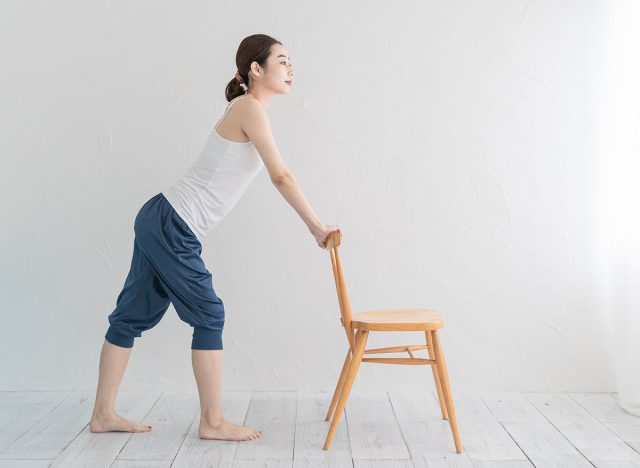
Use these four exercises as a circuit. Complete one set of each move in order, rest for 60 to 90 seconds, then repeat for two to three total rounds.
- Keep the circuit moving: Short rest periods help the routine feel more active while still giving you enough time to keep good form.
- Prioritize the bigger moves: Sit-to-stands, push-ups, and lunges produce more total work than isolated ab reps.
- Use the chair safely: Place it against a wall before doing push-ups or mountain climbers to keep it secure.
- Progress gradually: Add a few reps, extend the mountain climber interval, or slow the lowering phase as your strength improves.
- Support the routine with daily movement: Walking and regular activity help the strength work contribute to body-composition goals.
Crunches can target the abs, but a stronger plan engages more of the body. Use the chair to stay supported, keep the circuit consistent, and build the kind of effort that helps support a firmer midsection over time.
References:
- Beekman, Marian et al. “Lifestyle-Intervention-Induced Reduction of Abdominal Fat Is Reflected by a Decreased Circulating Glycerol Level and an Increased HDL Diameter.” Molecular nutrition & food research vol. 64,10 (2020): e1900818. doi:10.1002/mnfr.201900818
- Harris, M Brennan, and Chia-Hua Kuo. “Scientific Challenges on Theory of Fat Burning by Exercise.” Frontiers in physiology vol. 12 685166. 6 Jul. 2021, doi:10.3389/fphys.2021.685166