4 Daily Exercises That Rebuild Hip Strength Faster Than Gym Machines After 65

Hip strength after 65 benefits from steady practice, especially when the exercises are simple enough to repeat and specific enough to feel. The goal is to get the hips creating force again, then build enough control for that strength to carry into walking, stairs, and standing from a chair.
In training, I pay close attention to whether the glutes and outer hips are doing their share of the work. If the lower back takes over during a bridge or the pelvis rolls during a clamshell, the movement loses some of its value. Cleaning up those positions first makes each rep more productive.
Gym machines can strengthen the hips, but they often guide the body through a fixed path. These four daily exercises ask you to create tension, hold position, and control your own movement with minimal equipment. Keep the effort moderate if you’re doing them every day, and let clean reps drive the progress.
Glute Bridge Hold
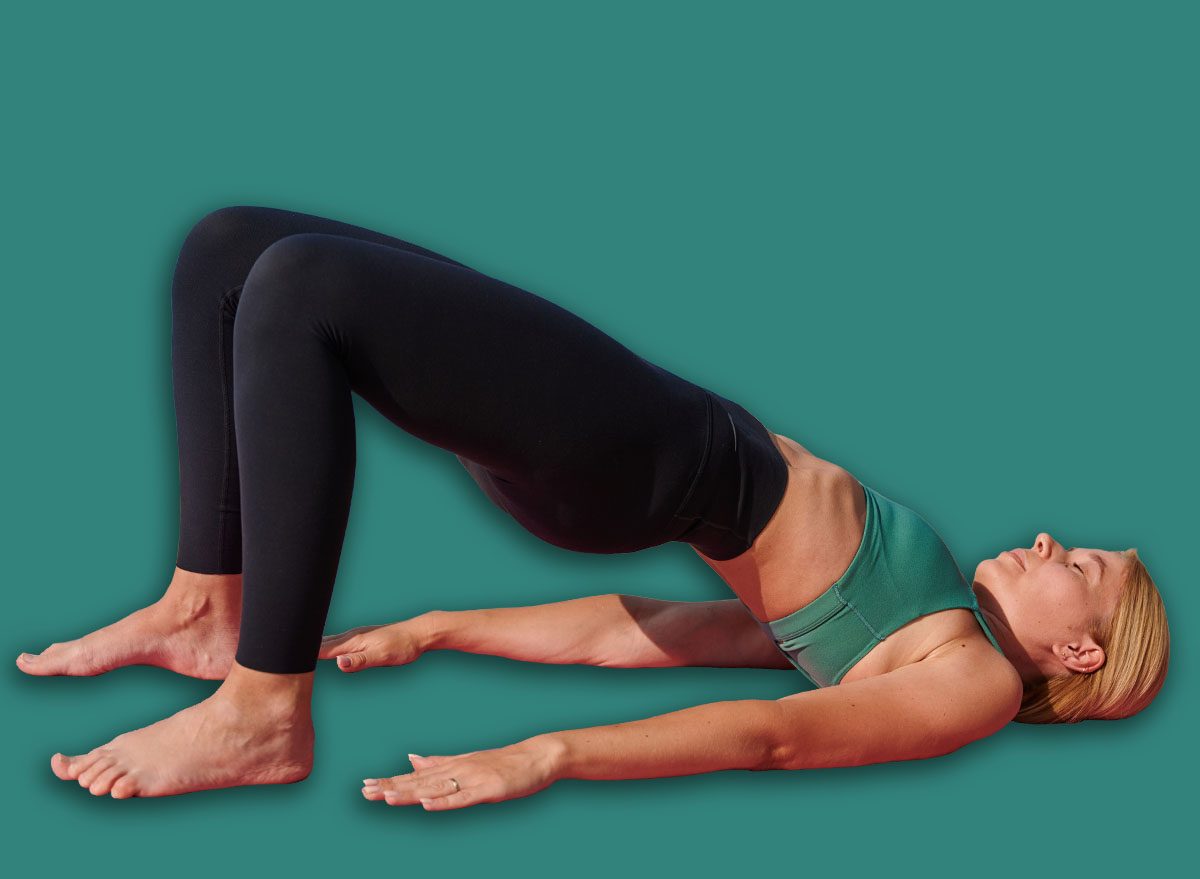
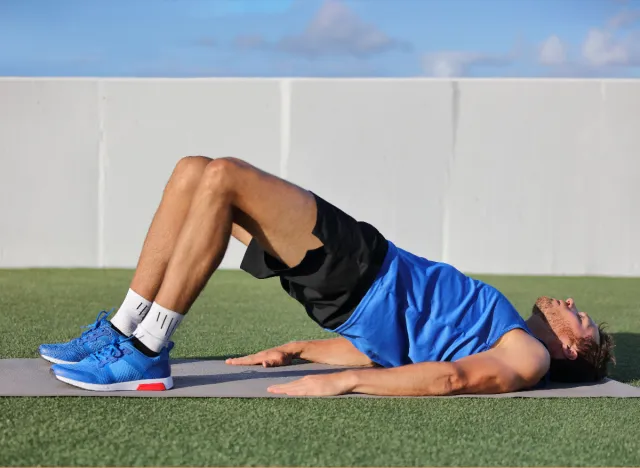
The glute bridge hold builds strength by making your hips stay lifted under tension. Your glutes have to keep working while your core helps hold your pelvis steady. Start with a short hold and focus on feeling the effort in the hips.
Muscles Trained: Glutes, hamstrings, hips, core.
How to Do It:
- Lie on your back with your knees bent and feet flat on the floor.
- Set your feet about hip-width apart.
- Brace your core and press through your heels.
- Lift your hips until your glutes tighten.
- Hold the top position while breathing steadily.
- Lower your hips with control.
Recommended Sets and Reps: Perform 3 sets of 15 to 30-second holds. Rest for 30 to 45 seconds between sets.
Best Variations: Standard glute bridges, mini-band bridge holds, slow-tempo glute bridges.
Form Tip: Keep your ribs down so the hold stays in your glutes, not your lower back.
Bodyweight Hip Hinge
The bodyweight hip hinge teaches your hips to move back and then drive forward with control. This builds strength through the glutes and hamstrings while reinforcing a pattern you use when bending, lifting, and standing tall. Move slowly and keep the range comfortable.
Muscles Trained: Glutes, hamstrings, hips, lower back, core.
How to Do It:
- Stand tall with your feet hip-width apart.
- Soften your knees and brace your core.
- Push your hips back as your torso tips forward slightly.
- Keep your spine long and your chest open.
- Stop when you feel tension through your hamstrings.
- Drive your hips forward to return to standing.
Recommended Sets and Reps: Perform 3 sets of 10 to 12 reps. Rest for 30 to 45 seconds between sets.
Best Variations: Wall hip hinges, staggered-stance hip hinges, slow-tempo hip hinges.
Form Tip: Let your hips move first so the exercise doesn’t turn into a lower-back bend.
Clamshells
Clamshells strengthen the outer hips, which help keep the pelvis steady when you walk or stand on one leg. The movement is small, so control matters more than range. Keep your hips stacked and let the top knee open only as far as you can manage cleanly.
Muscles Trained: Glute medius, glute minimus, outer hips, core.
How to Do It:
- Lie on your side with your knees bent.
- Stack your hips and keep your feet together.
- Brace your core lightly.
- Open your top knee without rolling your hips backward.
- Pause briefly at the top.
- Lower with control and repeat before switching sides.
Recommended Sets and Reps: Perform 3 sets of 12 to 15 reps per side. Rest for 30 seconds between sides.
Best Variations: Bodyweight clamshells, banded clamshells, slow-tempo clamshells.
Form Tip: Keep your pelvis still so the outer glute does the work.
Bodyweight Split Squat
Bodyweight split squats build hip and leg strength one side at a time. The front hip and thigh do most of the work as you lower and stand, while the back leg gives you support. Use a chair, counter, or wall for balance if needed.
Muscles Trained: Glutes, quadriceps, hamstrings, calves, core.
How to Do It:
- Stand tall with your feet hip-width apart.
- Step one foot back into a split stance.
- Keep your front foot flat and your torso tall.
- Bend both knees and lower straight down.
- Press through your front foot to stand.
- Complete all reps, then switch sides.
Recommended Sets and Reps: Perform 3 sets of 6 to 10 reps per side. Rest for 45 to 60 seconds between sets.
Best Variations: Supported split squats, short-range split squats, slow-tempo split squats.
Form Tip: Keep your front heel grounded and let the front hip help drive you back up.
How to Use These Daily Exercises After 65
Use this routine as a short hip-strength block. Complete one set of each exercise in order, rest for 60 to 90 seconds, then repeat for two to three total rounds.
- Keep daily work moderate: You should finish feeling better trained, not drained. Save harder sets for two or three days each week.
- Own the bridge first: A strong bridge hold helps you feel the glutes before moving into hinges and split squats.
- Use support when needed: A wall, chair, or counter can help you keep clean positions during hinges and split squats.
- Progress one piece at a time: Add a few reps, extend the bridge hold, use a light band for clamshells, or lower a little deeper in the split squat.
- Watch where you feel the work: The hips should lead the effort. Reduce the range if your lower back, knees, or hip flexors start taking over.
Rebuilding hip strength after 65 comes down to consistent, controlled work. Keep the routine simple, repeat it often, and let better hip strength support stronger steps, steadier balance, and easier daily movement.
References
- Gafner, Simone C et al. “Hip muscle and hand-grip strength to differentiate between older fallers and non-fallers: a cross-sectional validity study.” Clinical interventions in aging vol. 13 1-8. 21 Dec. 2017, doi:10.2147/CIA.S146834
- Jeong, Ui-Cheol et al. “The effects of gluteus muscle strengthening exercise and lumbar stabilization exercise on lumbar muscle strength and balance in chronic low back pain patients.” Journal of physical therapy science vol. 27,12 (2015): 3813-6. doi:10.1589/jpts.27.3813
- Neto, Walter Krause et al. “Gluteus Maximus Activation during Common Strength and Hypertrophy Exercises: A Systematic Review.” Journal of sports science & medicine vol. 19,1 195-203. 24 Feb. 2020