5 Chair Exercises That Reverse Aging Better Than Cardio After 50


Cardio does a lot of good things after 50. It builds stamina, supports heart health, and helps you stay active through the week. Strength work gives your body a different kind of push, especially when the goal is feeling stronger, steadier, and more capable in daily life.
Chair exercises make that kind of training easier to start. The chair gives you support when you need it and a clear target when you’re practicing lower-body strength. That can make the workout feel approachable without watering it down.
When I program chair workouts for personal training clients over 50, I’m looking for exercises that help them feel progress quickly. A better sit-to-stand, a smoother pushup angle, or more control stepping back can change how someone carries themselves. Those wins build momentum, and momentum keeps people training.
Use these five chair exercises three to five days per week. Keep the first round comfortable, then build your effort once the movements feel warm and steady.
Chair Sit-to-Stand
The chair sit-to-stand deserves a spot in almost any strength routine after 50 because it trains a movement you use constantly. It builds leg strength, reinforces control through the hips and knees, and helps make standing from a seated position feel more automatic. This exercise also gives you an easy way to track progress because smoother reps and lighter hand support tell you your legs are getting stronger.
Muscles Trained: Quads, glutes, hamstrings, core.
How to Do It
- Sit near the front edge of a sturdy chair.
- Place your feet flat on the floor about hip-width apart.
- Lean forward slightly so your weight shifts into your feet.
- Press through your feet and stand tall.
- Lower yourself back toward the chair with control.
- Lightly touch the seat and repeat.
Recommended Sets and Reps: Perform 2 to 3 sets of 10 to 15 reps.
Best Variations: Hands-assisted sit-to-stand, slow sit-to-stand, sit-to-stand with a pause above the chair.
Form Tip: Touch the chair lightly instead of dropping into the seat.
Chair Incline Push-up
Chair incline push-ups bring upper-body strength into a chair routine, which is important because aging well takes more than strong legs. This move trains the pushing muscles that help you get up from the floor, catch yourself against a counter, and support your body weight with more confidence. The incline angle makes the exercise easier to scale, so you can build strength without forcing a floor push-up before you’re ready.
Muscles Trained: Chest, shoulders, triceps, core.
How to Do It
- Place both hands on the edge or back of a sturdy chair.
- Step your feet back until your body forms a straight line.
- Brace your core.
- Bend your elbows and lower your chest toward the chair.
- Press through your hands to return to the starting position.
- Repeat with smooth control.
Recommended Sets and Reps: Perform 2 to 3 sets of 8 to 12 reps.
Best Variations: Wall pushups, counter pushups, incline push-ups with a slower lowering phase.
Form Tip: Keep the chair secure and use a wall or counter if the chair shifts.
Chair-Supported Reverse Lunge
Chair-supported reverse lunges help each leg build strength on its own, which can make a big difference after 50. Single-leg work supports balance, hip strength, and better control during steps and stairs. The chair gives you enough support to move with confidence while your front leg handles the main effort. Start with a small step back and build range as the movement feels stronger.
Muscles Trained: Quads, glutes, hamstrings, calves, core.
How to Do It
- Stand beside a sturdy chair and hold it lightly with one hand.
- Stand tall with your feet about hip-width apart.
- Step one foot back.
- Bend both knees to a comfortable depth.
- Press through your front foot to return to standing.
- Alternate sides or finish all reps on one side before switching.
Recommended Sets and Reps: Perform 2 to 3 sets of 6 to 10 reps per side.
Best Variations: Step-back taps, supported split squats, reverse lunges with a pause.
Form Tip: Keep most of your weight in the front leg as you return to standing.
Seated Knee Tuck
Seated knee tucks give your core a clear job while keeping the setup simple. A stronger core helps you sit taller, move with better control, and feel more stable when your arms and legs are working. This exercise fits well in an aging-focused routine because it trains the midsection without needing to get down on the floor. It also adds a little energy to the workout once your legs and upper body have already done some work.
Muscles Trained: Abs, hip flexors, deep core.
How to Do It
- Sit near the front edge of a sturdy chair.
- Hold the sides of the chair lightly.
- Lean back slightly while keeping your chest lifted.
- Lift both knees toward your torso.
- Lower your feet back toward the floor.
- Repeat without rushing.
Recommended Sets and Reps: Perform 2 to 3 sets of 10 to 15 reps.
Best Variations: Single-leg knee tucks, smaller-range knee tucks, seated marches.
Form Tip: Keep your chest lifted so the movement stays controlled.
Chair-Supported Calf Raise
Chair-supported calf raises train the lower legs in a way many routines skip. Strong calves help with walking, balance, and push-off, which makes them valuable for staying active after 50. This exercise also strengthens the feet and ankles, areas that can quietly affect how steady you feel. The chair keeps the movement stable while you build strength through a simple standing pattern.
Muscles Trained: Calves, ankles, feet.
How to Do It
- Stand behind a sturdy chair and hold the backrest lightly.
- Place your feet about hip-width apart.
- Stand tall and brace your core.
- Press through the balls of your feet.
- Lift your heels as high as you can.
- Lower your heels with control and repeat.
Recommended Sets and Reps: Perform 2 to 3 sets of 12 to 20 reps.
Best Variations: Seated calf raises, slow-tempo calf raises, single-leg supported calf raises.
Form Tip: Lift through your big toe and second toe so your ankles stay aligned.
Best Tips for Getting More From Chair Exercises After 50
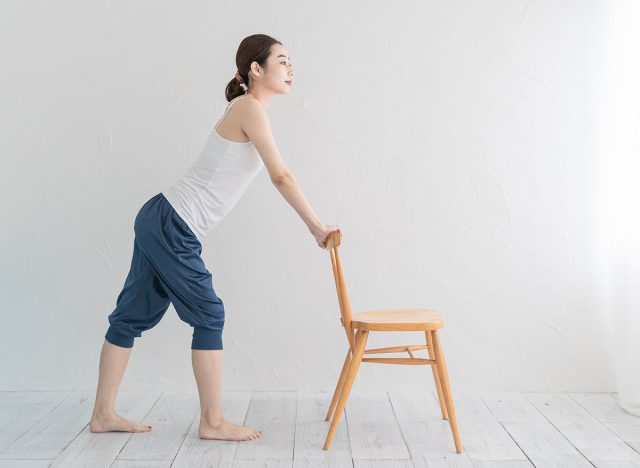
Chair exercises work best when they feel simple enough to repeat and strong enough to move the needle. You want the chair to make the workout more accessible, not less effective. Use it for balance, structure, and confidence while your muscles handle the work. The more consistent you are with the basics, the easier it gets to feel progress in strength, posture, and everyday movement. Keep the routine upbeat, stay patient with the early sessions, and let small improvements build into something bigger.
- Pick the right chair: Use a sturdy chair that doesn’t roll, slide, or wobble when you move.
- Treat each rep like strength work: Move with purpose, even when the exercise looks simple.
- Use light support at first: Hold the chair as much as needed, then gradually use less help as your balance improves.
- Keep the workout short enough to repeat: A few focused rounds several times per week can work better than one long session you dread.
- Add challenge gradually: Use slower reps, longer holds, more reps, or less hand support before making the exercises harder.
- Pair it with cardio you enjoy: Walking, cycling, or swimming can support stamina while these exercises help preserve strength.
Chair exercises can do more than fill an easy workout day. Use them with purpose, repeat them often, and they can help you build the strength, balance, and confidence that make your body feel younger in the first place.
References
- Burtscher, Johannes et al. “How much resistance exercise is beneficial for healthy aging and longevity?.” Journal of sport and health science vol. 12,3 (2023): 284-286. doi:10.1016/j.jshs.2022.11.004
- Klempel, Natalie et al. “The Effect of Chair-Based Exercise on Physical Function in Older Adults: A Systematic Review and Meta-Analysis.” International journal of environmental research and public health vol. 18,4 1902. 16 Feb. 2021, doi:10.3390/ijerph18041902