If You Can Complete These 4 Standing Exercises After 60, You’re Fitter Than Most 50-Year-Olds

Turning 60 doesn’t automatically mean moving slower than someone in their 50s. I’ve trained plenty of adults in their 60s and 70s who outperform younger clients because they’ve maintained their balance, strength, endurance, and coordination. The body responds remarkably well to consistent movement, regardless of age. That’s why I care far more about what someone can do than the number on their birth certificate.
Instead of focusing on isolated muscles or gym records, I like using functional standing exercises to measure overall fitness. They challenge the same abilities you rely on every day, including getting up from a chair, climbing stairs, carrying groceries, and recovering your balance after a misstep. When someone performs these movements with confidence and control, it tells me their body works as a coordinated system rather than a collection of separate muscles. Those qualities often matter much more than raw strength alone.
I’ve used these four assessments with hundreds of adults over 60, and they provide an excellent snapshot of real-world fitness. Don’t worry if one movement feels more difficult than another. The goal isn’t perfection. The goal is identifying your strengths while uncovering areas where a little focused training can make everyday life even easier.
Sit-to-Stand
Every time you stand up from a chair, your legs, hips, and core work together to lift your body against gravity. That’s why the sit-to-stand remains one of my favorite functional fitness assessments. It closely mirrors daily life while revealing lower-body strength, muscular endurance, and movement efficiency. Clients who perform this test well almost always walk with greater confidence, climb stairs more comfortably, and maintain better independence. It’s one of the simplest ways to evaluate how well your lower body has aged.
How to Perform It
- Sit near the front of a sturdy chair.
- Cross your arms over your chest.
- Stand completely.
- Sit back down with control.
- Continue for 30 seconds.
- Count your total repetitions.
RELATED: 4 Chair Exercises That Strengthen Your Core Faster Than Planks After 6
Standing March
Walking may seem simple, but every step requires strength, balance, coordination, and cardiovascular endurance working together. The standing march challenges each of those qualities while asking your core and hips to stabilize continuously. I often use this assessment because it closely resembles the movement patterns people rely on during daily life. Clients who complete it comfortably usually demonstrate strong functional endurance and excellent lower-body control. Maintaining posture throughout the test matters just as much as finishing it.
How to Perform It
- Stand tall.
- Lift one knee to about hip height.
- Lower it with control.
- Alternate legs continuously.
- Keep your chest upright.
- Continue for one full minute.
Lateral Step
Most people spend very little time moving sideways, even though side-to-side strength plays a huge role in preventing falls. This assessment measures hip strength, balance, agility, and coordination all at once. I like using it because it challenges muscles that often weaken with age while exposing stability issues that forward walking may hide. Clients who move smoothly from side to side usually feel much more confident navigating crowded areas or uneven ground. Strong lateral movement often separates highly functional older adults from their peers.
How to Perform It
- Stand with your feet together.
- Step to the right.
- Bring your other foot in.
- Step to the left.
- Continue alternating directions.
- Perform continuously for 45 seconds.
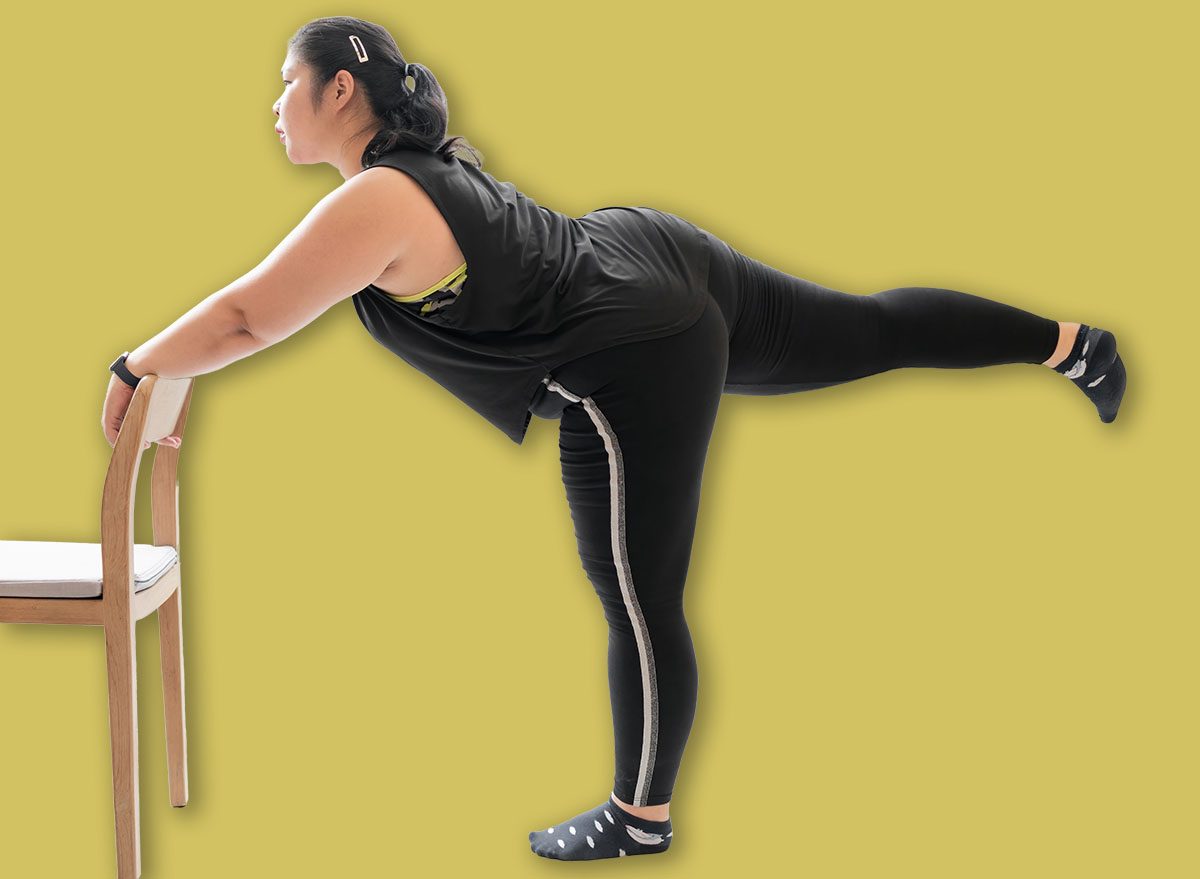
Single-Leg Reach
I like ending with a movement that combines balance, hip strength, flexibility, and coordination into one challenge. Standing on one leg while reaching forward asks your body to stabilize through the ankle, knee, hip, and core simultaneously. Unlike a simple one-leg balance test, the added reach introduces movement that better reflects real-life situations. Clients who perform this exercise confidently almost always display exceptional functional fitness. It’s one of the clearest signs that the entire body works together efficiently.
How to Perform It
- Stand next to a sturdy chair.
- Shift your weight onto one leg.
- Reach both hands forward slightly while hinging at the hips.
- Return to standing.
- Perform 8 controlled repetitions.
- Repeat on the opposite leg.