5 Daily Standing Routines That Build Strength Better Than the Gym After 50

It’s time to take a stand—a standing workout, that is. Standing routines are stellar for building core stability, boosting functional strength, and posture. This type of exercise really challenges and strengthens the core and legs, which is essential to make a top priority as you age. Strength naturally declines at this point in life, primarily because of sarcopenia—the loss of lean muscle due to hormonal declines, slower metabolism, and lifestyle changes.
To help maintain and boost muscle growth, we learned five daily standing routines to build strength better than the gym after 50.
Why Standing Workouts Are an Effective Option After 50
“As a licensed massage therapist, holistic health coach, former athlete, and a woman who rebuilt her own strength and hormones after 40 (and had a child at 43), I’m very clear on this: For adults over 50, daily standing routines often outperform traditional gym workouts because they train the body the way it actually functions—upright, coordinated, weight-bearing, and integrated,” explains Arlena Bessard, holistic health coach, licensed massage therapist, founder at Heavenly Hands Massage And Bodywork, and fascia specialist with 20+ years in women’s integrative pain care.
Many gym workouts isolate the muscles. Standing workouts, however, integrate multiple systems, including your joints, fascia, muscles, balance, lymphatic flow, and nervous system regulation. This is essential for building sustainable strength as you age.
Plus, standing routines are easier to do on a consistent basis, “which matters more than intensity at this stage,” Bessard tells us.
5 Standing Strength Workouts To Do After 50
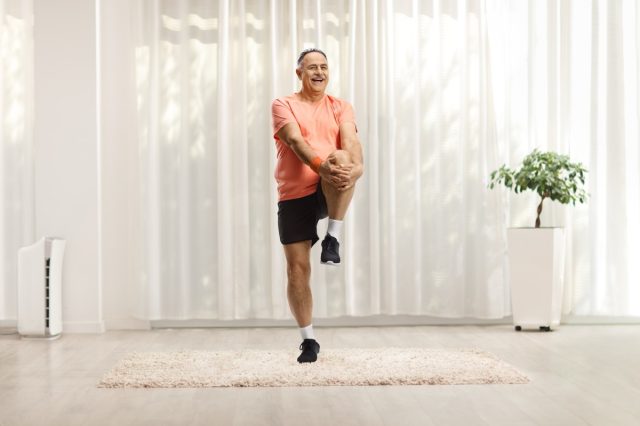
According to Bessard, the below exercises can be completed at home, either barefoot or in supportive footwear. For best results, she recommends performing them five to six days a week for 15 to 30 minutes.
“Short, daily sessions outperform long, sporadic workouts—especially for busy professionals over 50,” Bessard tells us.
Sit-to-Stand Squats (Chair Squats)
Sit-to-stands (chair squats) fire up the core, quads, and glutes.
“This is one of the most important movements for independence after 50,” Bessard points out.
- Begin seated at the front of a sturdy chair, feet under your knees.
- Lean forward just a bit.
- Try to stand up without using your knees, hands, or additional support.
- Use control to slowly sit back down.
- Perform 2 to 3 sets of 8 to 12 reps.
Standing Hip Hinges (Good Mornings)
The standing hip hinge activates the lower back, hamstrings, and glutes.
“This exercise teaches safe bending and protects the spine,” Bessard says.
- Stand tall, feet hip-width apart.
- Place your hands behind your head.
- Press your hips back while maintaining a tall chest.
- As you hinge forward, feel a solid stretch in your hamstrings.
- Activate your hamstrings and glutes to drive your hips forward.
- Perform 2 to 3 sets of 10 to 12 reps.
Standing Push-Backs
Standing push-backs engage the core, chest, triceps, and shoulders. This exercise promotes upper-body strength without joint strain.
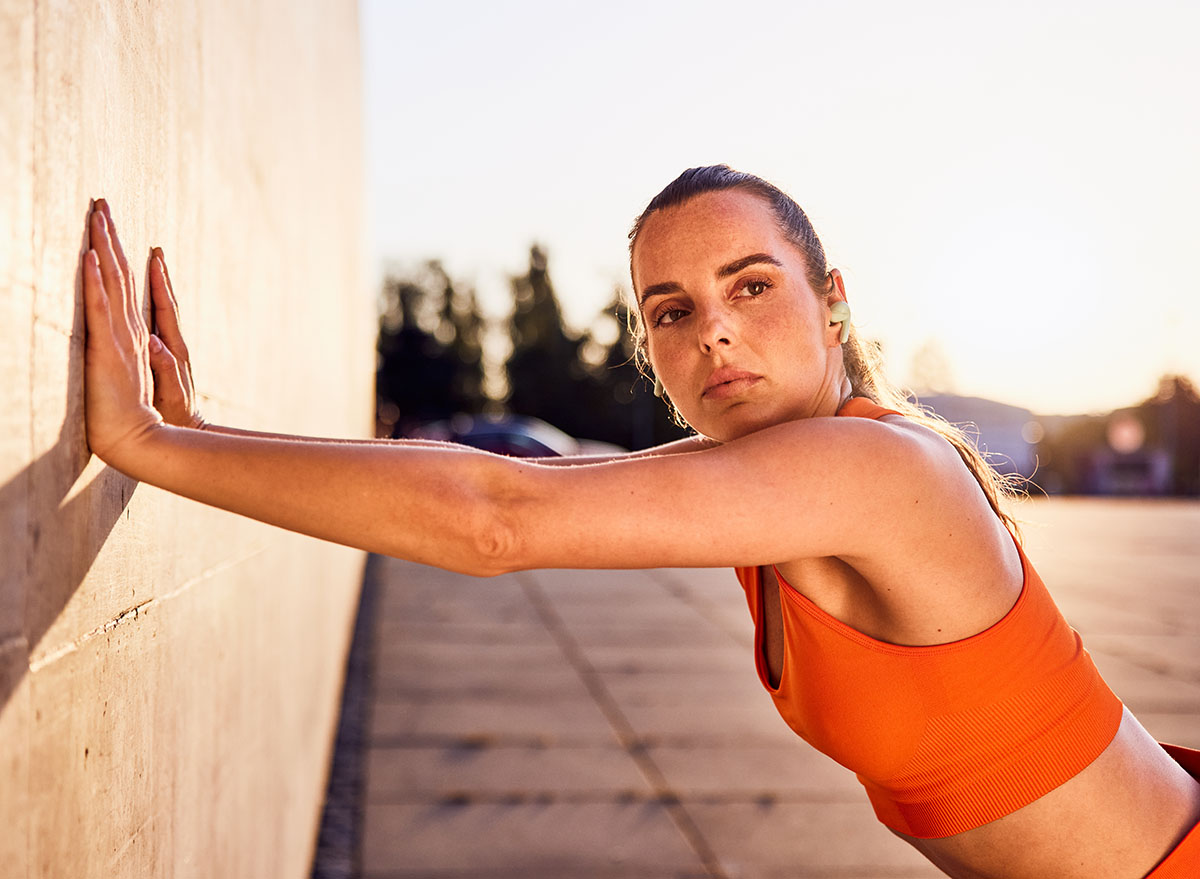
- Stand tall, arms-length away from a wall.
- Place your hands shoulder-width apart on the surface.
- Bend your elbows to lower your chest toward the wall.
- Press back up.
- Perform 2 to 3 sets of 8 to 15 reps.
Standing Rows (Band or Towel Pulls)
The standing row puts your postural muscles and upper back to work. This exercise is essential for breathing, posture, and shoulder health.
- Anchor a resistance band at chest level.
- Stand tall, facing the anchor point.
- Hold the handles with both hands.
- Bend your elbows and pull the band toward your body.
- Squeeze your shoulder blades together.
- Extend your arms back to the start position.
- Perform 2 to 3 sets of 10 to 15 reps.
Standing Marches or Single-Leg Balance Holds
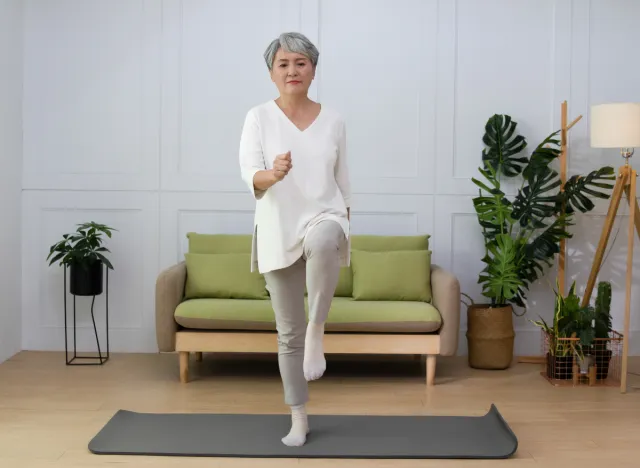
This move fires up the core, hip flexors, and balance systems. It also helps prevent falls.
- For standing marches, begin standing tall with your feet hip-width apart.
- Lift your left knee up to hip height while reaching your right arm overhead.
- Lower your foot and repeat with your right knee and left arm.
- Perform 2 to 3 sets of 20 to 40 seconds.