The 5-Day Plank Hold Challenge That Rebuilds Core Strength After 60
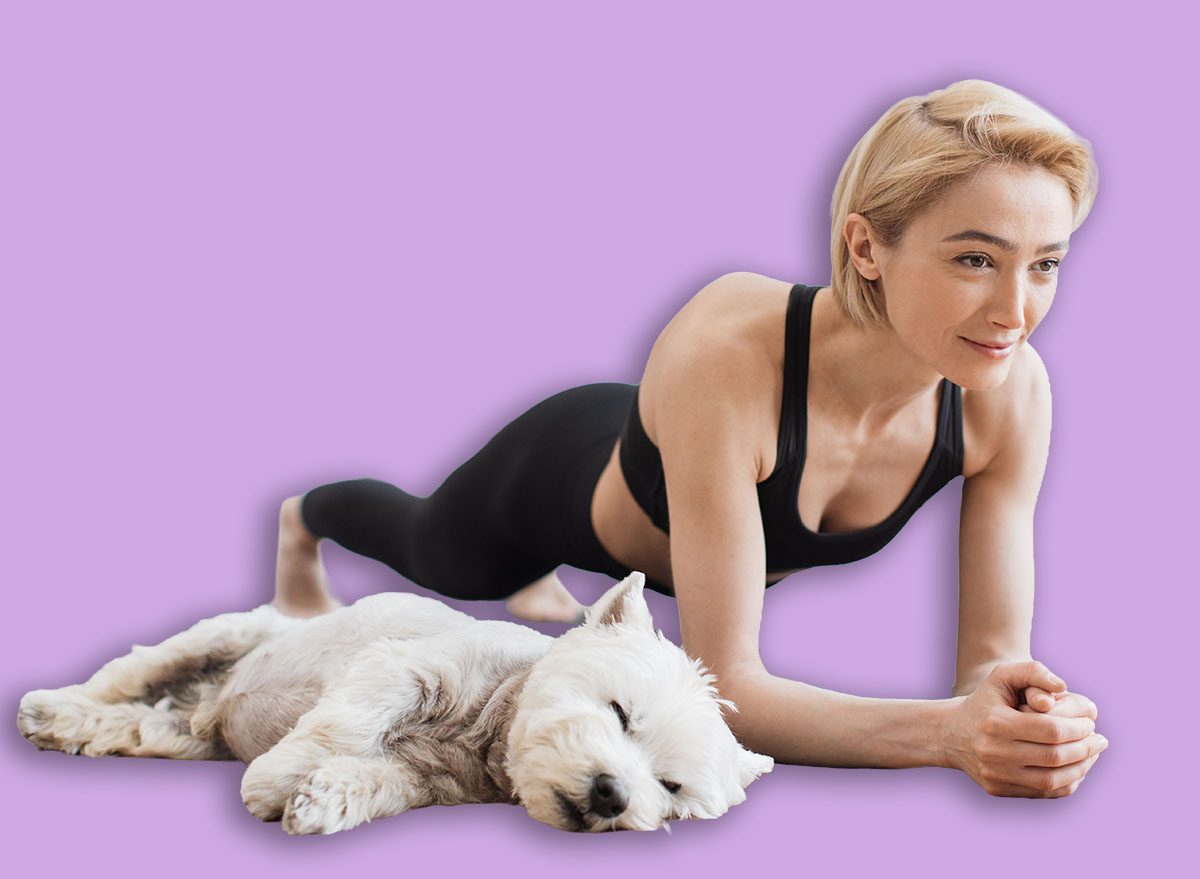

Most people approach the plank the wrong way. They drop down, set a timer, and try to hold on for as long as physically possible, usually until their hips sag, their lower back arches, and the exercise stops doing what it’s supposed to do. While that approach might work fine in your twenties, after 60, it’s a surefire way to turn a core exercise into a lower-back strain.
Fortunately, there’s a better approach to rebuilding core strength after 60. By gradually adding a few seconds at a time to your planks, your core has a chance to actually adapt to the load rather than collapsing under it. That’s the idea behind this five-day plank challenge. Rather than chasing an arbitrary time goal on day one, you extend your hold by five seconds each day, keeping the same three sets throughout, so your muscles build real endurance instead of just gutting out a single long hold with poor form.
We spoke with James Brady, CPT, a certified personal trainer at OriGym, who designed this exact structure for clients rebuilding core strength later in life. “Rather than trying to hold a plank for as long as possible, you should gradually increase your time over five days,” Brady explains. “If holding a full plank becomes difficult before the timer ends, it’s better to stop, rest, and repeat than allow your hips to sag or your back to arch. Quality is always more important than duration, particularly as we get older.”
Keep reading for the 5-day plank challenge and detailed instructions. Then, when you’re done, be sure to check out these 6 Home Exercises That Strengthen Your Core Faster Than Sit-Ups After 60.
The Plank Form
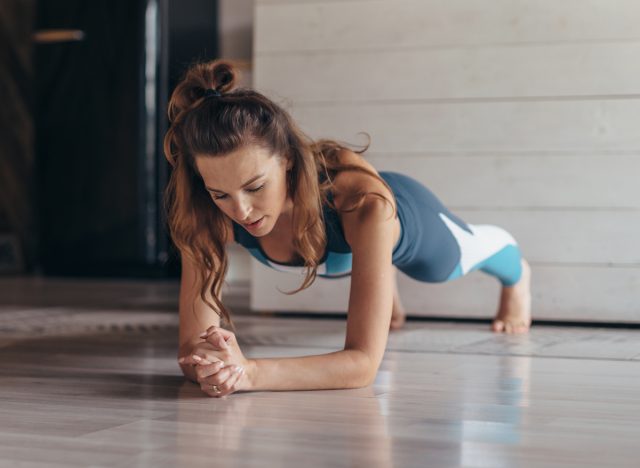
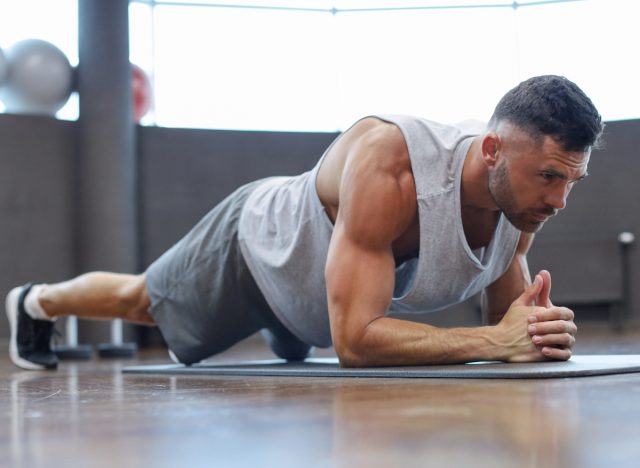
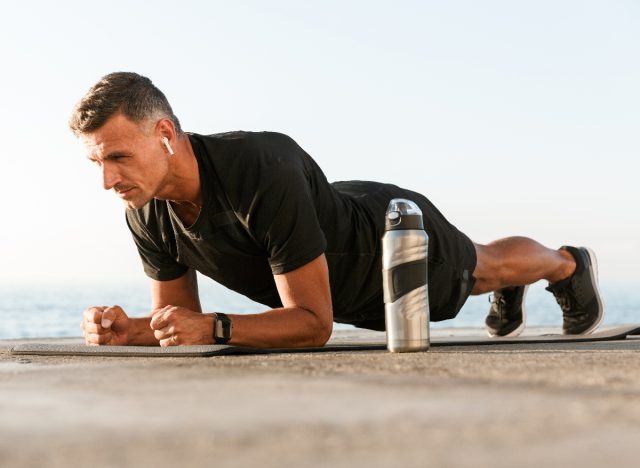
Before starting Day 1, it helps to know what proper plank positioning looks like, since every day of this challenge uses the same form. “To perform a plank, rest on your forearms and toes with your elbows directly under your shoulders,” says Brady. “Engage your core by maintaining a straight line from your head to your heels by tucking your pelvis and squeezing your glutes.”
How to do it:
- Rest on your forearms and toes with your elbows directly under your shoulders.
- Maintain a straight line from your head to your toes.
- Tuck in your pelvis.
- Squeeze your glutes.
- Breathe steadily through your nose during the hold.
Day 1

Day one is about establishing the position and getting a feel for how your core responds under load, not testing your limits. “On Day 1, start with a 20-second plank and repeat this for three sets,” Brady advises.
How to do it: Set up in the plank position above, hold for 20 seconds, rest for 30 to 40 seconds, then repeat for a total of three sets.
Day 2
By day two, your core has already had one session to adapt, so the five-second increase should feel manageable. “Over the next five days, increase the time by five seconds, but still only repeat this for three sets,” Brady says.
How to do it: Hold for 25 seconds, rest for 30 to 40 seconds, and repeat for a total of three sets.
Day 3
Halfway through the challenge is often where fatigue starts to test your form more than your first two days did. Sticking to Brady’s guidance on quality over duration matters most here.
How to do it: Hold for 30 seconds, rest for 30 to 40 seconds, and repeat for a total of three sets.
Day 4

You’re close to the finish line! The extra five seconds today should reflect real progress from where you started on Day 1. Keep the same three-set structure as described above.
How to do it: Hold for 35 seconds, rest for 30 to 40 seconds, and repeat for a total of three sets.
Day 5
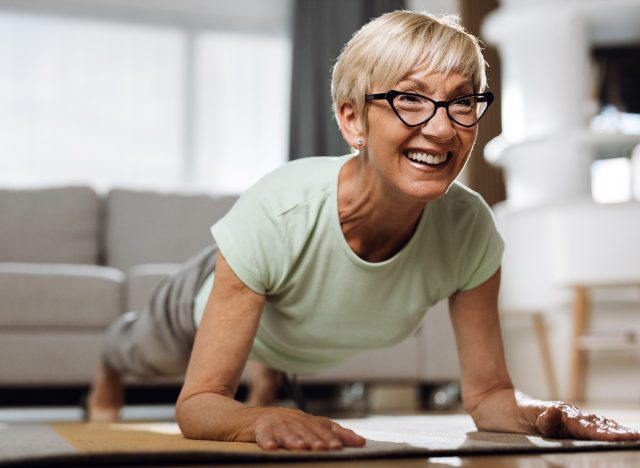
By the final day, you’ll be holding double the time you started with, all while keeping the same clean form. “This means by day 5, you will be performing a 40-second plank for three sets.”
How to do it: Hold for 40 seconds, rest for 30 to 40 seconds, and repeat for a total of three sets.
The Bottom Line
Once you’ve finished the five days, you don’t need to keep increasing your plank-hold time. Instead, repeat the Day 5 target of a 40-second plank for three sets a few times a week to maintain what you’ve built, or start the progression over at a slightly higher starting point and work your way up to 60 seconds. Core strength built this way carries real benefits beyond how your midsection looks, helping to support balance, posture, and stability as you age.