6 Home Exercises That Strengthen Your Core Faster Than Sit-Ups After 60
A strong core means much more than having toned abdominal muscles. After 60, the muscles surrounding your abdomen, lower back, hips, and pelvis work together to help you stand taller, walk with confidence, lift safely, and maintain your balance throughout the day. As a trainer, I’ve found that many people still believe endless sit-ups offer the fastest route to a stronger core. In reality, those repetitive movements often place unnecessary stress on the neck and lower back while neglecting the deeper muscles that provide true stability.
Your core functions like your body’s natural support system. Every time you bend down to pick something up, carry groceries across the house, or get out of bed, those muscles stabilize your spine before your arms and legs even begin moving. That’s why I encourage clients to focus on exercises that train the core to resist movement rather than simply creating it. This approach develops practical strength that transfers directly into everyday life.
I’ve coached adults over 60 for years, and the strongest cores I’ve seen weren’t built with hundreds of crunches. They came from consistent practice with functional movements that challenged the entire midsection from multiple angles. These six home exercises strengthen your core while improving posture, balance, and full-body coordination. Perform them several times each week, and you’ll build the kind of strength that helps you move confidently for years to come.
Bird Dog
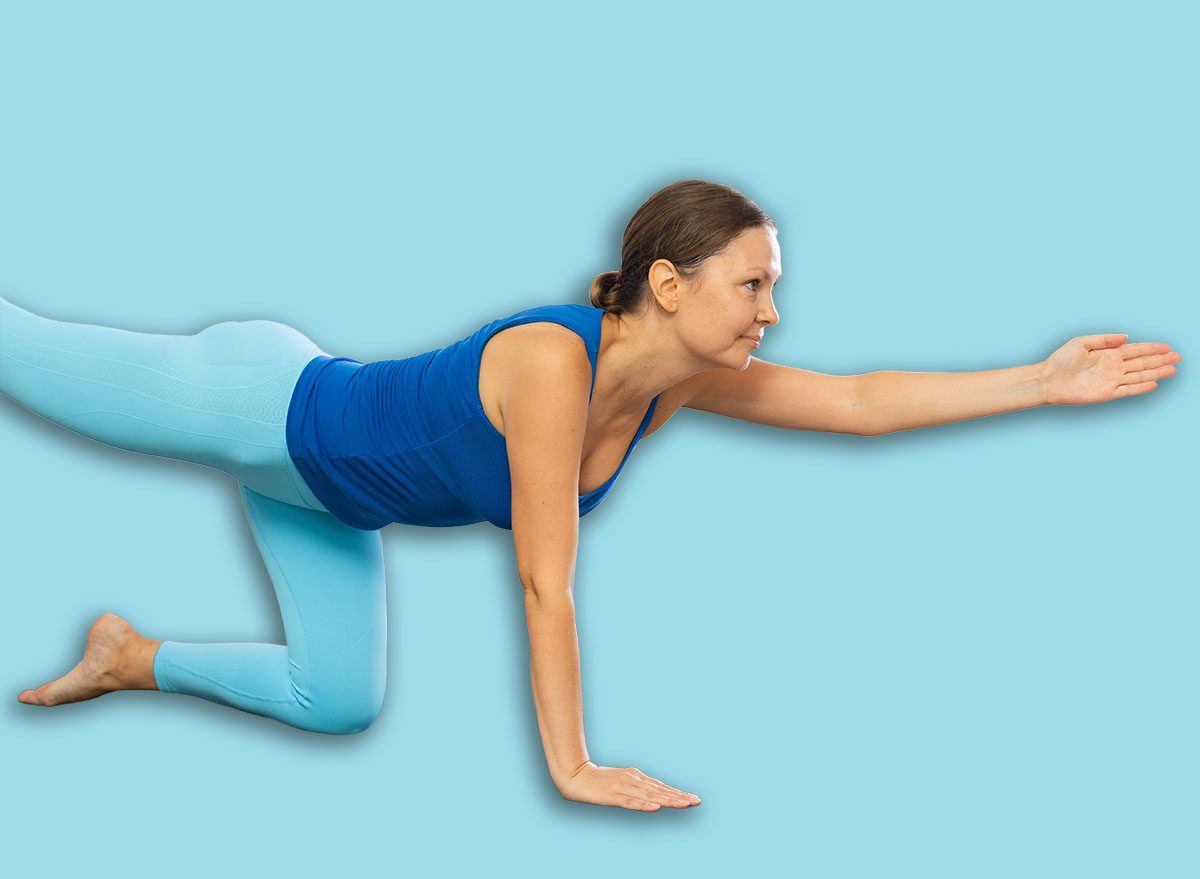
Whenever someone tells me they want a stronger core without aggravating their back, bird dogs almost always become my first recommendation. This movement strengthens the deep stabilizing muscles surrounding the spine while also recruiting the glutes, shoulders, and hips. Instead of repeatedly bending the spine like a sit-up, it teaches your body to maintain excellent alignment as your limbs move. Clients often notice improvements in posture and lower-back comfort after just a few weeks of consistent practice. It’s one of the safest and most effective ways to build functional core strength after 60.
How to Do It
- Begin on your hands and knees.
- Extend your right arm forward.
- Extend your left leg behind you.
- Hold briefly.
- Return with control.
- Alternate sides for 10 repetitions per side.
Dead Bug
The dead bug challenges your core to stabilize your spine while your arms and legs move independently. I use this exercise frequently because it closely mimics the way your core functions during walking and other daily activities. Clients often find it surprisingly challenging despite its gentle appearance, which highlights how much the deep abdominal muscles contribute to stability. Slow, controlled repetitions produce far better results than rushing through the movement. Better control here often translates into better movement everywhere else.
How to Do It
- Lie on your back.
- Raise your arms toward the ceiling.
- Lift your knees to 90 degrees.
- Extend one arm and the opposite leg.
- Return slowly.
- Alternate sides for 10 repetitions each.
Glute Bridge
Many people overlook the connection between strong glutes and a strong core. In reality, the hips and abdominal muscles work together during nearly every movement you perform. I include glute bridges because they strengthen the posterior chain while teaching the core to stabilize the pelvis. Clients often notice less lower-back discomfort and greater ease when standing up or climbing stairs after adding them to their routine. Strong hips create a stronger, more resilient core.
How to Do It
- Lie on your back with your knees bent.
- Place your feet flat on the floor.
- Tighten your core.
- Lift your hips until your body forms a straight line.
- Lower slowly.
- Perform 12 to 15 repetitions.
Bear Plank Hold
One of my favorite ways to challenge the entire core involves asking clients to simply hold the right position. The bear plank activates the shoulders, abdominals, hips, and legs simultaneously while encouraging excellent spinal alignment. Unlike traditional planks, the hovering knees increase the demand on the deep stabilizing muscles without requiring long hold times. Clients usually feel their entire midsection working within seconds. It’s an efficient exercise that builds strength without a single sit-up.
How to Do It
- Start on your hands and knees.
- Place your hands beneath your shoulders.
- Lift your knees one to two inches off the floor.
- Keep your back flat.
- Hold for 15 to 30 seconds.
- Repeat 3 to 5 times.
Standing Pallof Press
The core doesn’t just help you bend forward. One of its biggest jobs involves preventing unnecessary twisting while you move. The Pallof press strengthens those anti-rotation muscles while improving posture and balance at the same time. I often recommend it because clients immediately feel the deep abdominal muscles engage without placing stress on the spine. It’s one of the best exercises for building real-world core strength that carries over into lifting, carrying, and walking.
How to Do It
- Attach a resistance band at chest height.
- Stand sideways to the anchor point.
- Hold the band against your chest.
- Press your arms straight forward.
- Return slowly.
- Complete 10 to 12 repetitions per side.
Farmer’s Carry
I like finishing core workouts with an exercise that looks deceptively simple but challenges nearly every muscle in the body. Carrying weight while maintaining excellent posture forces the core to stabilize continuously from the first step to the last. The shoulders, grip, hips, and abdominal muscles all work together to keep your body upright. Many clients are surprised by how demanding this movement feels despite involving nothing more than walking. It’s one of the most practical core exercises you can perform because it mirrors tasks you’ll encounter throughout everyday life.
How to Do It
- Hold a dumbbell or kettlebell in each hand.
- Stand tall with your shoulders back.
- Tighten your core.
- Walk slowly with controlled steps.
- Maintain an upright posture.
- Continue for 30 to 60 seconds.